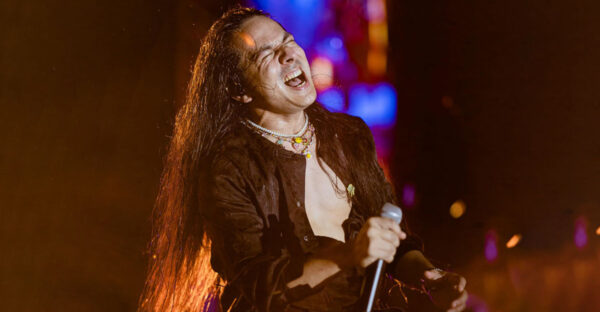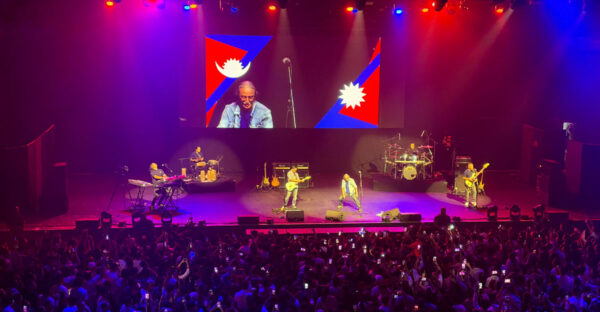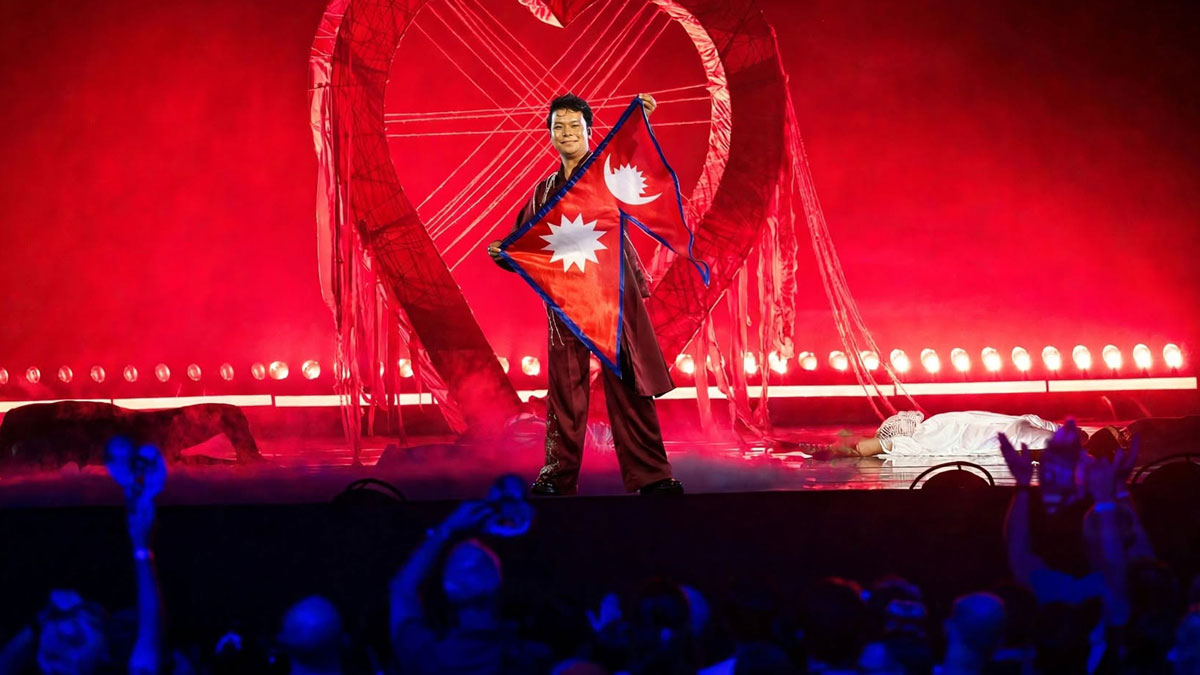
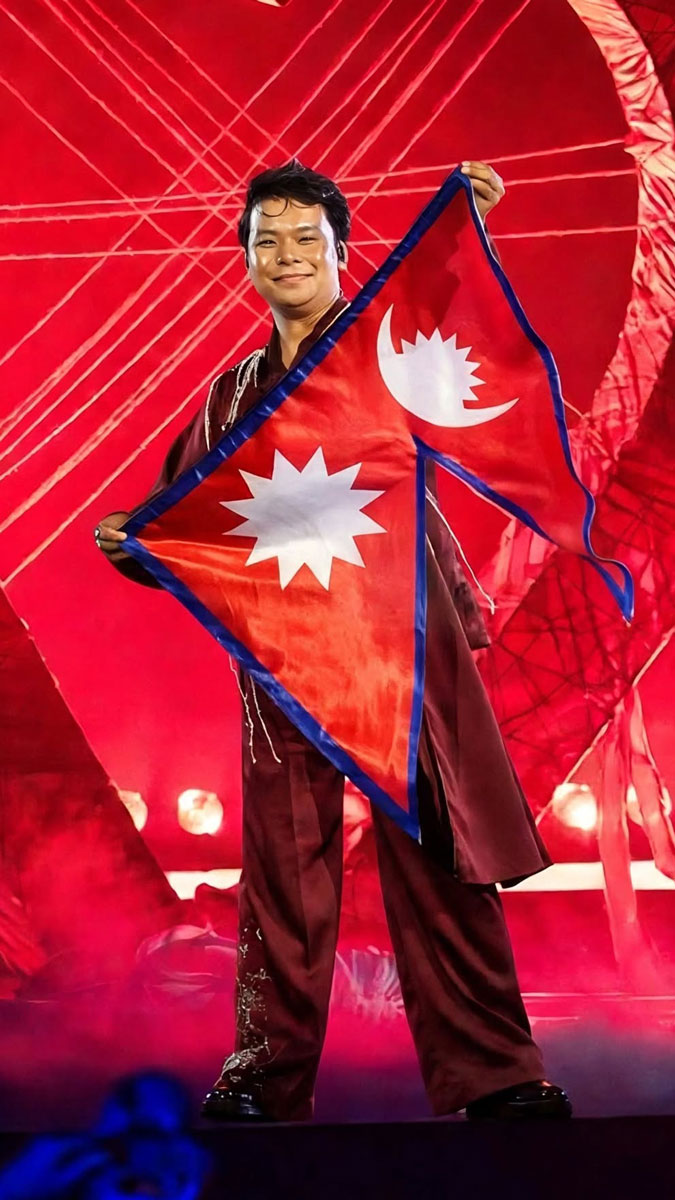
Nepali singer Pratik Himal Rai proudly displays Nepal’s national flag during his performance at Eurovision Song Contest Asia 2026 in Bangkok.
Pratik Himal Rai Represents Nepal at Eurovision Asia, Shares Emotional Backstage Moment
From singing in Kathmandu’s bars to performing on an international stage in Bangkok, Nepali rock singer Pratik Himal Rai has travelled a remarkable musical journey. But it was the emotion of representing his homeland that made his Eurovision Asia debut unforgettable.
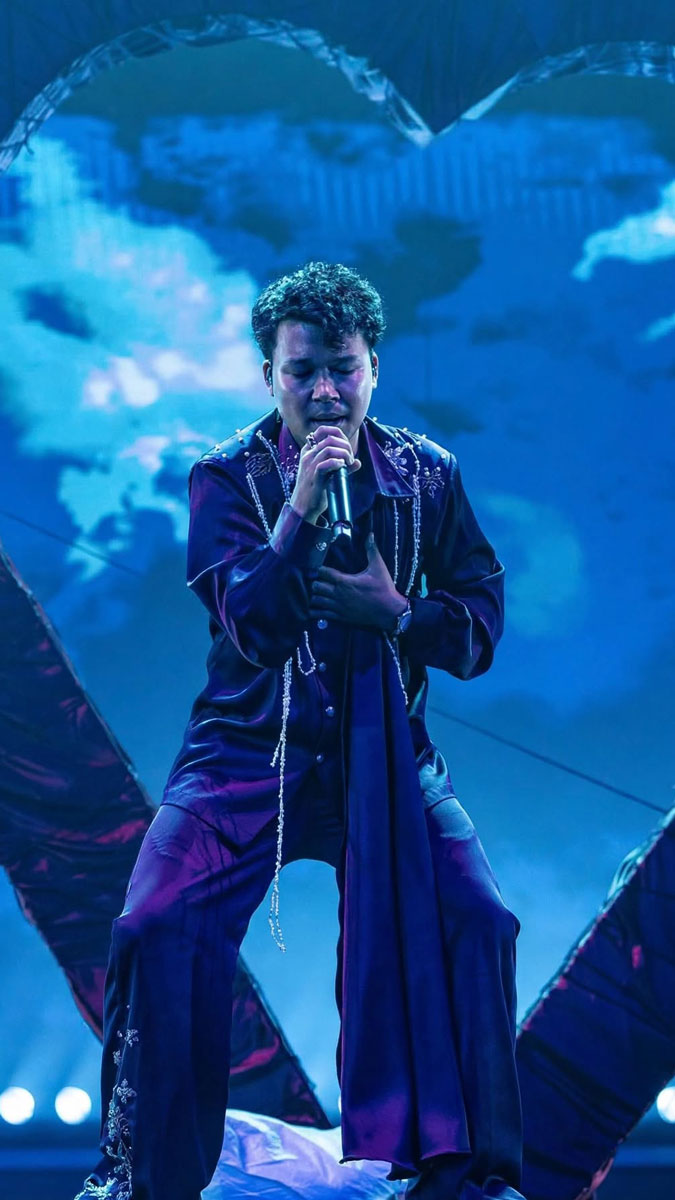
Standing backstage at Eurovision Song Contest Asia 2026 in Bangkok, Nepali singer Pratik Himal Rai found himself overwhelmed with emotion. He had just experienced one of the biggest moments of his musical career, yet his thoughts were far away from the bright lights and cheering audience.
He was thinking about Nepal, his family, his people and the years of struggle that had brought him to an international stage.
In an emotional Instagram post following his performance, the 26-year-old singer revealed that he cried while sitting alone backstage, reflecting on his homeland and the journey that had shaped his life.
For Rai, representing Nepal at Eurovision Asia was more than a professional achievement. It was an opportunity to introduce Nepali music, language and identity to an international audience.
On November 14, 2026, Rai performed his original song ‘Ananta Maya’ at the inaugural Eurovision Song Contest Asia, held at One Bangkok Forum in Bangkok, Thailand.
The historic competition brought together musicians from 11 Asian countries, each performing a song selected to represent their nation.
Rai finished ninth among the 11 contestants, but the experience gave him something that could not be measured by rankings alone.

An Emotional Moment Behind the Eurovision Stage
Rai’s emotional response became one of the most personal parts of his Eurovision journey.
In his Instagram message, the singer described how thoughts of his country and the people who supported him brought tears to his eyes.
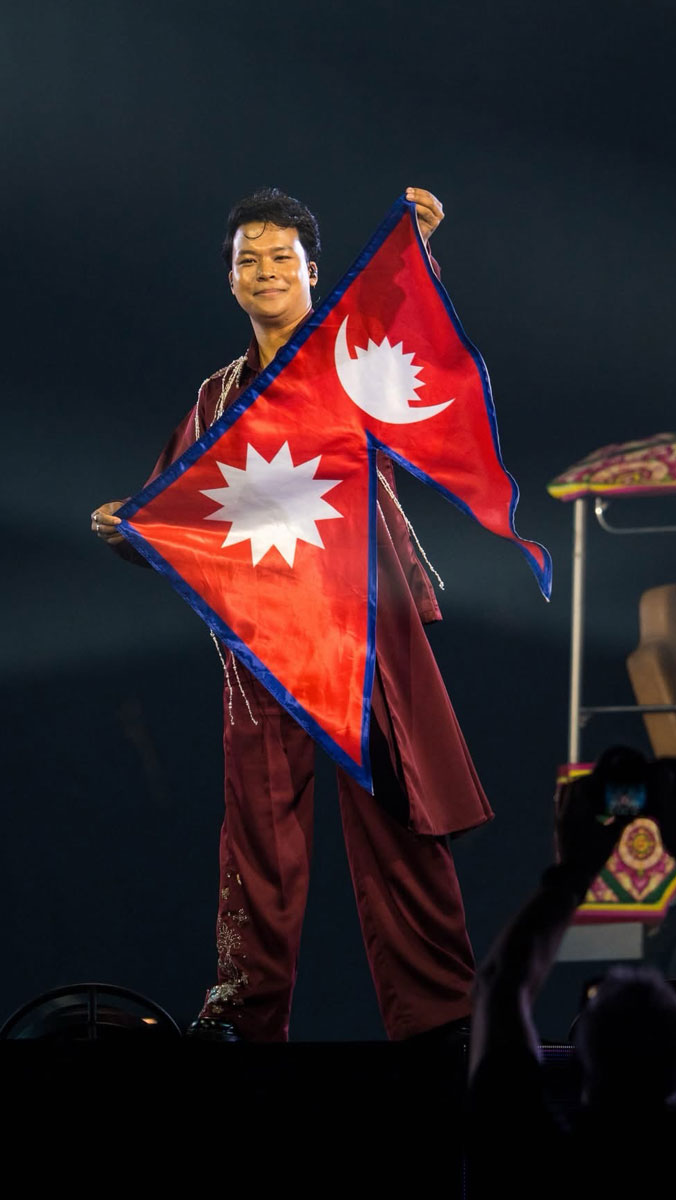
He wrote about the pride of carrying Nepal’s flag on an international platform and performing in the Nepali language before audiences around the world.
His performance also came at a difficult time for Nepal. The devastating Bhotekoshi flash floods of August 26, 2026, had caused widespread loss of life, displacement and destruction.
With the suffering of affected communities still weighing on his mind, Rai used his international appearance to draw attention to Nepal’s situation and appeal for support.
The singer also expressed gratitude to everyone who believed in him, encouraged him and helped him reach the competition.
His Instagram post ended with an emotional declaration in Nepali: “म मरे पनि मेरो देश बाँचिरहोस्।”
The words, expressing his wish for Nepal to live on even after his death, captured the deep connection he felt with his homeland.
From Kathmandu’s Small Music Venues to Eurovision Asia
Rai’s appearance in Bangkok was the result of years of persistence rather than overnight success.
Born and raised in Bhojpur, eastern Nepal, he developed an interest in singing during childhood. Growing up, he listened to prominent Nepali vocalists, including Narayan Gopal, Satyaraj Acharya, Swaroopraj Acharya and Rajesh Payal Rai.
Music gradually became more than a childhood interest. Rai wanted to make singing his profession, although his family initially hoped he would pursue a more conventional career.
After completing his Secondary Education Examination in 2015, he decided to move to Kathmandu to follow his musical ambitions.
The decision was not easy. His parents were initially reluctant to support his plans, but Rai remained determined.
In Kathmandu, he began performing at bars and live music venues in areas such as Thamel, Jhamsikhel and Chabahil.
Those performances helped him earn money while continuing his education. They also gave him practical experience in connecting with audiences, building confidence and developing his stage presence.
From intimate music venues to a major international television production, Rai’s journey reflects the opportunities that dedication and consistent effort can create.

Early Competition Setbacks Did Not Stop Him
Before representing Nepal at Eurovision Asia, Rai had already experienced the disappointment of unsuccessful attempts at televised singing competitions.
He auditioned twice for ‘Nepal Idol’ and once for ‘The Voice of Nepal’, but none of those attempts took him to the final.
Rather than abandon music, he continued studying and improving his skills.
Rai earned a bachelor’s degree in music from Ratna Rajyalaxmi Campus, commonly known as RR Campus, in Kathmandu. He also pursued private music lessons for three additional years.
His musical interests expanded beyond rock to include ballads, classical music, folk and contemporary Nepali songs.
Alongside singing, he developed an interest in songwriting, drawing inspiration from poetry and literature.
His original songs ‘Jhari’ and ‘Brahmanda’ are among the works that introduced listeners to his musical style.
These experiences gradually shaped him into a singer, songwriter and independent performer capable of presenting his own compositions.
How ‘Ananta Maya’ Took Him to Bangkok
Rai’s opportunity to represent Nepal arrived unexpectedly.
After Eurovision organisers became familiar with his musical performances and original songs, he was approached about participating in the selection process for the first Asian edition of the competition.
The preparation period was short, and Rai had to create an original entry within a tight deadline.
He responded by writing and composing ‘Ananta Maya’, a three-minute song whose title translates to “Boundless Love.”
The song became his entry in ‘Nepal Decides’, the national selection programme held on October 7, 2026.
The competition featured 11 musical acts competing for Nepal’s place in the international final.
Rai emerged as the winner through a combined voting system involving a professional jury, Nepali viewers and international audiences.
The victory secured him a place in Bangkok, where he would represent Nepal alongside performers from ten other Asian countries.
For an artist who had previously struggled to advance through televised competitions, winning the national selection marked a major turning point.

Nepal’s Rock Sound Reaches an International Audience
At Eurovision Asia, Rai brought Nepali rock music to an international stage with an energetic performance of ‘Ananta Maya’.
His presentation featured dramatic red lighting, dancers, fire-inspired visuals and a large heart-shaped stage structure.
The production combined the intensity of rock music with the emotional character of his original composition.
The competition featured participants from Nepal, Bangladesh, Bhutan, Cambodia, Laos, Malaysia, Mongolia, the Philippines, South Korea, Thailand and Vietnam.
The Eurovision Asia Grand Final was also streamed internationally, giving Rai’s performance exposure beyond the participating countries.
Ultimately, 19-year-old Filipino singer CARMELLE won the inaugural title with her song ‘Sobra-Sobra’, receiving 211 points.
Thailand finished second, while Vietnam secured third place.
Nepal’s ninth-place finish did not bring the trophy home, but Rai’s appearance became an important milestone in his career and a moment of international visibility for Nepali music.
The experience also introduced his voice and original composition to listeners who might never previously have encountered his music.
A Proud Return to Bhojpur and Bigger Dreams Ahead
Rai’s Eurovision journey strengthened his connection with his hometown and his country.
Returning to Bhojpur after winning Nepal’s national selection, he received a warm response from the community where his musical dreams had begun.
What initially felt like a personal achievement gradually became something larger. The opportunity to represent Nepal carried meaning for his hometown, his supporters and the wider Nepali music community.
Although he gained recognition through rock music, Rai does not intend to limit himself to a single genre.
He wants to continue exploring different musical styles, including Nepali folk, classical and modern music, while writing and performing original compositions.
His Eurovision appearance has also inspired a bigger dream: seeing a future Nepali representative win the Asian competition and, someday, seeing Nepal welcome the international event.
For now, the memories of Bangkok remain deeply personal.
The international stage offered Rai an opportunity to share his music, but the experience also reminded him of the people and places that made his journey possible.
His message after the competition was filled with gratitude for his supporters and pride in his homeland.
From the music venues of Kathmandu to the Eurovision stage in Bangkok, Pratik Himal Rai’s journey shows how far a Nepali artist can travel while keeping his roots close to his heart.
And for the singer who once dreamed of simply making a career in music, performing his own song for Nepal before an international audience has become a defining chapter of his life.