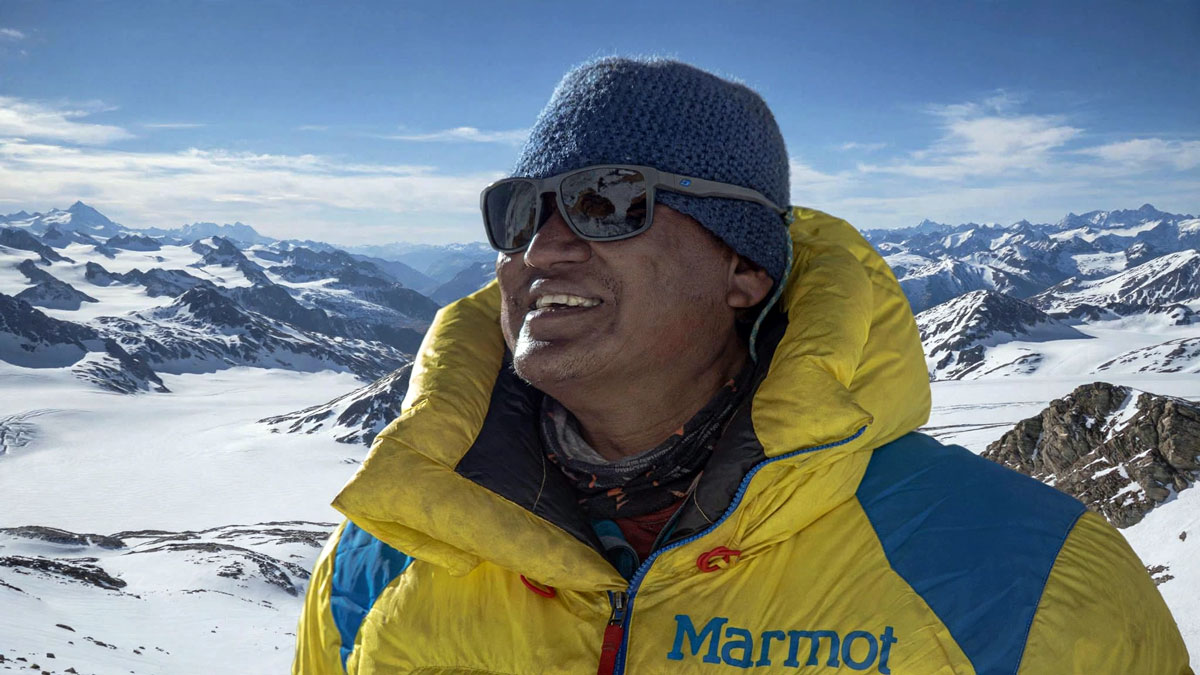
Nepali mountaineer Ang Tshering Lama spoke with his former schoolmate Subhasish Chakraborty about Summit to Sea and his plan to follow Everest’s waters to the Bay of Bengal.
Ang Tshering Lama had climbed Mount Everest several times by the time he spoke with travel journalist Subhasish Chakraborty in Kathmandu. The two had known each other since their boarding school days in Tezpur, Assam. This time, the Nepali mountaineer had something unusual to explain to his old friend. His plans for Everest included a kayak.
The boat would be waiting in the foothills. After climbing Everest, Lama and his team planned to paddle down the Dudh Koshi, the glacier-fed river he calls the “Restless River of Everest.” From Nepal, they would follow the river system through India, with the Bay of Bengal in Bangladesh as their destination. They called the 1,830-mile expedition Summit to Sea.
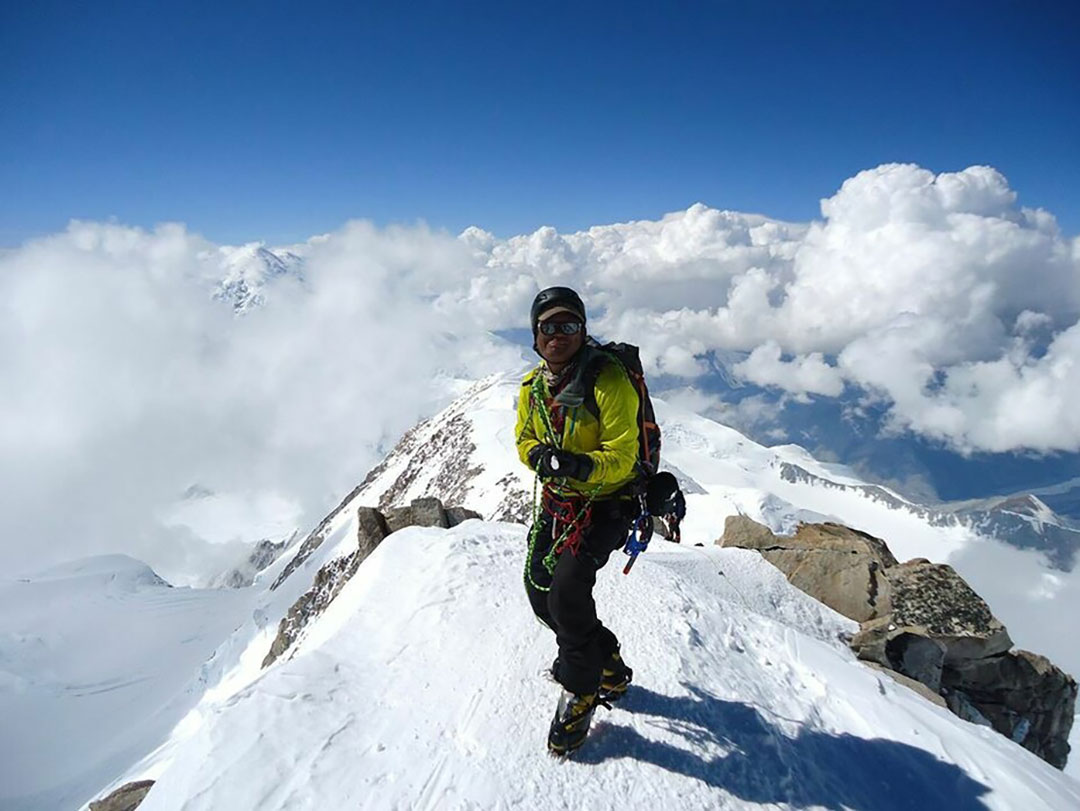
Ang Tshering Lama pauses on a snowy ridge during his first ascent of Mount Everest.
Why follow the water so far? In his years as a guide, Lama had seen how changes in the Everest region affected the people who lived there. But the water from its snowfields and glaciers travels much farther than most climbers do. It feeds rivers that people rely on for farming and everyday life, hundreds of kilometres from the mountain.
“When the mountains change, the rivers change and so do the lives of those who depend on them,” Lama told Chakraborty.
Chakraborty recognised something of his old school friend in that answer. He uses the word ‘sankalpa’, a vow, to describe the personal commitments climbers sometimes take to the summit. In May 2019, Lama guided Wangda Sherpa, a climber in recovery from drug addiction, to the top of Everest. The message Wangda took with him came from his own experience: “Say No To Drugs.”
With Summit to Sea, Lama wanted people living along the route to have the same chance to speak for themselves. Travelling by kayak would give the team a way to tell the story of the river through the lives of people on its banks. For Lama, the voices of Himalayan communities belonged in the conversation about climate change, alongside the accounts brought home by visiting climbers.
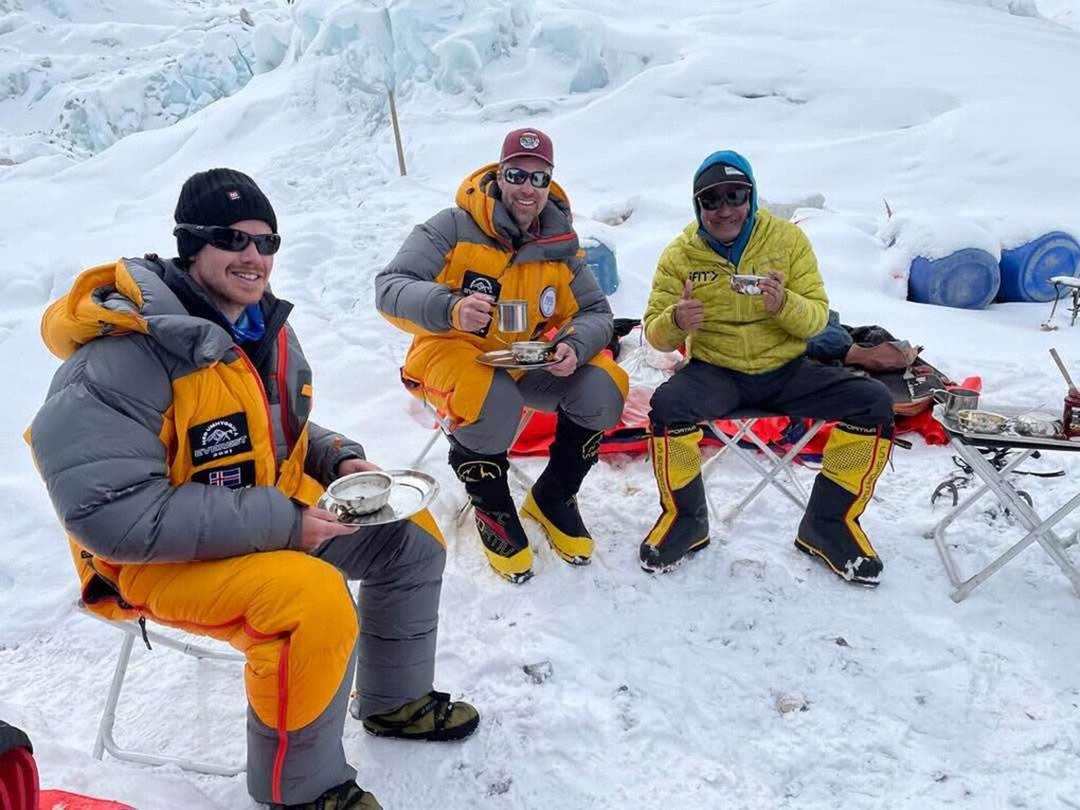
A meal break in the mountains for Ang Tshering Lama and two fellow climbers.
When Chakraborty asked how young people could take part, Lama described plans for hands-on activities and storytelling sessions in Khumbu with the Sagarmatha Pollution Control Committee. At Everest Base Camp, he had a different group in mind. He wanted climbers, guides and support crews to discuss the waste an expedition generates and the responsibility each person has for what they leave behind.
Chakraborty and Lama had attended Carmel Residential School together in Assam. One grew up to write about places people travel to. The other made a career guiding people to a summit many dream of reaching. In Kathmandu, their conversation came back to a place well below that summit: the banks of the Dudh Koshi. That was where Lama hoped to put a kayak in the water and follow a part of Everest that keeps moving long after the climbers go home.

Guest Post: Interview by Subhasish Chakraborty
Subhasish Chakraborty is a travel journalist from Kalyani, West Bengal, India. He writes about Himalayan expeditions, Indigenous cultures and sustainable tourism across Nepal, Bhutan and Northeast India. He has also served as a consultant to the World Tourism Organization.