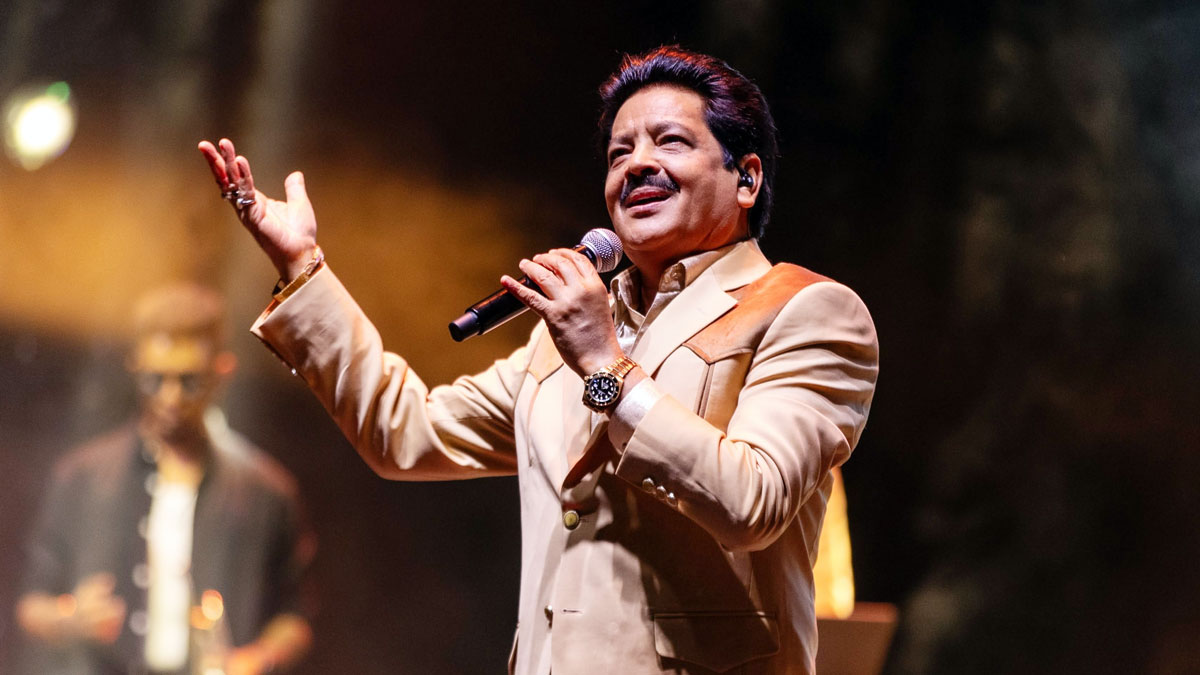
Udit Narayan Jha performs at Berlin’s Uber Eats Music Hall on November 13, 2026, decades after his early singing days at Radio Nepal, 100 Rupees a Month.
Deepa Narayan Jha Said Udit Was Proud to Be Nepali. How Did He Describe Himself?
Years before Udit Narayan sang “Papa Kehte Hain” for Aamir Khan, listeners in Kathmandu knew him as a folk singer on Radio Nepal. He earned 100 rupees a month at the station and sang in hotels to make a little extra. For Nepali listeners, that chapter of his life gives particular weight to a few words attributed to him after a concert in Berlin.
Narayan and his son Aditya were billed together at Berlin’s Uber Eats Music Hall on November 13, 2026. A social media post attributed to the singer described the pair as the first Indian artists to perform there. The venue’s listing confirms the date and the father-son billing. The claim about who performed there first remains unverified.
For an audience that grew up hearing Narayan sing in Nepali, the word that stands out is “Indian.” How does the singer describe his own roots? His interviews over the years offer several answers. One of the most personal came in 2017, when he called himself “a boy from Mithila.”
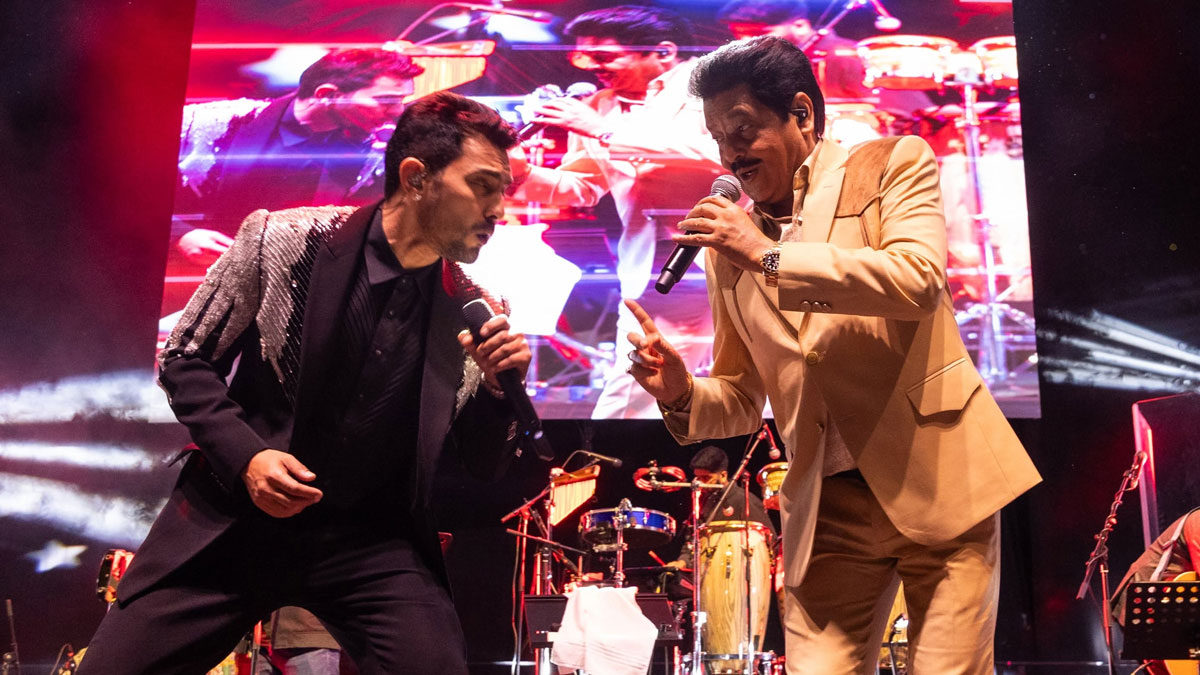
Father and son share the stage as Udit Narayan and Aditya Narayan sing together at their first Berlin show.
From village fairs to Radio Nepal
In a first-person account published in April 2017, Udit Narayan Jha traced his earliest performances to village fairs around Baisi in Bihar’s Supaul district. He recalled singing Maithili folk songs there when he was four or five. Baisi was the family home of his mother, Bhuvaneshwari Jha, and the place where he said he was born and raised. His father, Harekrishna Jha, came from across the border in Nepal’s Saptari district.
Radio played an early part in his life, long before it paid him a salary. His family could not afford a set, so he slipped into neighbours’ homes to hear Lata Mangeshkar and Mohammed Rafi. After finishing school, he moved to Kathmandu and found work singing Maithili folk music at Radio Nepal. He also sang Nepali songs, building a connection with listeners in both languages.
After about eight years in Kathmandu, a music scholarship through the Indian Embassy took him to Mumbai in 1978. He studied classical music at Bharatiya Vidya Bhavan. One of his earliest breaks brought him into a recording studio with Rafi, the voice he had once gone from house to house to hear. Composer Rajesh Roshan chose him to sing alongside Rafi for the film ‘Unees Bees’, released in 1980.
The song that changed his career came eight years later. In ‘Qayamat Se Qayamat Tak’, a young Aamir Khan stood on a college stage and sang about a father’s hopes for his son. The voice was Narayan’s. “Papa Kehte Hain” made him one of the most recognisable playback singers of his generation.

Sharing photos from their first Berlin show, Udit Narayan described himself and his son Aditya as the “first Indian artists” to perform at Uber Eats Music Hall.
What Deepa said in Kathmandu, and what Udit said later
By January 2004, Narayan had been a Bollywood star for more than 15 years. His wife, singer Deepa Narayan, was in Kathmandu to accept an award on his behalf. The couple had also recorded a Nepali album together, ‘Upahar’, which she described as a gift to listeners in Nepal.
During that visit, Deepa addressed a rumour that her husband had given up his Nepali citizenship. “Udit still carries a Nepali passport,” she said in an interview published on January 15. She also spoke of the pride they took in being Nepali. It was a statement from his wife about the passport he held at the time. She was also speaking as a singer who had just made a record with him for a Nepali audience.
In January 2009, as India prepared to honour Narayan with the Padma Shri, questions about his birthplace resurfaced. Narayan said he had been born at his maternal grandparents’ home in Baisi and publicly identified himself as Indian. Later that month, speaking to the Nepali daily ‘Kantipur’, he made a different point about the award itself. A country, he argued, could honour an artist for work that people there loved, wherever the artist came from.
In March 2012, Bihar’s centenary gave him a more personal reason to talk about his birthplace. Chosen to sing the state anthem and prayer song, he described himself as a son of Bihar. Five years later, when he wrote about his childhood in his own words, he named both his mother’s village in Bihar and his father’s home in Saptari. Mithila was the name he chose for the place he still felt he belonged.
Those accounts tell us how Narayan and his wife spoke about family, birthplace and belonging at different points in their lives. They leave open the legal question of whether or when his citizenship might have changed. A concert caption cannot fill that gap.
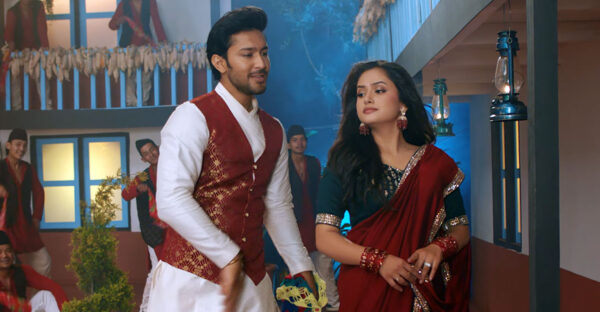
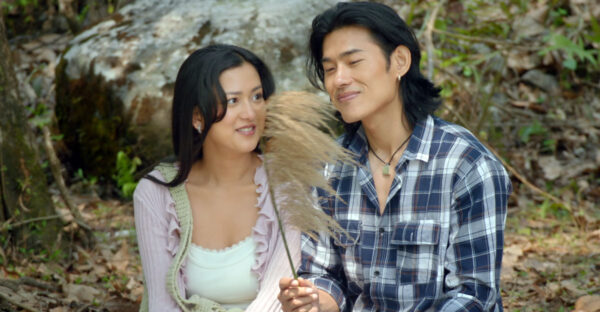
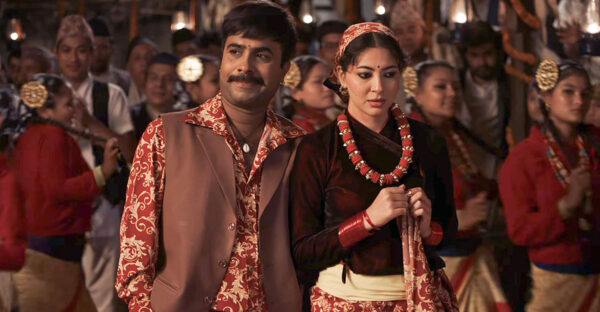
His recordings tell a part of the story that is easier to follow. A listener who discovered Narayan through “Papa Kehte Hain” can hear him sing in Nepali on ‘Upahar’, then hear him again years later on “Saachai Bisesh Chheu” from the Nepali film ‘Leela’. For the audience that first knew his voice through Radio Nepal, the Saptari connection is family history. The songs are something they can still play.