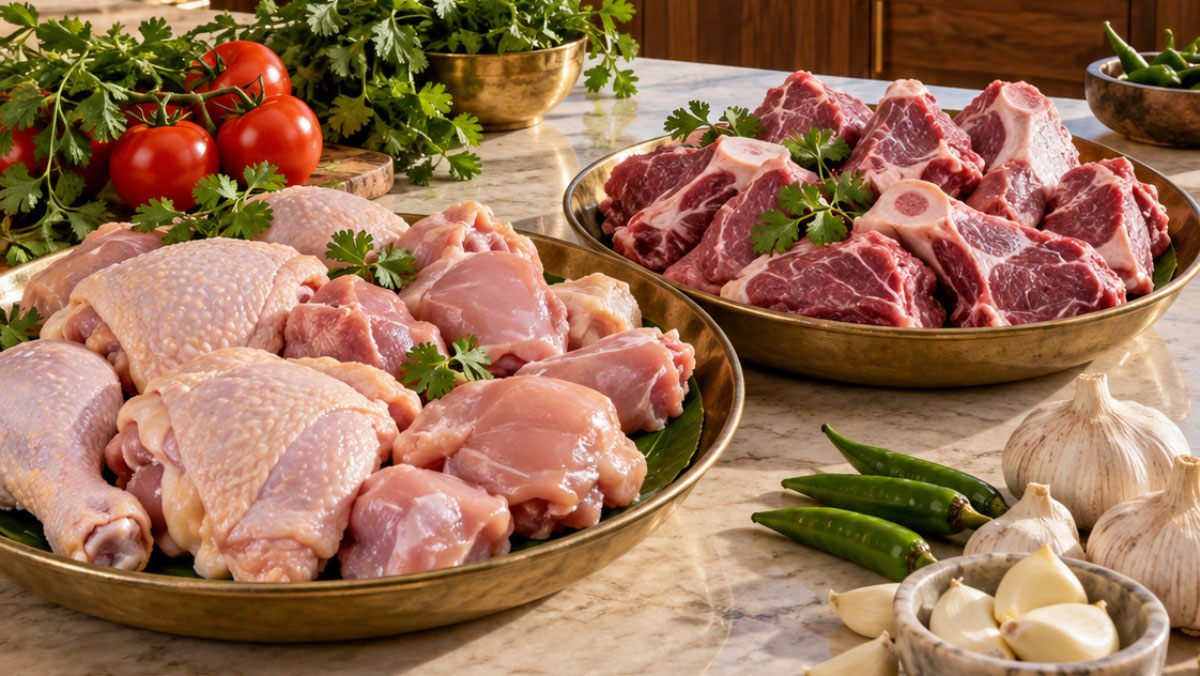
Preparing meat for Dashain? Keep raw ingredients separate, cook thoroughly and refrigerate promptly to help keep festive meals safe.
Eating Meat During Dashain? How to Cook, Serve and Store It Safely
A bowl of goat curry, freshly grilled sekuwa and a table full of family favourites are part of Dashain celebrations in many Nepali homes. But when meals stretch across the day and leftovers fill the kitchen, food safety can easily slip down the list.
Enjoying meat during the festival means paying attention to more than taste. Portion sizes, cooking methods and how quickly leftovers reach the fridge all matter.
A few practical habits can help you enjoy festive meals while looking after your health.
How much red meat should you eat?
Goat, buffalo, lamb and pork all count as red meat. They provide protein, iron, zinc and vitamin B12, but that does not mean larger portions are better.
The World Cancer Research Fund recommends that people who eat red meat limit it to about three portions a week, equivalent to roughly 350–500 grams of cooked meat in total.
That is a weekly amount, not a daily allowance or a minimum you need to eat.
During Dashain, serving a smaller portion can help, especially when several meals feature meat. For variety, replace some servings with lentils, beans, eggs, fish or chicken.
Understand the difference between fresh and processed meat
Processed meat has been preserved or changed through methods such as curing, smoking, fermentation or salting. Examples include bacon, ham and some sausages. Smoked, preserved sukuti can also fall into this category.
The World Health Organization’s cancer research agency classifies processed meat as carcinogenic to humans, based on sufficient evidence that it causes colorectal cancer. Red meat is classified as probably carcinogenic.
This does not mean that eating meat at one festive meal will cause cancer. The concern relates to eating habits over time, including how much and how often people consume it.
The recommendation is to eat little, if any, processed meat.
Avoid burning or heavily charring meat
The smoky flavour of sekuwa may be appealing, but blackened edges are best avoided.
Cooking meat at very high temperatures, particularly over an open flame, can produce chemicals called heterocyclic amines and polycyclic aromatic hydrocarbons, or HCAs and PAHs.
According to the US National Cancer Institute, these chemicals can damage DNA in laboratory studies. However, studies have not established a definitive link between exposure through cooked meat and cancer in humans.
To reduce exposure, avoid prolonged cooking over intense heat or direct flames. Consider preparing meat in a curry or stew, and remove charred portions before eating.
These precautions apply to chicken and fish as well as red meat.
Cook the centre, not just the surface
A browned exterior does not tell you whether meat has reached a safe temperature inside. A food thermometer offers a more reliable check.
FoodSafety.gov recommends an internal temperature of at least 74°C for chicken, including minced chicken. Other ground meats should reach at least 71°C, while leftovers should be reheated to 74°C.
Check the thickest part, keeping the thermometer away from bone.
Wash your hands with soap and water after handling raw meat. Keep raw meat and its juices away from salads and cooked food. Use separate chopping boards where possible, and thoroughly clean knives, boards and utensils between uses.
The fridge is part of the solution
Refrigerating meat does not make it harmful. Correct refrigeration is an important way to keep food safe.
Keep the fridge at 4°C or below and the freezer at −18°C or below. Store raw meat in a sealed, leakproof container so its juices cannot contaminate other food.
Under proper refrigeration, raw chicken and minced meat should generally be cooked within one to two days. Cooked meat leftovers should be used within three to four days. Freeze them promptly if you will not eat them within that period.
These storage limits assume the food has been handled safely from the start. Putting meat in the fridge after it has spent too long outside does not make it safe again.
Do not leave leftovers out overnight
Refrigerate cooked meat within two hours. If the surrounding temperature is above 32°C, refrigerate it within one hour.
Instead of leaving a large pot on the kitchen counter until it cools completely, divide the food into smaller, shallow containers and refrigerate promptly.
Thaw frozen meat in the fridge rather than leaving it on the kitchen counter for hours. Storing meat in meal-sized portions also makes it easier to use only what you need.
Make room for vegetables and lentils
Meat does not need to dominate every Dashain meal. Include vegetables, lentils, beans, whole grains and fruit to provide fibre and a wider range of nutrients.
There is no need to seek out one particular vegetable. Choose a variety of seasonal produce that is available and affordable.
Adding vegetables does not cancel out the risks of regularly eating too much meat, but it helps build a more balanced eating pattern.
If you already follow a prescribed diet for a health condition, continue following your clinician’s or dietitian’s advice during the festival.
The pleasure of a Dashain meal comes from favourite flavours and shared company. Smaller servings, careful cooking and safe storage can help keep those celebrations enjoyable.