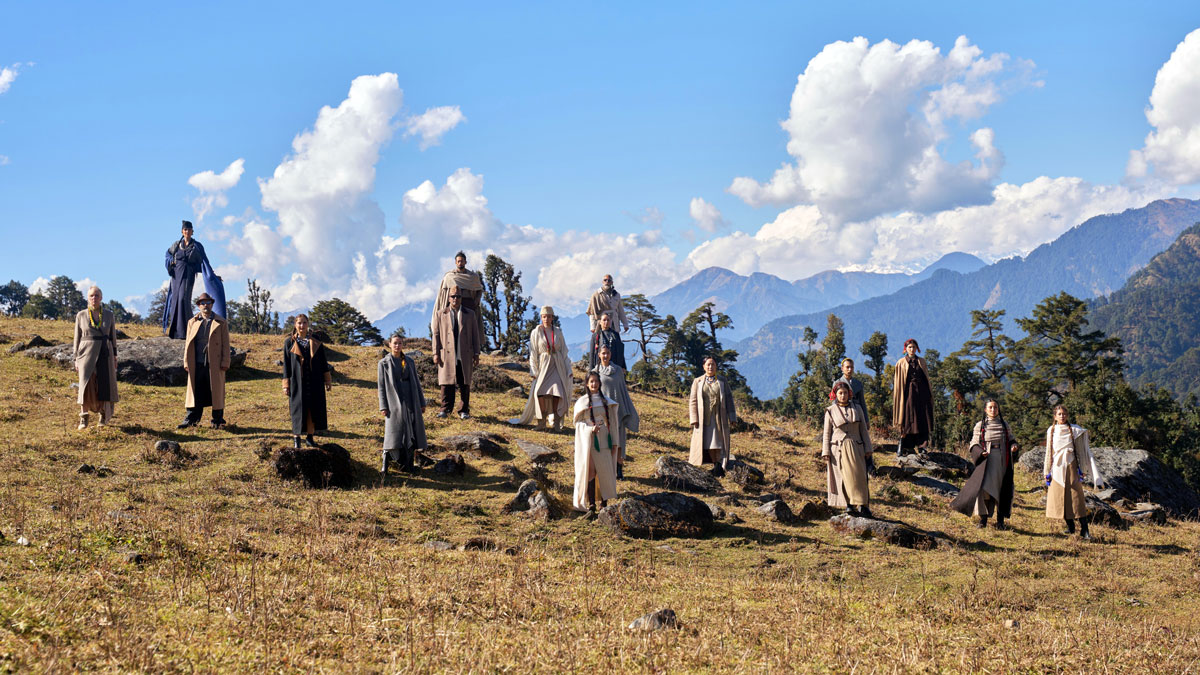
KASA presents its Farm to Fashion collection at approximately 3,000 metres in Lamasim, Bajura, highlighting locally sourced sheep wool against a Himalayan backdrop.
Local Sheep Wool Gets a Fashion Spotlight At 3,000 Metres in Bajura, Sudurpaschim
Featuring Nepali celebrities and international fashion professionals, the Himalayan showcase puts locally sourced sheep wool, rural enterprise and climate-conscious fashion in the spotlight.
Bajura’s locally produced sheep wool took centre stage on an extraordinary Himalayan runway on 4 November 2026, as Nepalese fashion brand KASA brought its Farm to Fashion – Climate Awareness Runway 2026 to Lamasim, near Porkhe Lake, at approximately 3,000 metres above sea level.
Set against the dramatic mountain landscape, the high-altitude fashion presentation brought together prominent Nepali celebrities, international fashion professionals, models and distinguished guests to showcase the potential of transforming a traditional rural resource into contemporary fashion.
Organised by Threads of the Himalayan Foundation in collaboration with KASA, the initiative placed Bajura’s sheep-farming communities at the heart of the fashion narrative. Rather than focusing solely on the finished garments, it highlighted the journey from locally sourced wool to fashion products, drawing attention to the need for stronger rural production networks, local processing facilities and access to wider markets.
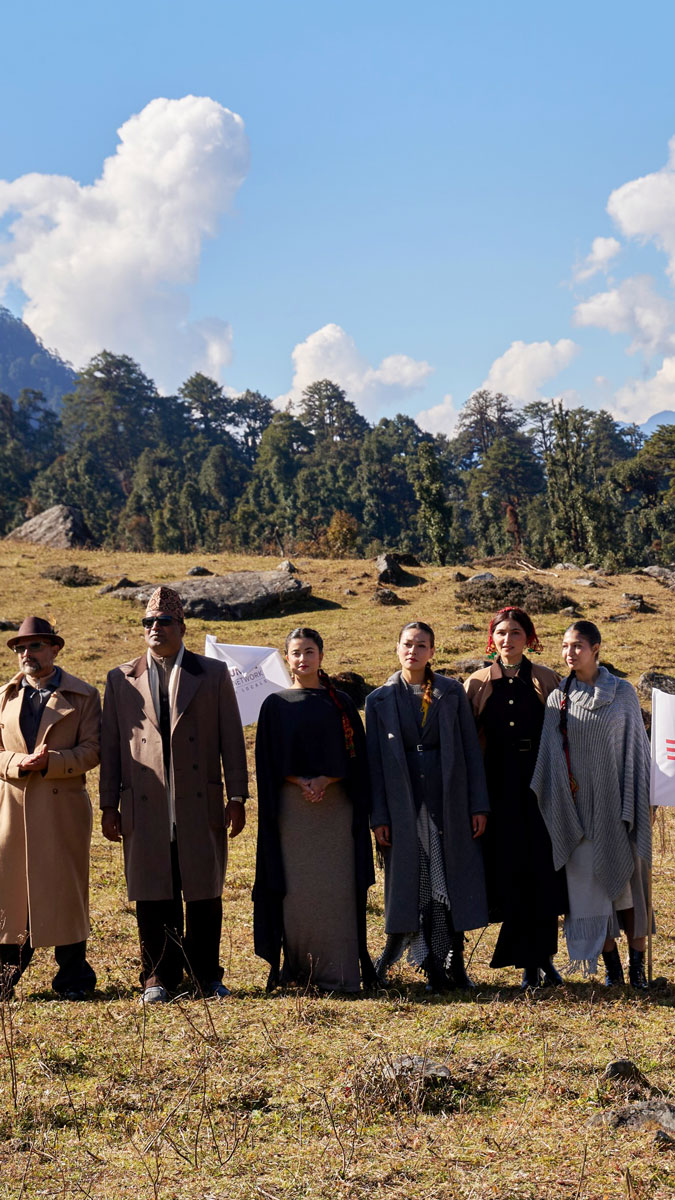
Featuring personalities actress Shweta Khadka, Miss Nepal World 2016 Ashmi Shrestha, model and actress Niti Shah, and international fashion professionals from Italy, France, Lithuania and Ukraine, the event gave a global-facing platform to a distinctly Himalayan resource.
Its significance extended beyond the runway, presenting fashion as a potential catalyst for rural entrepreneurship, women’s economic participation, sustainable livelihoods and destination promotion.
With Bajura reportedly home to more than 70,000 sheep, the initiative also drew attention to the district’s largely underdeveloped wool economy.
Its longer-term ambition is to strengthen the connection between livestock farmers, wool processing, textile craftsmanship and commercial fashion markets, potentially creating new economic opportunities for communities across the region.
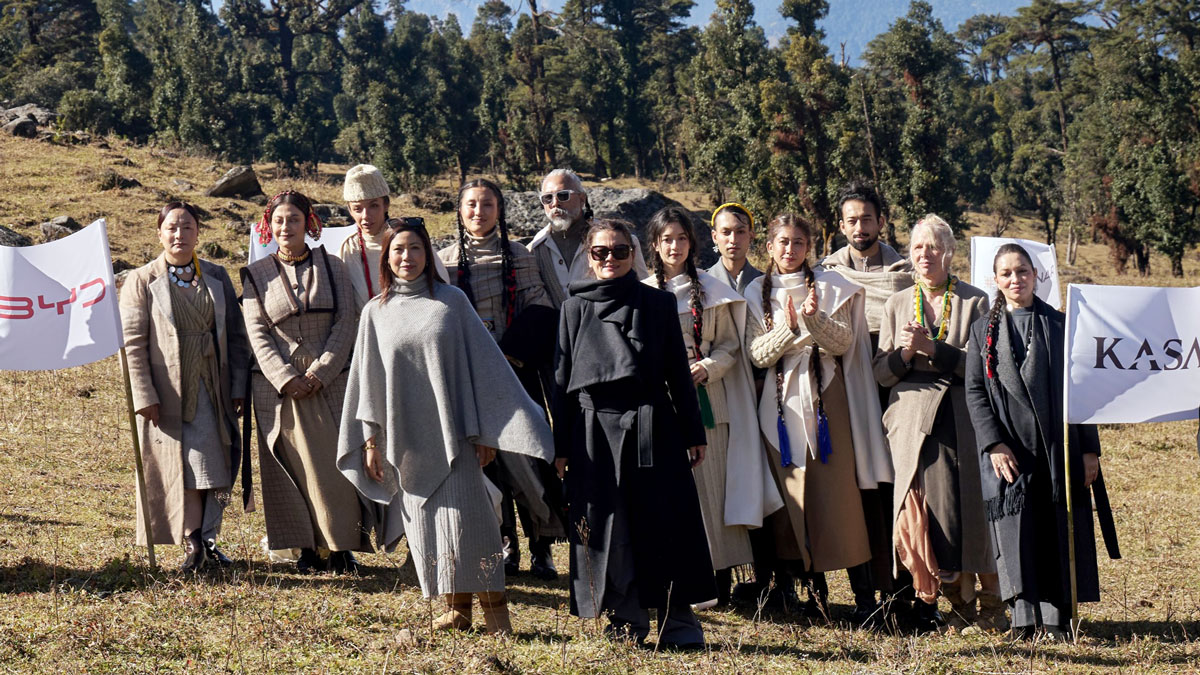
Participants gather at the Farm to Fashion – Climate Awareness Runway 2026, which brought Nepali personalities and international fashion guests to Bajura on November 4.
A Global Fashion Gathering in The Himalayas
The runway featured prominent Nepali personalities, including actress Shweta Khadka, Miss Nepal World 2016 Ashmi Shrestha, Miss Nepal World 2024 Aashma Kumari KC, Miss Nepal World 2026 Deepmala Dhakal, Miss Nepal International 2025 Urusha Bhandari, model and actress Niti Shah, fashion model Bhawana Pant, and actor and model Ayushman Deshraj Joshi.
International participation included Flavia Cannata, an Italian-French fashion stylist and talent scout; Lithuanian model Gabrielė Tevainytė; Italian fashion professional and former model Cristina Egger; and Ukrainian participant Marharyta Pohosian. Cannata, founder of Alwaysupportalent, brought extensive experience in fashion styling and talent scouting, while Tevainytė’s international modelling career includes luxury-brand collaborations and editorial appearances.
Their presence added an international dimension to a presentation firmly rooted in Nepal’s local resources. The convergence of entertainment personalities, fashion professionals and industry representatives also helped draw attention to the possibilities of connecting Nepalese fashion with wider markets.
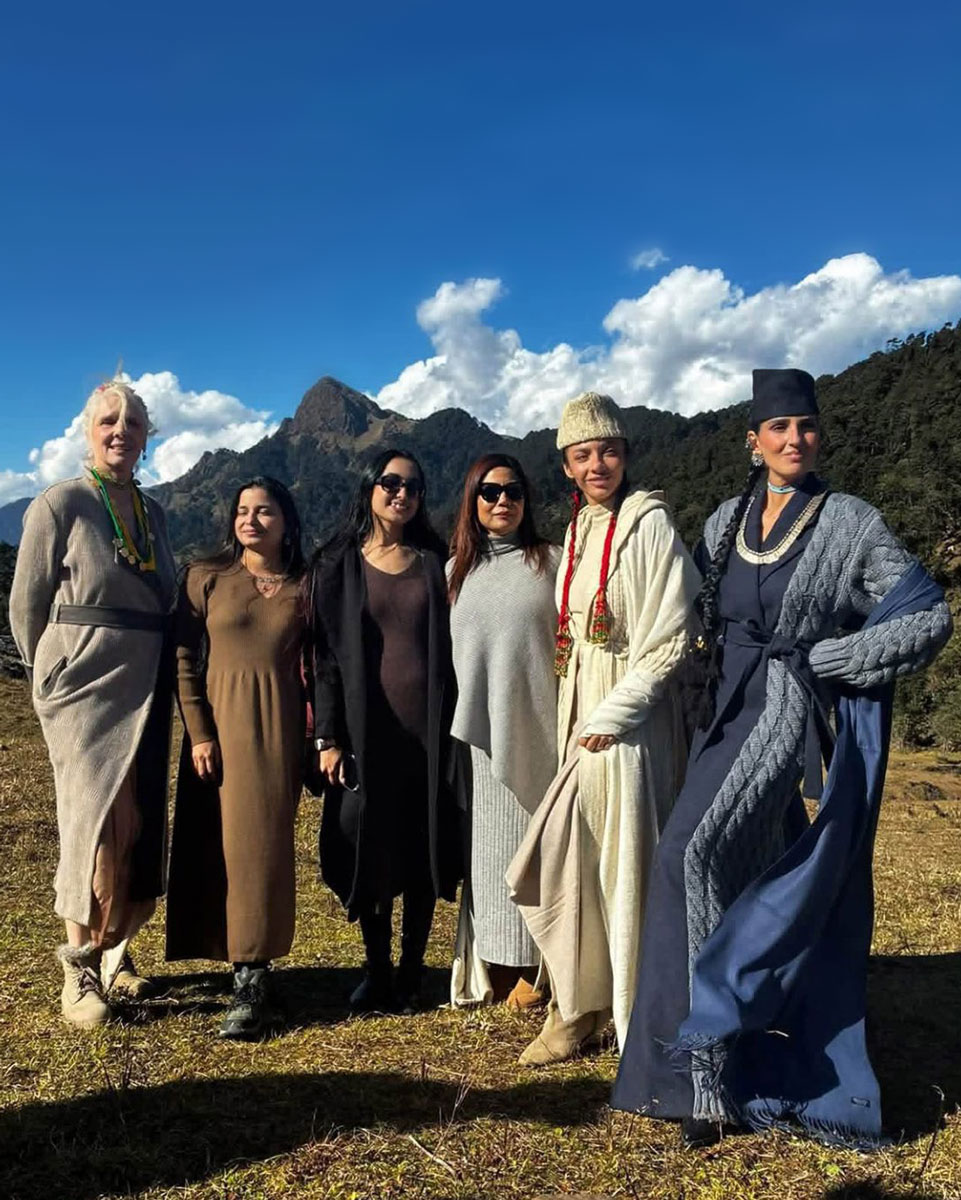
Layered silhouettes and knitted textures feature in a group portrait during KASA’s Himalayan fashion showcase.
From Local Wool To Contemporary Design
At the heart of the initiative was Bajura’s sheep-farming industry. According to figures reported in media coverage, the district has more than 70,000 sheep, with neighbouring Bajhang and Darchula also offering considerable wool-production potential. Yet the commercial value of this resource remains constrained by limited collection, processing and manufacturing infrastructure.
The runway showcased the possibilities of transforming locally sourced sheep wool into contemporary garments, bringing traditional materials into a modern design context. For KASA, founded and led by Ramila Nemkul Shrestha, the initiative reflects a broader ambition to connect farmers, raw materials, artisans and fashion markets.
A proposed wool collection and processing facility in Bajura forms an important part of this vision. By developing local capacity for wool preparation, processing and garment production, the initiative aims to strengthen the value chain, generate employment and create new income opportunities for rural communities.
Women, who have traditionally played an important role in livestock management and textile-related skills, could particularly benefit from expanded opportunities in local production and entrepreneurship.
Fashion, Climate Resposinility And Community Devlopment
The climate-awareness dimension gave the event a wider purpose. By highlighting locally sourced natural fibres and community-based production, the initiative encouraged greater attention to responsible material sourcing and the environmental and social implications of fashion.
Its central proposition was that sustainable fashion should extend beyond the finished garment to include the people, resources and processes behind its creation. Connecting local producers with designers and commercial markets could help preserve traditional skills while making rural industries more economically viable.
For Himalayan communities whose livelihoods are closely linked to livestock, agriculture and natural resources, such an approach offers an opportunity to combine traditional knowledge with contemporary enterprise.
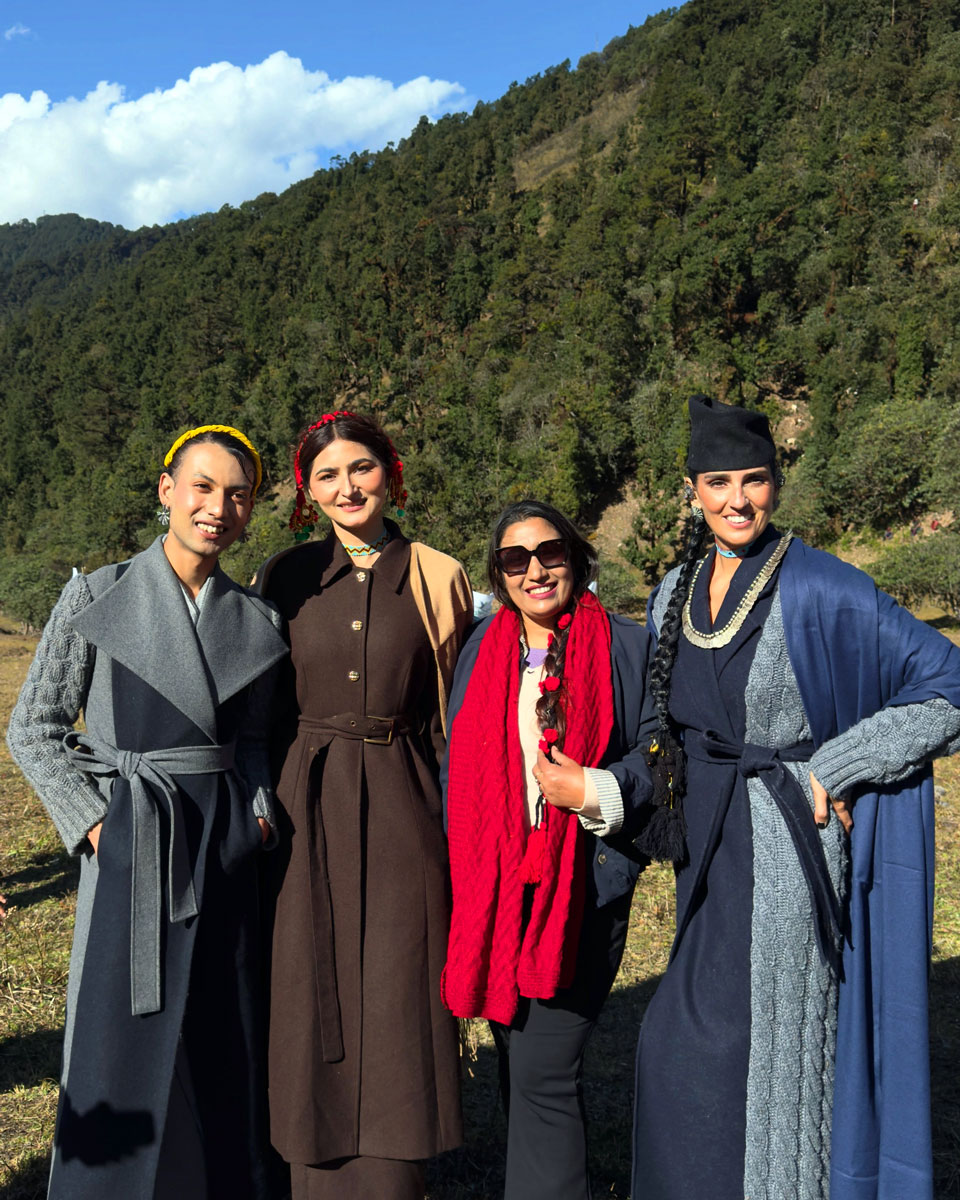
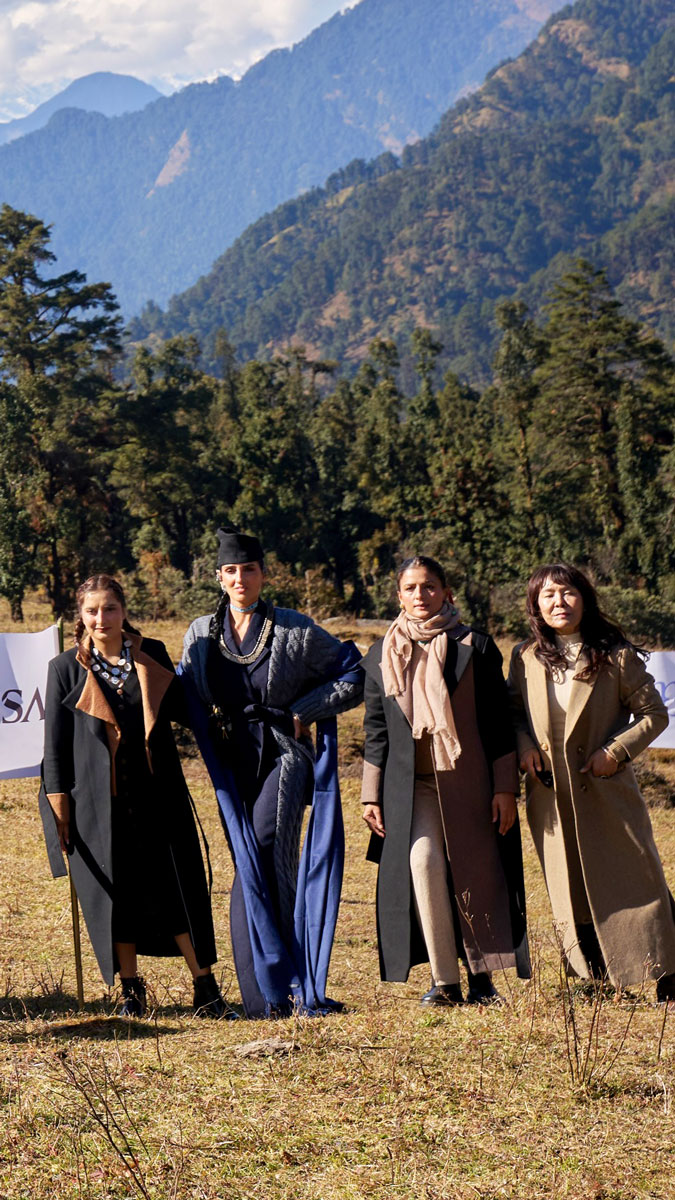
A group portrait captures a moment from KASA’s mountain showcase, which connected fashion with Bajura’s local wool and rural livelihoods.
Bajura as a Destination For Fashion and Tourism
Staging the runway at Lamasim, near Porkhe Lake, also served as a distinctive destination-promotion initiative. With its dramatic mountain scenery and proximity to the renowned Badimalika region, Bajura offers considerable potential for cultural, religious and nature-based tourism.
The programme reportedly brought a 55-member delegation from Kathmandu, creating an opportunity to introduce the region to a wider audience. Fashion, photography and media exposure became instruments for presenting Bajura’s landscape, culture and local enterprise beyond conventional tourism promotion.
The programme also incorporated cultural and culinary elements. The participation of renowned Nepali chef Santosh Shah added a culinary dimension, while traditional musical instruments, including the dholak and damaha, reinforced the cultural character of the gathering.
A Cross Sector Collaboration
The event brought together representatives from government, business, and tourism, agriculture and development sectors. Among the distinguished guests were former Minister Shraddha Shrestha; Baldev Regmi, former member of the Sudurpaschim Provincial Assembly; Janak Bohara, Mayor of Budhinanda Municipality; Govinda Malla, Chairperson of Himali Rural Municipality; and Maru Bista, Vice-Chairperson of Jagannath Rural Municipality.
Industry and institutional representatives included Dhan Prasad Lamichhane, President of the Pashmina Industry Association; Bal Bahadur Gurung, President of the Carpet Industry Association; Govinda Gurung, Chief Executive Officer of Agricultural Development Bank; and Arun G.C., associated with the Food and Agriculture Organization (FAO).
Reported supporting organizations included BYD, LAMINAR, FAO, CHN, MM Group, Lemon Tree, Summit Air, Sita Air and Buddha Air. Local hospitality providers and community contributors were also acknowledged for their support.
Beyond The Runway
The lasting significance of Farm to Fashion-Climate Awareness Runway 2026 will depend on translating its visibility into tangible outcomes: stronger links with sheep farmers, accessible processing facilities, skilled local production and reliable access to fashion markets.
For Nepal’s fashion industry, the initiative offers a compelling alternative to conventional design-led presentations. It shifts attention towards the origin of materials and the communities behind them, demonstrating how fashion can intersect with agriculture, craftsmanship, tourism and rural economic development.
By bringing Bajura’s wool to an international-facing runway, KASA and Threads of the Himalayan Foundation have presented a vision in which local resources can become the foundation of contemporary Nepalese fashion.
From the farm to the fibre, and from the fibre to fashion, the ambition is to make the Himalayan value chain part of Nepal’s next fashion story.