Nepali Entrepreneurs Build AI Echo, an AI Breakup Recovery App in the US
A breakup can leave someone replaying conversations, writing down what went wrong or fighting the urge to message an ex. Three young Nepali entrepreneurs are building an AI-powered app around those emotionally difficult moments.
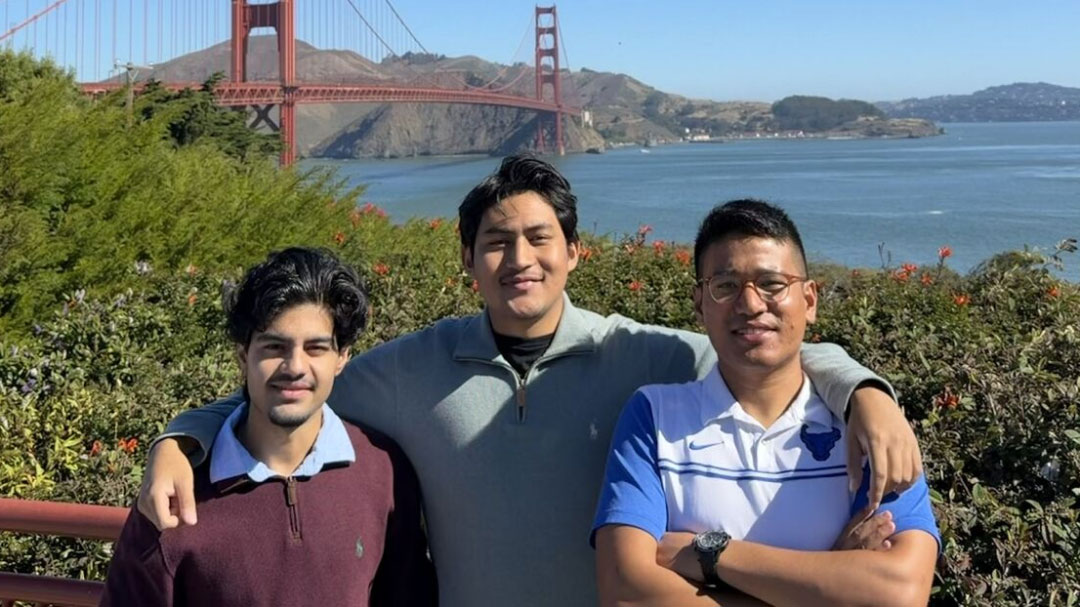
Sanij Shrestha, Aakrish Poudel and Oshan Maharjan are associated with AI Echo, the venture behind Echo: Break The Cycle, an emotional recovery app designed for people navigating breakups and relationship endings.
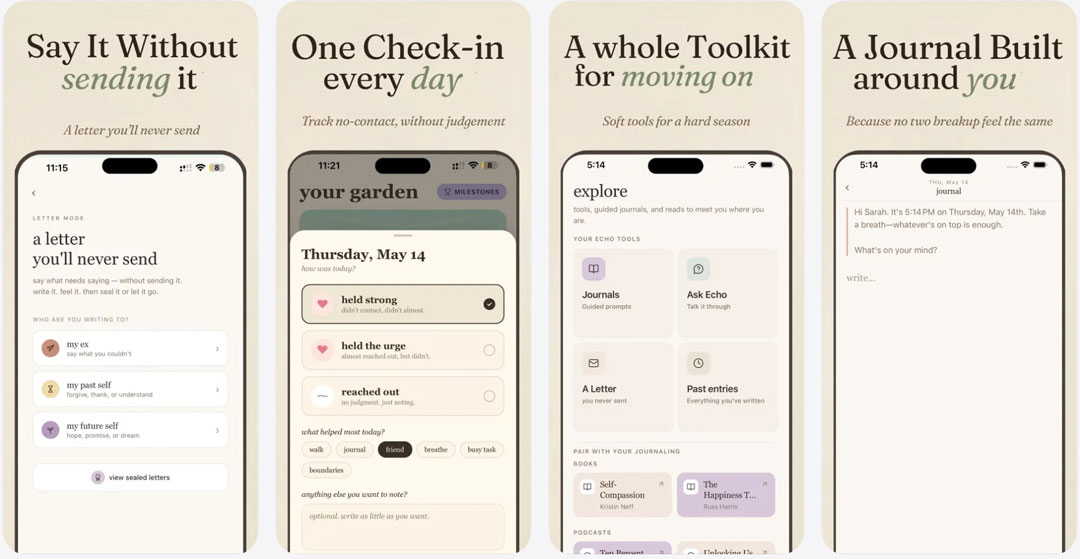
The app combines guided journaling, daily exercises, a “no contact” tracker and an AI companion that users can chat with or call. At the centre of the experience is a structured 90-day recovery programme intended to help users reflect on emotions, recognise relationship patterns and build healthier routines through small daily activities.
Echo’s current US App Store listing places it in the Health & Fitness category and shows a rating of around 4.8 out of 5 from roughly 360 ratings. The app is free to explore, with additional features available through in-app purchases.

Its daily exercises are described as drawing on principles associated with Cognitive Behavioural Therapy (CBT), Acceptance and Commitment Therapy (ACT) and attachment theory. Other features include guided journal prompts, a progress-based “Garden,” voice journaling and tools for tracking periods of no contact with a former partner.
The AI companion can also use a person’s journal entries, check-ins and recorded patterns to provide more contextual conversations, according to the App Store description. AI Echo’s official website similarly presents the product around relationship patterns and emotional reflection.
Public profiles connect all three Nepalis with the venture. Aakrish describes himself publicly as a co-founder of AI Echo, while Sanij and Oshan list AI Echo among their professional experience. Oshan has also posted publicly about scaling the company alongside Sanij and Aakrish.
Aakrish’s public profile has described AI Echo as being backed by Cintrifuse, a Cincinnati-based startup and venture organisation. However, a direct investment in AI Echo could not be independently confirmed through the publicly accessible Cintrifuse material reviewed for this story.
Social media posts have also circulated a reported $5 million valuation, equivalent to approximately Rs. 76 crore. That figure has not been independently confirmed through an official funding or valuation announcement from AI Echo or Cintrifuse.
The distinction matters: a startup valuation represents an estimated value assigned to a company, usually in connection with an investment or financing discussion. It does not mean its founders received the entire valuation amount as funding.
For the Nepali team, Echo brings a familiar human experience into one of technology’s rapidly expanding areas: AI-powered personal support.
The developers also draw an important boundary around the product. Echo is presented as a tool for reflection and emotional support, not as therapy or medical care. Its App Store listing advises people experiencing a crisis to contact appropriate emergency services or a trusted person instead.