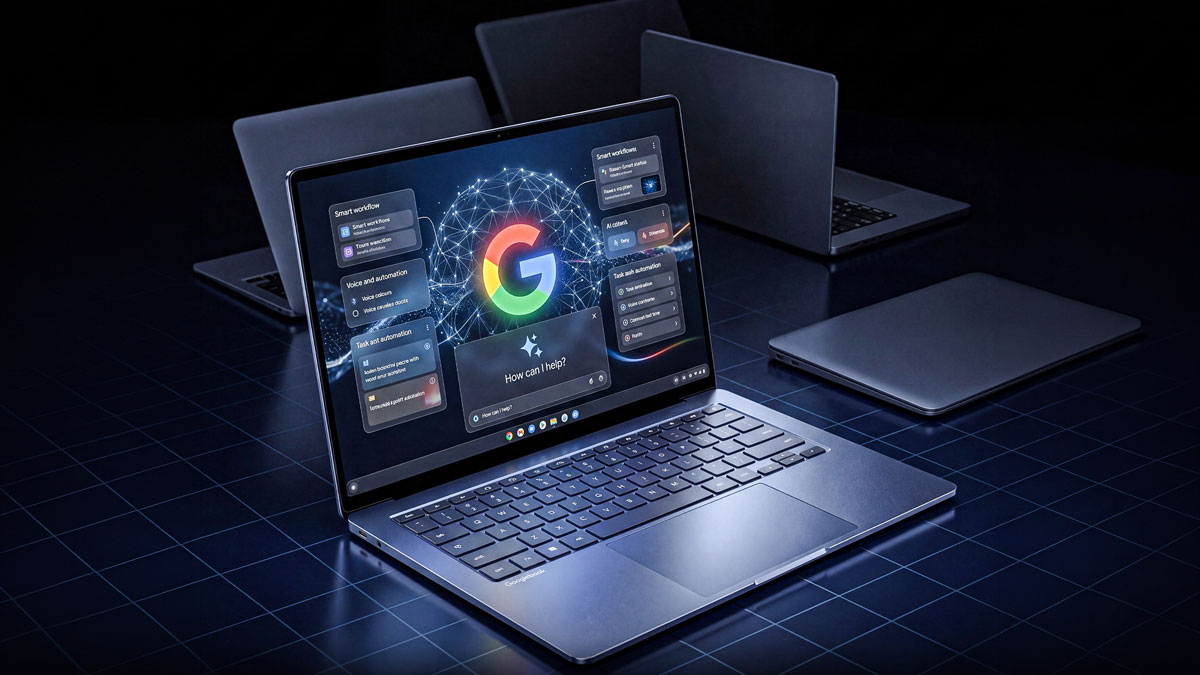
Google is making a major new push into premium personal computing with Googlebook, a new family of AI-focused laptops built around Gemini and designed to work closely with Android phones.
First previewed in May 2026, Googlebook officially opened for pre-orders on September 21, with prices starting at $899. Rather than producing the laptops on its own, Google has partnered with Acer, ASUS, Dell, HP and Lenovo for the first generation of devices.
The first models are scheduled to reach stores in the United States on October 4, followed by Canada, the UK, Ireland, France, Germany and Australia on October 5.
Googlebook is more than a new Chromebook
Despite the familiar name, Google is positioning Googlebook as a new category of flagship laptops rather than simply another Chromebook.
Googlebook is built on the Android technology stack while borrowing desktop foundations from ChromeOS, including the desktop-class Chrome browsing experience. The result is a platform that combines Android apps, traditional laptop features and deeper integration with Android smartphones.
Chromebooks remain a separate part of Google’s computer strategy. Google describes them as devices focused on simplicity, speed and everyday computing, while Googlebooks are designed around premium materials, stronger performance, Android connectivity and advanced AI features.
Gemini Intelligence moves directly into the desktop
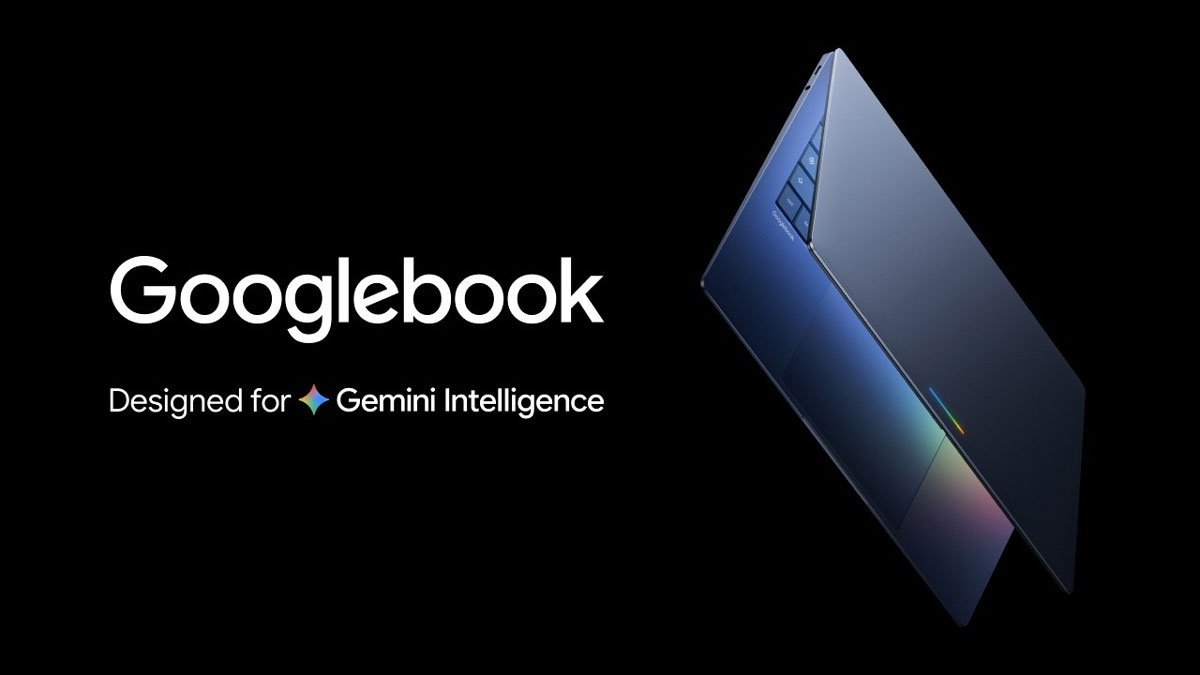
At the centre of the Googlebook experience is Gemini Intelligence, which brings Google’s AI tools more deeply into everyday laptop tasks.
One of the standout features is Magic Pointer, an AI-powered evolution of the traditional computer cursor. The technology draws on work from Google DeepMind and allows Gemini to understand the text, images and other content a user selects or points toward on screen.
Instead of opening a separate AI chatbot and manually supplying context, users can summon Gemini while working and ask it to explain, compare, organize or create something based on what is already on screen.
Google has demonstrated Magic Pointer performing tasks such as turning information from a webpage into calendar events, analysing suspicious emails and working with multiple selected images.
Another feature, Rambler, is designed to transform spoken streams of thought into cleaner written material. Google says it can remove verbal mistakes and filler, organize action items and handle multilingual speech.
Create My Widget, meanwhile, lets users describe the kind of desktop widget they want and have Gemini generate it without requiring coding knowledge.
Designed to work closely with Android phones
Googlebook could hold particular appeal for Android users because Google is trying to make the laptop and smartphone feel like connected parts of the same ecosystem.
With Continue On, compatible activities started on an Android phone can be resumed on a Googlebook. Quick Access allows users to view, search and open files and photos stored on their phone through the laptop, while Cast My Apps streams phone apps into a desktop window without requiring them to be installed separately on the computer.
The tighter integration requires a compatible phone running Android 17 or later for supported cross-device features.
It is a strategy that puts Google more directly into the connected-device territory long associated with Apple’s iPhone and Mac ecosystem, while also giving Android users another option beyond traditional Windows laptops.
Five manufacturers lead the first Googlebook lineup
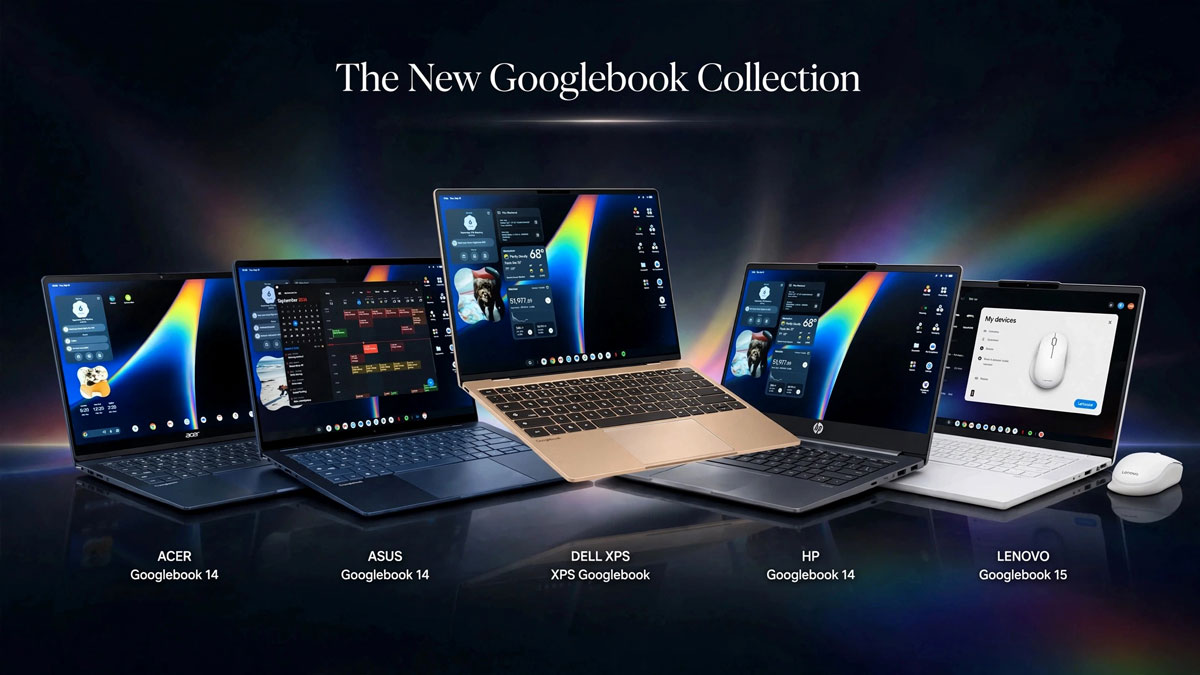
Google’s first wave of Googlebooks comes from Acer, ASUS, Dell, HP and Lenovo.
The lineup starts with the Acer Googlebook 14 at $899, while other models extend further into the premium price range. Google’s current range includes the ASUS Googlebook 14, XPS Googlebook, HP Googlebook 14 and Lenovo Googlebook 15.
Across the lineup, Google is emphasizing materials such as aluminum, magnesium alloy and carbon fibre, along with touchscreens, backlit keyboards and displays reaching up to 2.8K OLED resolution.
Intel and Qualcomm processors power the first machines, accompanied by dedicated neural processing units capable of more than 45 TOPS on selected models. Google also claims battery life of up to 14 hours, depending on the device and usage.
Another distinctive element is the return of Google’s Glowbar, an exterior light strip that can display charging progress and animate during some Gemini interactions.
Google says Googlebook OS will receive regular feature releases and updates for up to 10 years. Purchases also include 12 months of Google AI Pro for eligible users, alongside other limited-time software benefits.
Desktop apps could become an important test
Googlebook’s Android foundation gives it access to a huge library of applications, but how well those apps translate to a full desktop environment may become one of the platform’s most closely watched questions.
In an early hands-on with Googlebook OS, 9to5Google found an interface that felt strongly influenced by Android and Pixel devices, including familiar settings, an Android-style app launcher and desktop widgets.
However, the publication noted that opening services such as Gmail and Google Calendar brought up web-based versions rather than their Android apps. Google told the publication that developers can decide whether the web or Android version makes the most sense for their applications. The reviewer argued that stronger desktop-focused first-party applications would make the new platform more convincing.
That distinction could become important because Googlebook is entering the same premium-computing market occupied by established Windows PCs and Apple’s MacBook lineup.
When can you buy Googlebook?
Googlebook pre-orders opened on September 21, 2026, through the Google Store, Best Buy and selected retailers, with prices starting at $899.
Retail sales begin in the United States on October 4, followed by Canada, the UK, Ireland, France, Germany and Australia on October 5.
Google’s current official availability announcement does not list Nepal, and no official Nepal pricing has been announced. Until Google or an authorized local distributor confirms availability, prices circulating for Nepal should therefore be treated as unofficial estimates.
For Android users, Googlebook represents one of Google’s most ambitious attempts yet to bring its smartphone ecosystem, Android applications and Gemini AI together in a premium laptop experience.