Namuna’s 21st Graduation Fashion Show ‘Journey of Fashion XXI’ Reimagines Nepal’s Heritage
From temple craftsmanship and traditional jewellery to Himalayan journeys, divine feminine strength and futuristic couture, Namuna College of Fashion Technology’s 21st graduation fashion show brought six collections together.
A temple’s carved details, the rhythm of terraced fields, the ornaments passed through generations and the journeys of Himalayan herders all found a place on the runway at Namuna College of Fashion Technology’s 21st graduation fashion show. Across six collections, 54 graduating designers explored how Nepal’s cultural heritage could inspire clothing that speaks to the present while imagining the future.
Held on October 10, 2026, at The Plaza, Pulchowk, Lalitpur, Journey of Fashion XXI unfolded under the title Anantarūpavitānam. The showcase brought together 54 creations shaped by the central theme, “Cosmic Threads of Heritage: Nepal Beyond Time and Universe.”
The title, conveying the idea of an infinite tapestry of forms, reflected the range of expressions within the presentation. History, identity, spirituality, nature and technology provided different starting points for the designers, who translated their research into silhouettes, surfaces, textures and styling.
Some collections looked closely at the craftsmanship embedded in Nepal’s architecture and everyday objects. Others explored the relationship between communities and their surroundings, the symbolism of divine feminine power, or the possibilities of fashion in an imagined technological future.
Together, they presented heritage as an active part of the design process: something to study, interpret and carry forward through new creative work.
Organised and managed by NCFT’s 21st graduating batch, the event marked the culmination of the students’ academic and artistic journeys. It also gave them responsibility for bringing a fashion presentation to life, from developing individual garments to coordinating the larger showcase.
As an integral practical component of the college’s Bachelor of Fashion Design (BFD) and Bachelor of Fashion Design and Management (BFDM) programmes, the show connected research, concept development, textile experimentation, garment construction and styling with the demands of a public runway.
International fashion choreographer and media personality Rojin Shakya choreographed the presentation, bringing movement and continuity to the six collections. Shreetika Shakya, Subina Raut, Alish Ranjit and Swastika Bhari handled event coordination.
For the graduating designers, the finished garments represented only the most visible part of the work. Behind them lay the decisions about materials, construction, proportion and presentation that turned cultural inspiration into a complete collection.
Forged by Heritage: Ancestral Craftsmanship in Crimson, Black and Gold
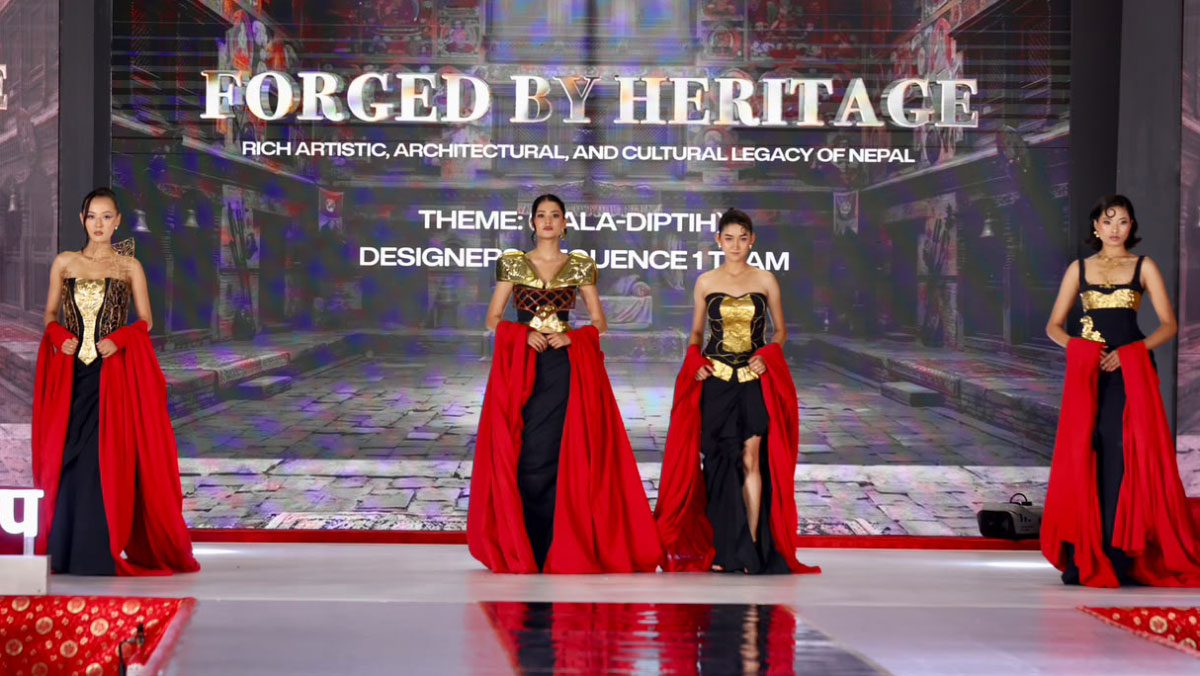
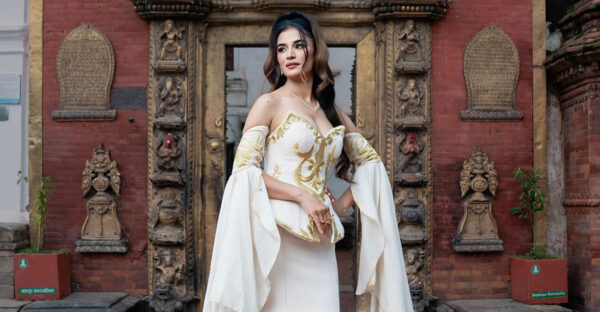
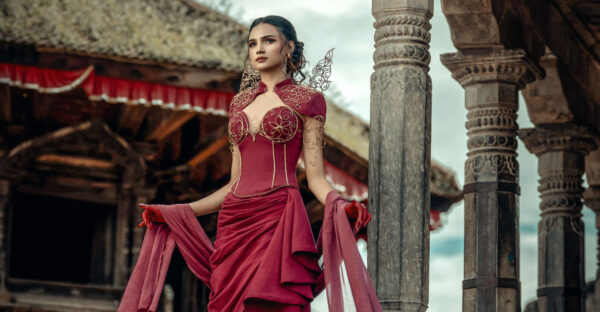
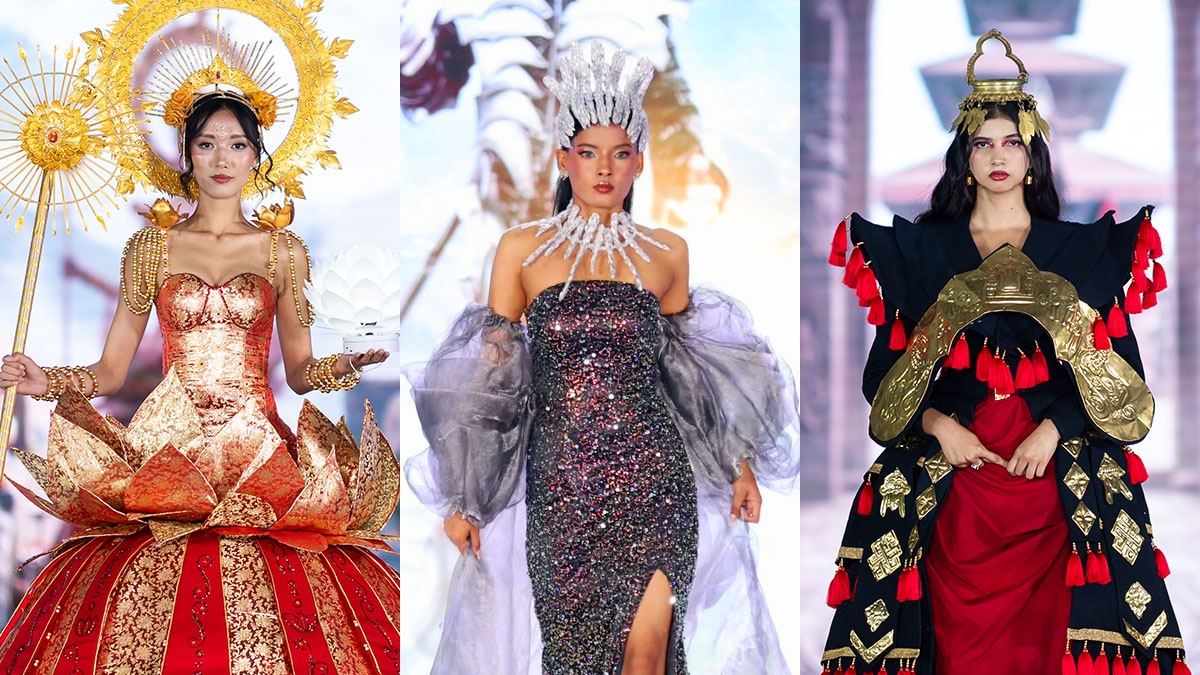
Opening the runway, Forged by Heritage drew its inspiration from Nepal’s artistic inheritance. Paubha paintings, temple woodcarving, traditional weaving, brass craftsmanship and sacred architecture provided the foundation for a collection rooted in the details of ancestral craft.
The designers explored how these references could influence the structure of clothing as well as its decoration. Architectural bodices brought a sense of form and construction, while carved-inspired details recalled the intricate work found in traditional buildings. Woven textures and antique-gold embellishments introduced further connections to the hands and materials behind Nepal’s craft traditions.
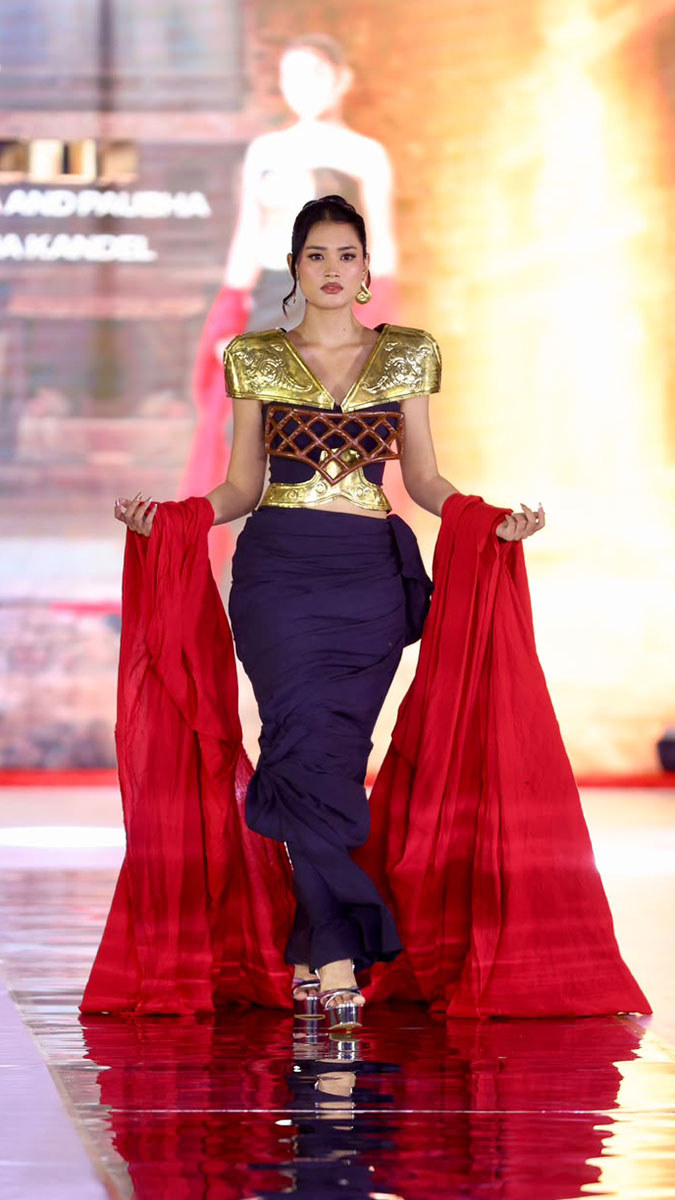
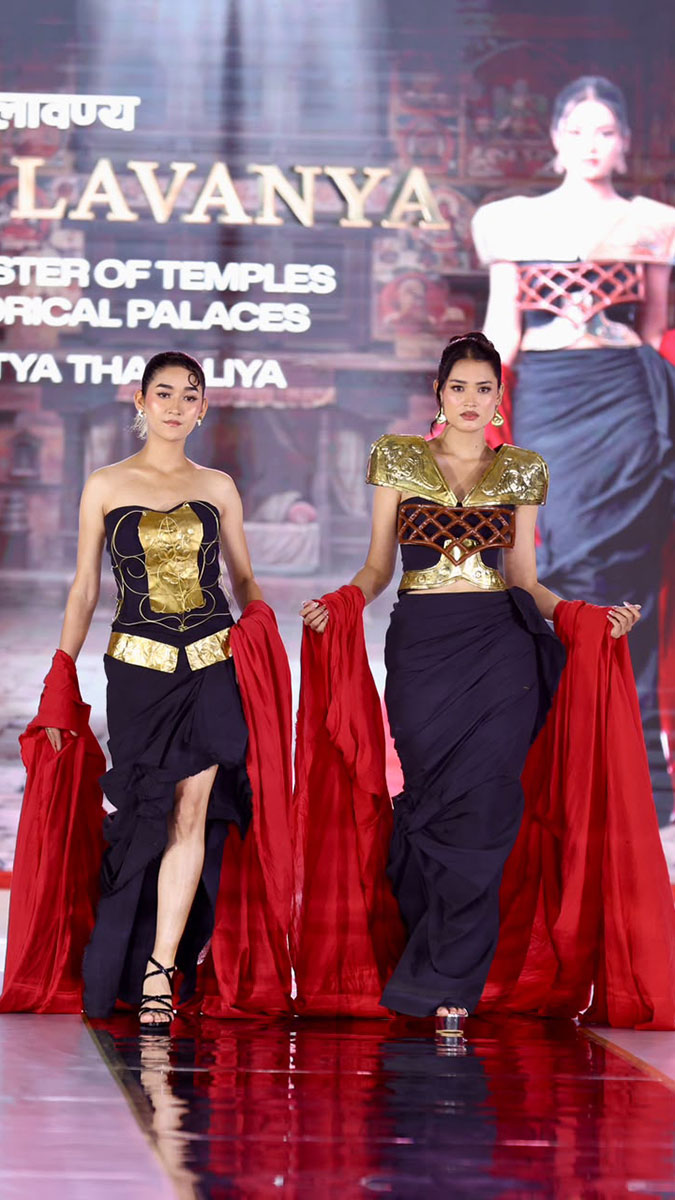
A palette of crimson, black and gold gave the collection a dramatic character. These colours supported its references to sacred art and metalwork, allowing shape, texture and embellishment to work together within a consistent visual language.
The collection’s interest lay in the movement from one medium to another. Details associated with a painting, a carved surface or a crafted metal object became ideas for a bodice, a textile treatment or a contemporary silhouette.
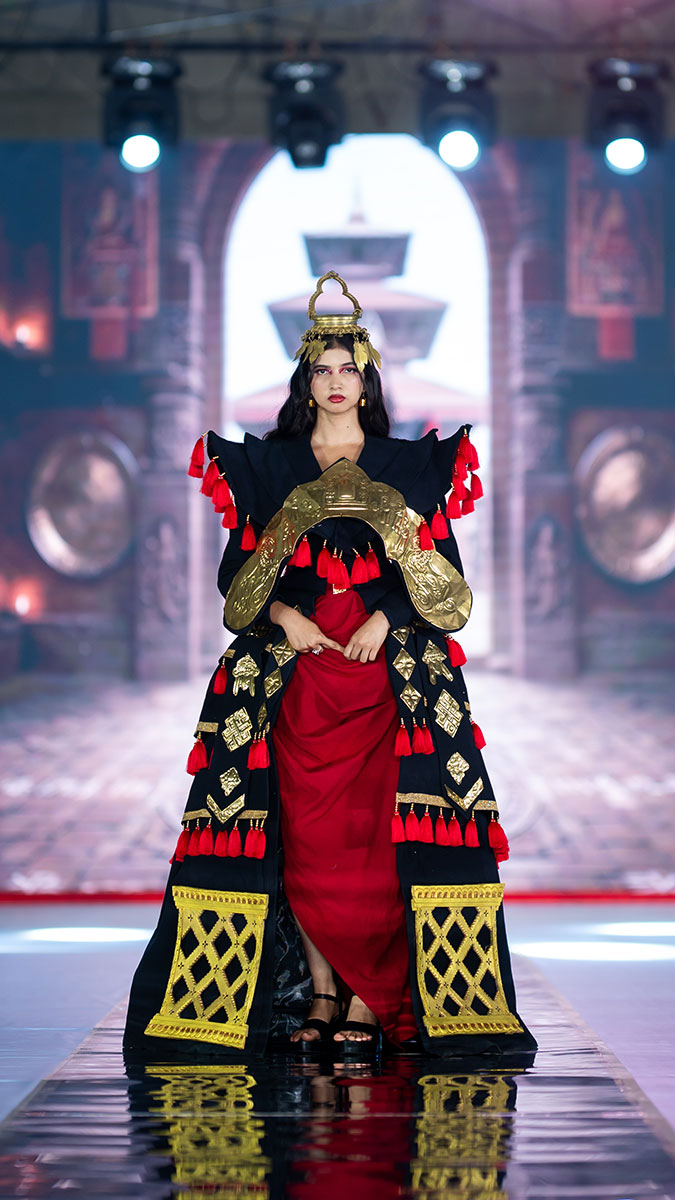
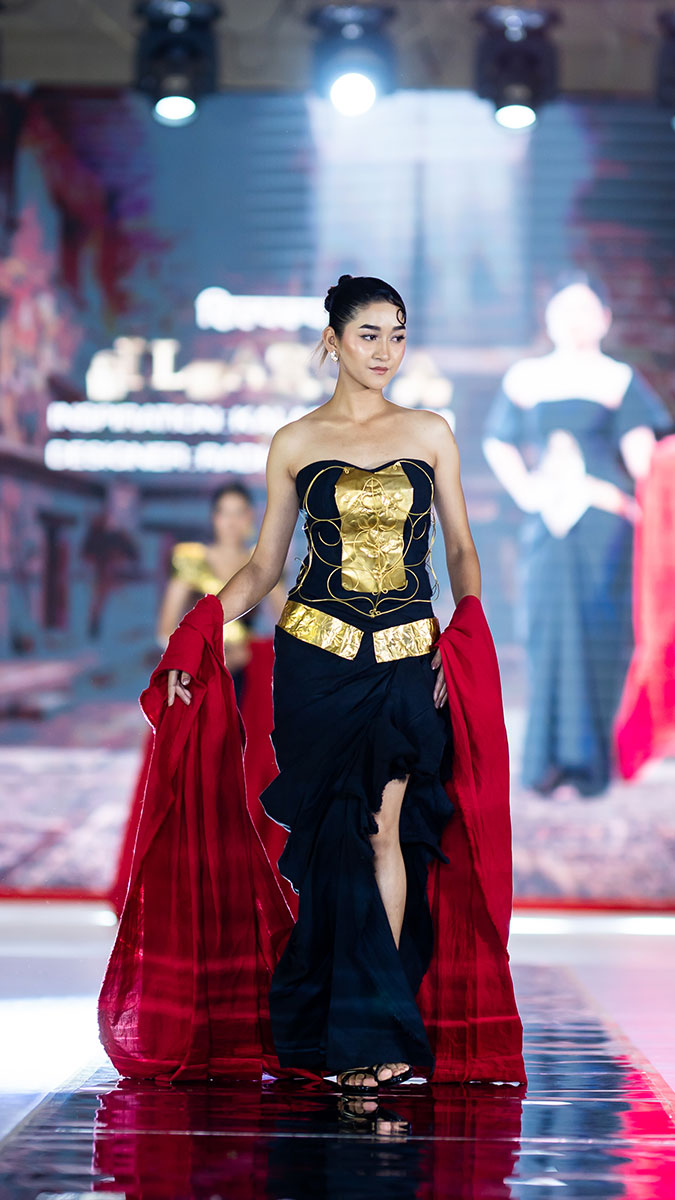
Through this approach, the designers explored how traditional craftsmanship could continue to influence fashion without limiting the garments to familiar forms. The cultural references remained central, while the clothing gave them a different setting and purpose.
Forged by Heritage was created by Naincy Shrestha, Angela Chaudhary, Sushma Adhikari, Radha Shrestha, Aaditya Thapaliya, Prativa Kandel, Kusum Pariyar and Rusana Lwagun.
Terra Sutra: Threads of Regeneration Looks to Nepal’s Agricultural Landscapes
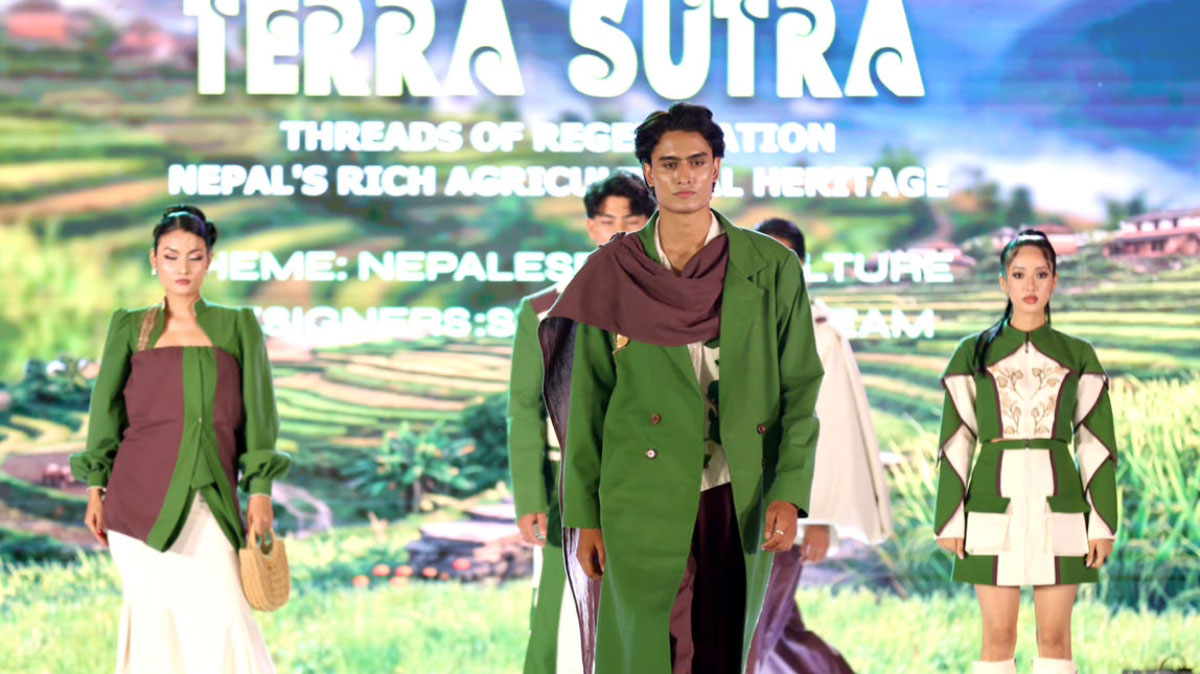
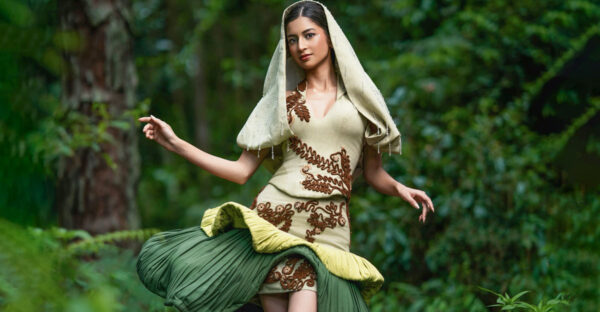
The second collection, Terra Sutra: Threads of Regeneration, shifted the focus from built heritage to the land. Inspired by rice, wheat, maize, tea and millet, it explored agriculture as a source of visual ideas, cultural knowledge and environmental reflection.
Terraced fields, grains, traditional baskets and seasonal cycles shaped the collection’s direction. These references connected the garments with landscapes and practices that sustain communities across Nepal.
The collection also considered how clothing might respond to ideas of regeneration and adaptability. Modular silhouettes, transformable garments and mindful material choices formed part of that exploration, placing attention on the way a garment can change and the decisions involved in making it.
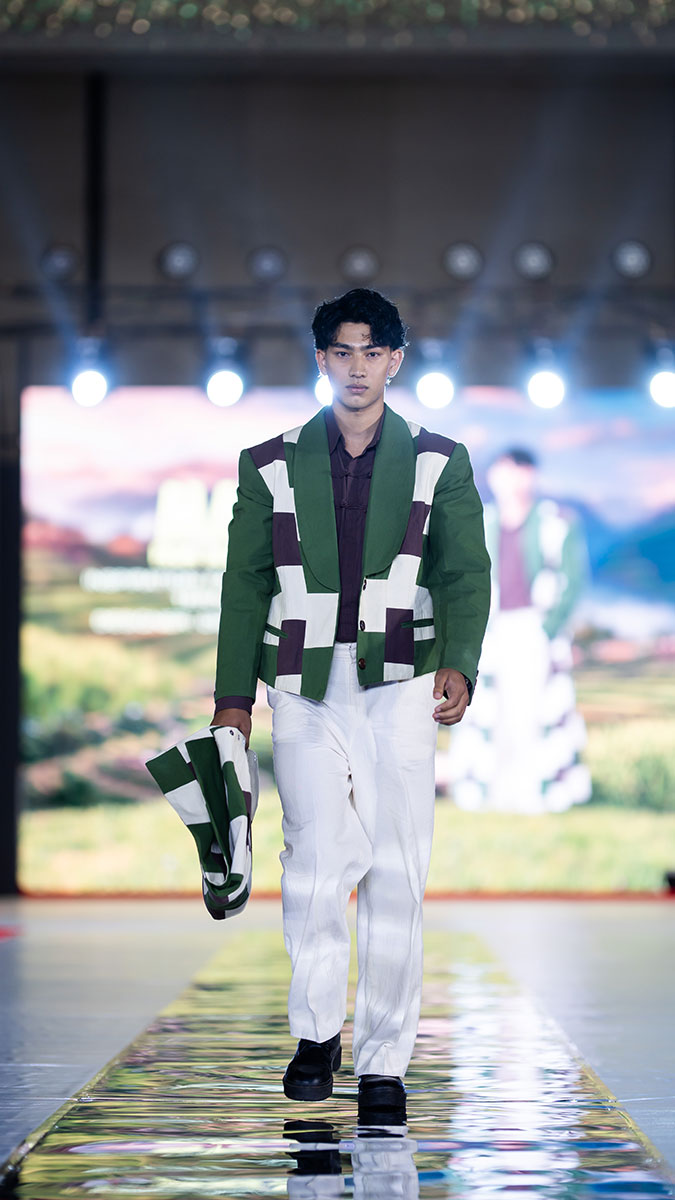
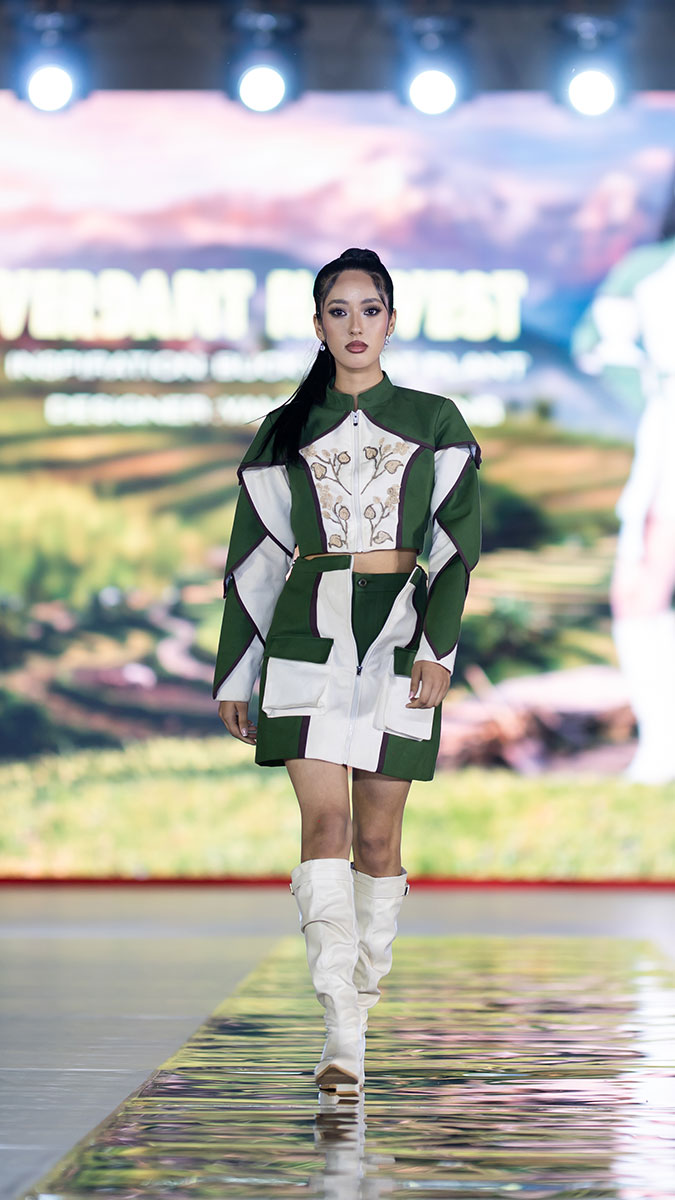
Its sustainability theme centred on the relationship between fashion, resources and inherited knowledge. Agriculture offered a way to consider how people work with the land, respond to changing seasons and pass practical understanding from one generation to the next.
By bringing those ideas into garment design, the team gave familiar agricultural references a different form. The shapes and rhythms of cultivated landscapes became part of a fashion narrative about resilience, responsibility and renewal.
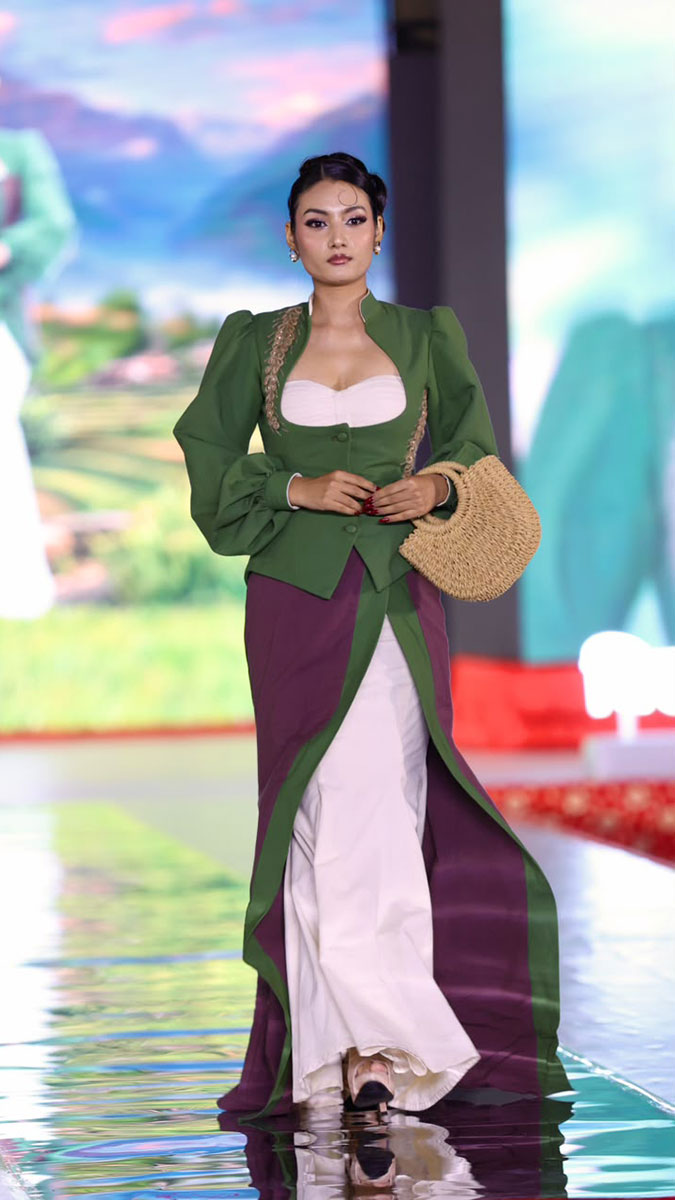
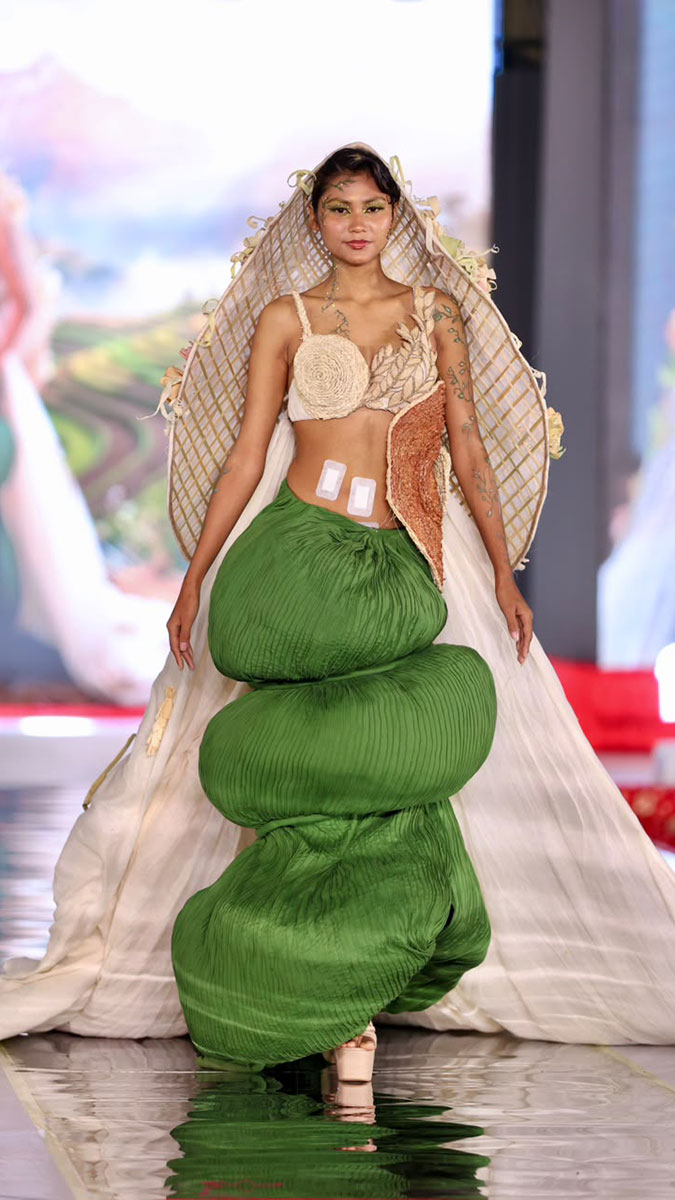
Terra Sutra also broadened the evening’s interpretation of heritage. Alongside monuments and decorative arts, it recognised farming practices and everyday knowledge as valuable sources of cultural expression.
The collection was developed by Isha K.C., Barsha Shahi, Swastika Bhari, Dipika Chaudhary, Rojana Shakya, Asmita Angbang, Yamuna Gurung, Suhangma Limbu and Sajina Khatri.
Nepalese Gilded Spine: Traditional Jewellery Becomes a Language of Identity
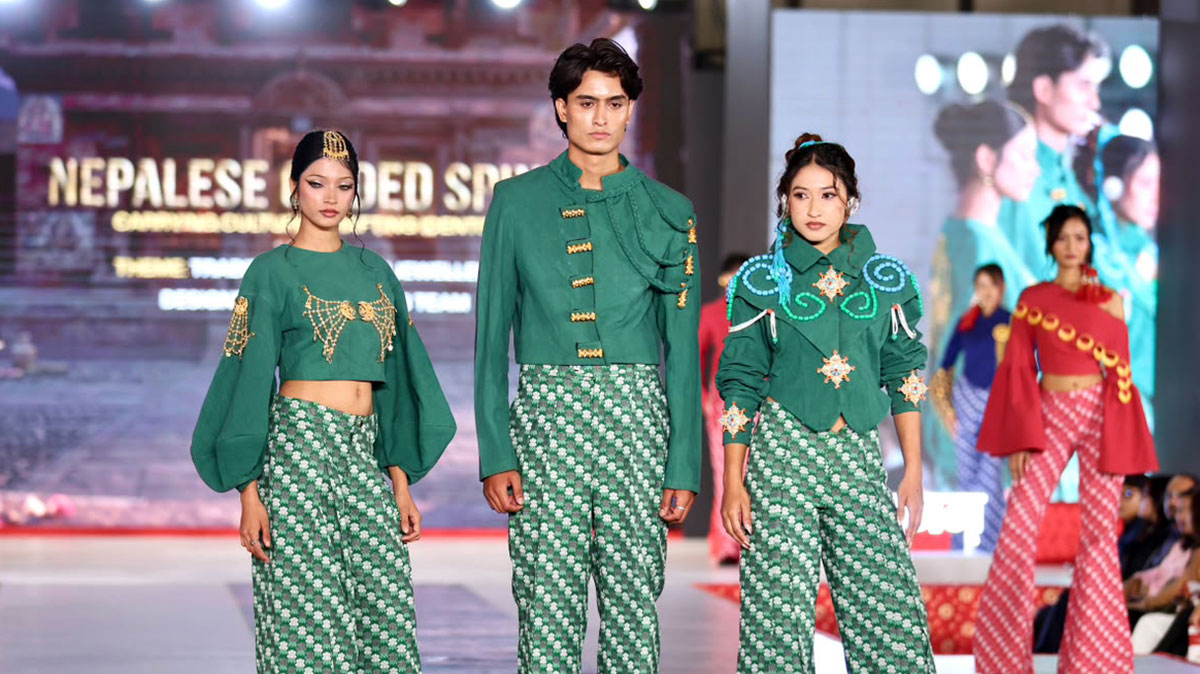
The third sequence, Nepalese Gilded Spine, explored the diversity of Nepal’s traditional jewellery and the meanings carried within it.
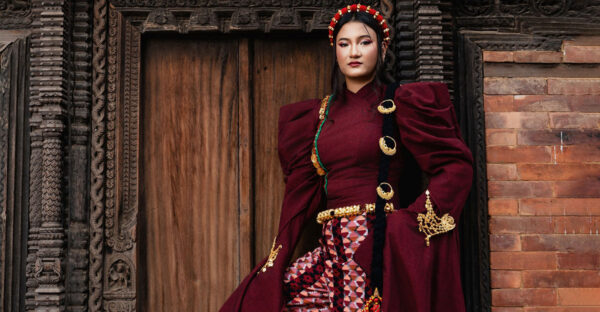
Ornaments associated with Magar, Tamang, Newar, Madhesi, Sherpa, Brahmin, Tharu, Gurung and Rai communities informed the collection. The designers used these cultural references to develop contemporary silhouettes, bringing them together with Dhaka textiles and vibrant colour combinations.
The spine served as the central metaphor. It represented strength, continuity and the structures that support both individual and collective identity. Within that idea, jewellery became a way to explore how craftsmanship and cultural belonging remain connected across generations.
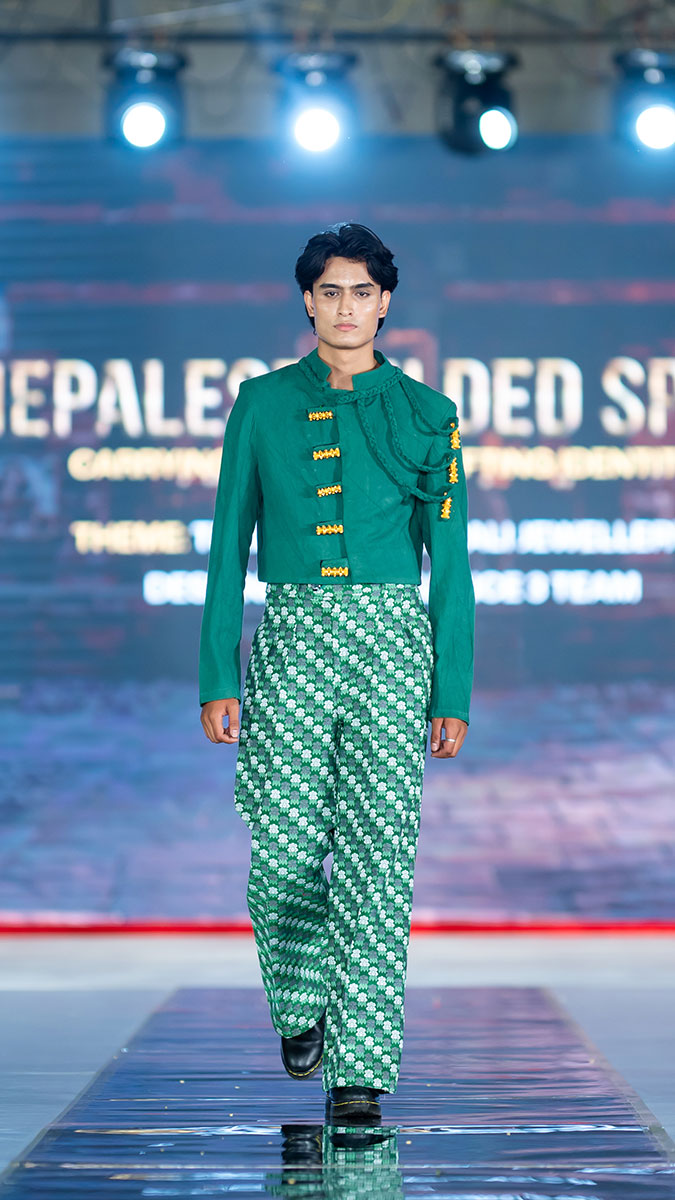
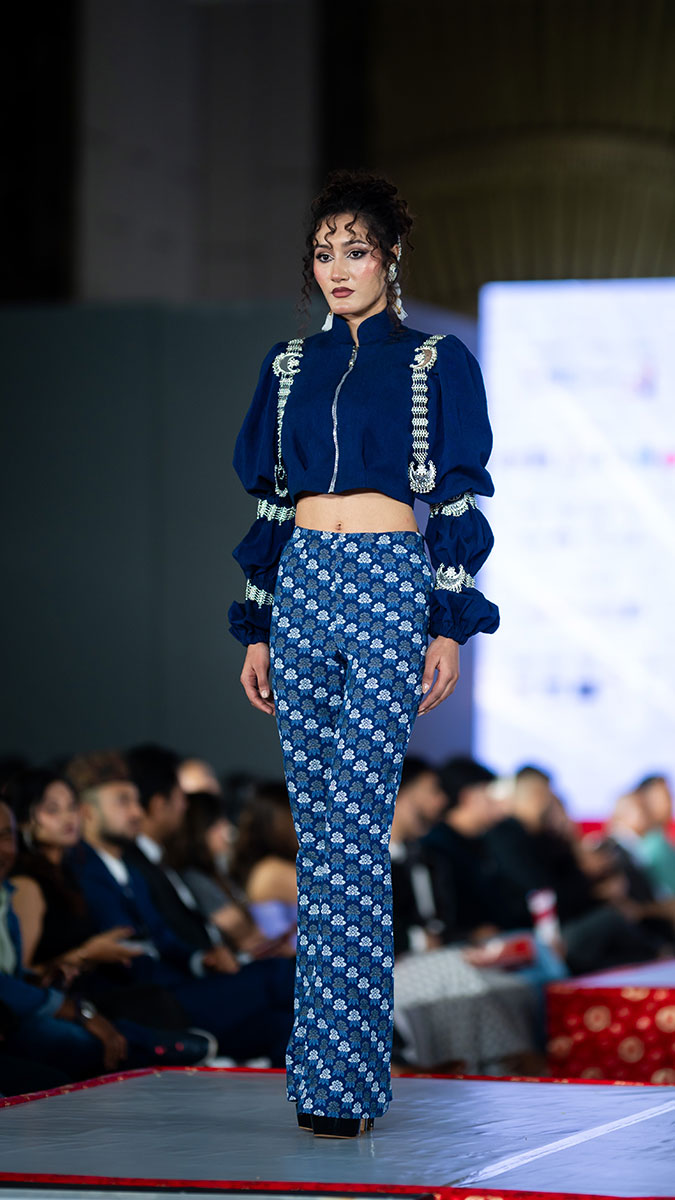
The collection considered adornment as something that carries memory. An ornament can express a connection to community, preserve the skill of its maker and become part of a family’s history. Those associations gave the designers a starting point for garments that looked beyond the decorative qualities of jewellery alone.
Translating ornaments into clothing also created opportunities to consider proportion, placement and form. The collection brought traditional references into a modern fashion setting while keeping their cultural significance at the centre of its concept.
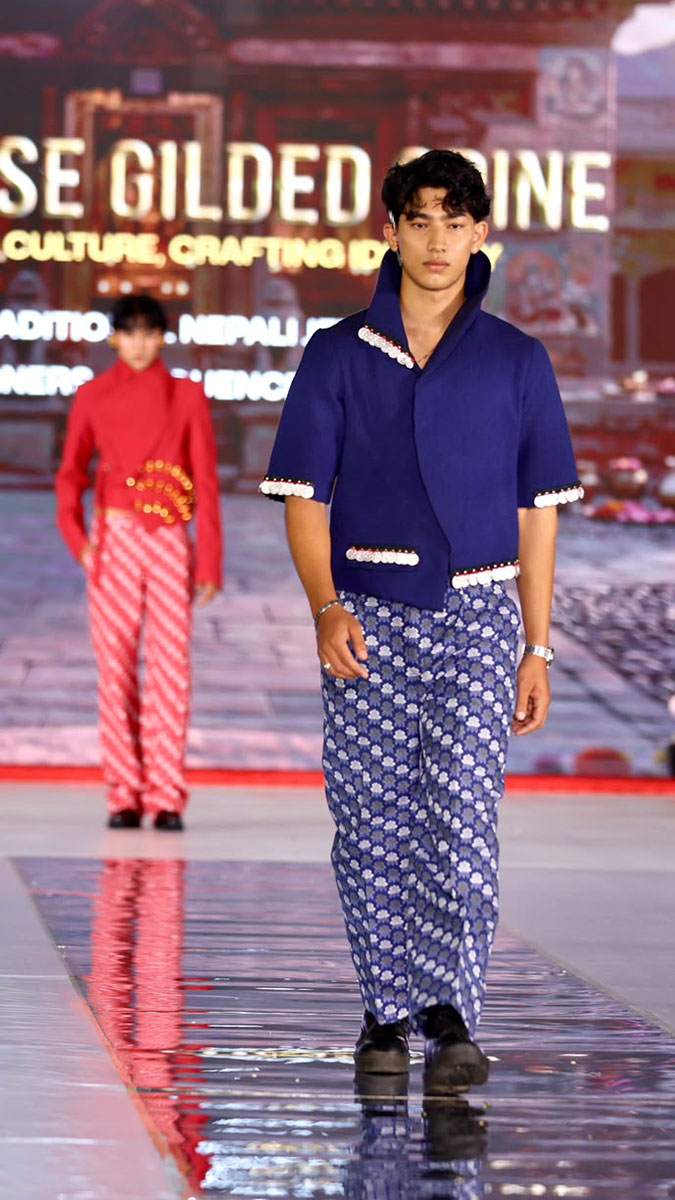
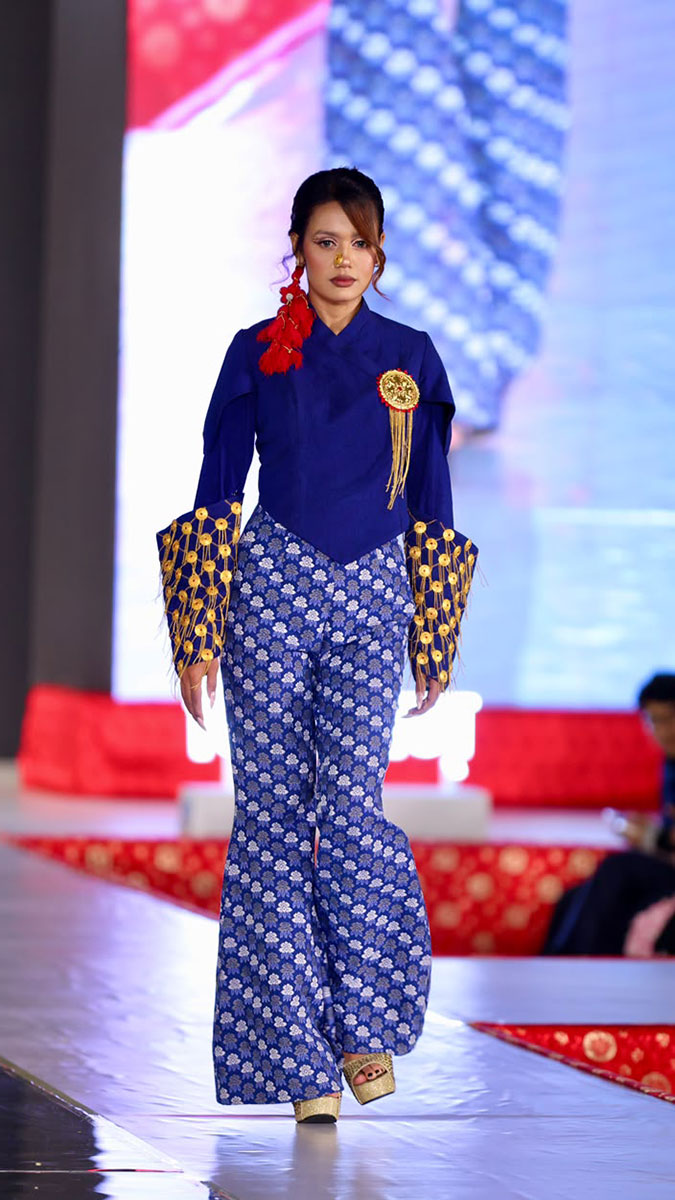
With inspirations drawn from several communities, Nepalese Gilded Spine reflected the range of identities within Nepal and the different ways people express belonging through what they wear.
The designing team comprised Archana Chaudhary, Garima Kumari Kathariya, Abisha Maharjan, Shreethika Shakya, Aradhana Gupta, Reshu Khatri, Subina Raut, Isoda Nagarkoti and Kusum Wagle.
The Shape of Returning: Himalayan Journeys Take Sculptural Form
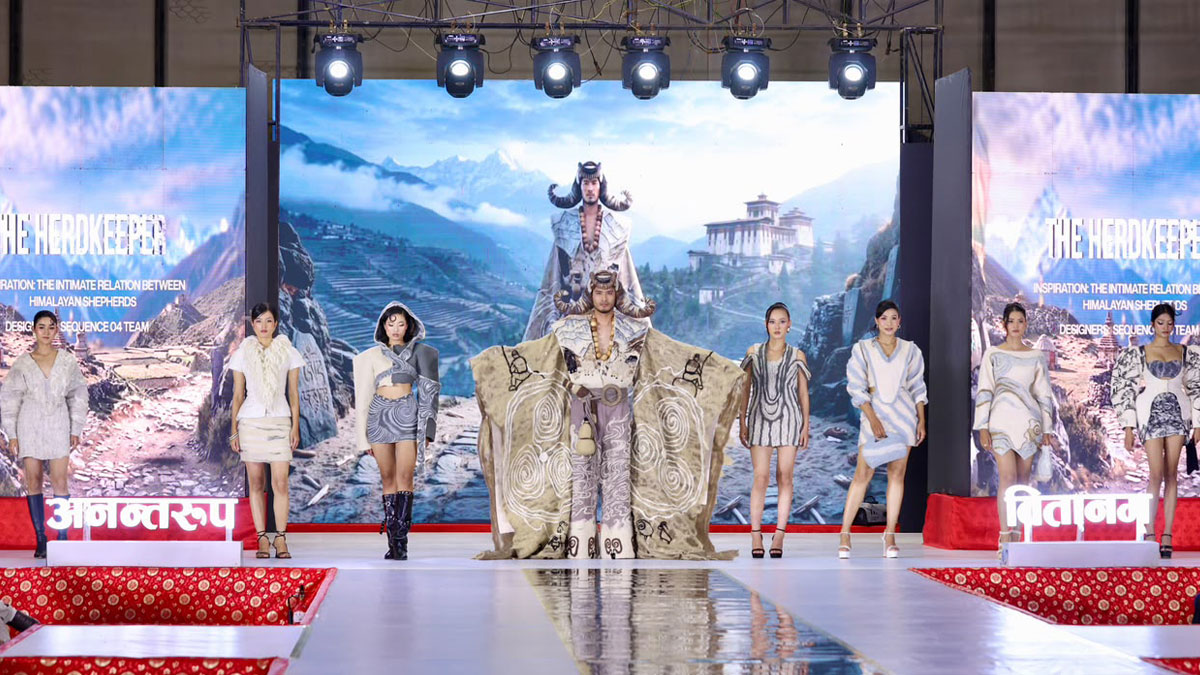
The Shape of Returning, the designers turned towards the mountains and the seasonal journeys of Himalayan herders.
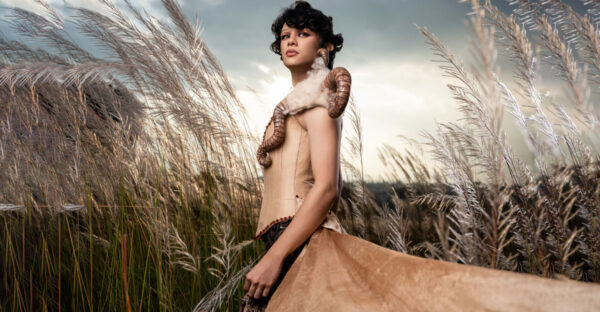
Developed around the theme “Nomads of Eternity,” the collection explored the relationship between people, animals, landscape and home. Movement and return gave it a narrative structure, while mountain life informed its attention to adaptability and resilience.
Traditional wool craftsmanship, wet felting, needle felting and experimental textile manipulation shaped the garments. These techniques gave the collection a strong material connection to its subject and allowed the designers to explore texture and sculptural form.
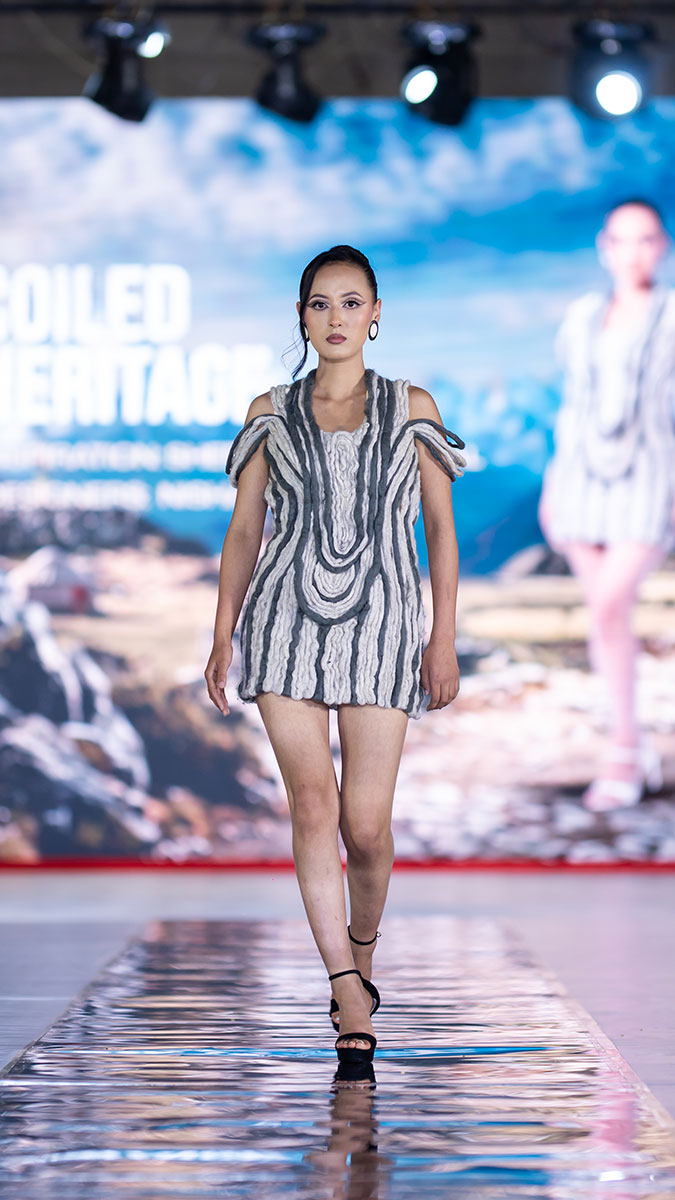
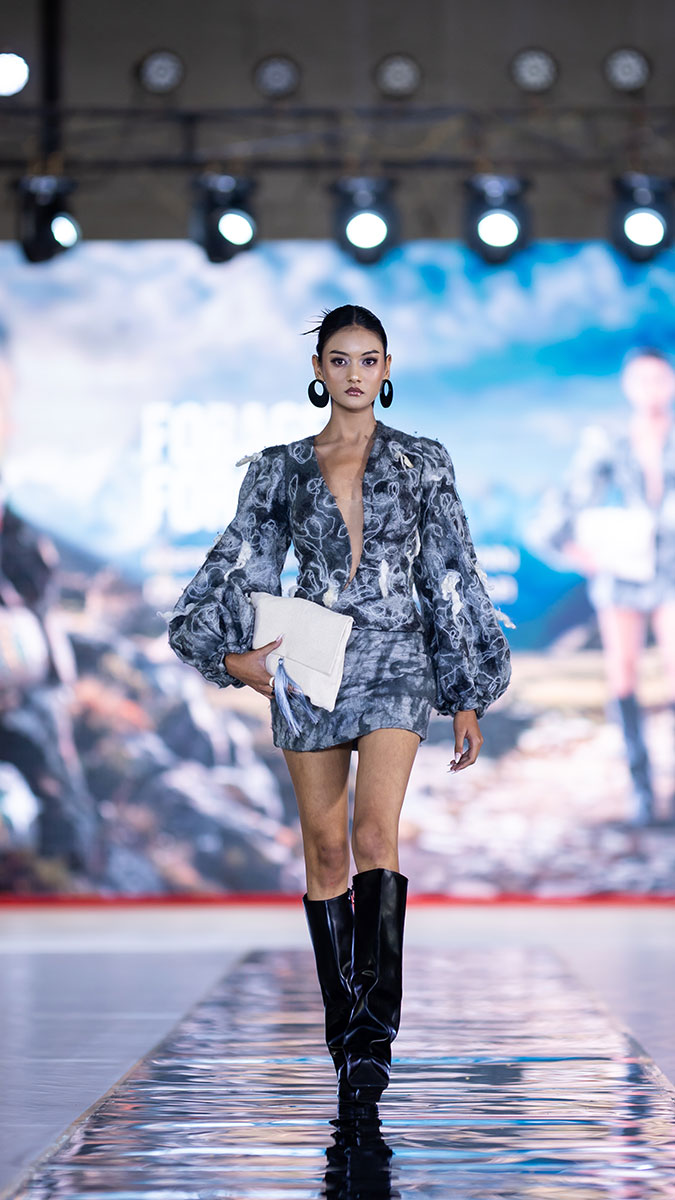
Wool became a means of expressing the collection’s ideas through the fabric itself. The designers worked with its possibilities to develop contemporary silhouettes that reflected the movement and changing conditions associated with Himalayan journeys.
The concept also considered what home means within a life shaped by seasonal travel. Returning, belonging and moving onward became connected ideas, offering a way to explore the relationship between a community and the landscape it knows.
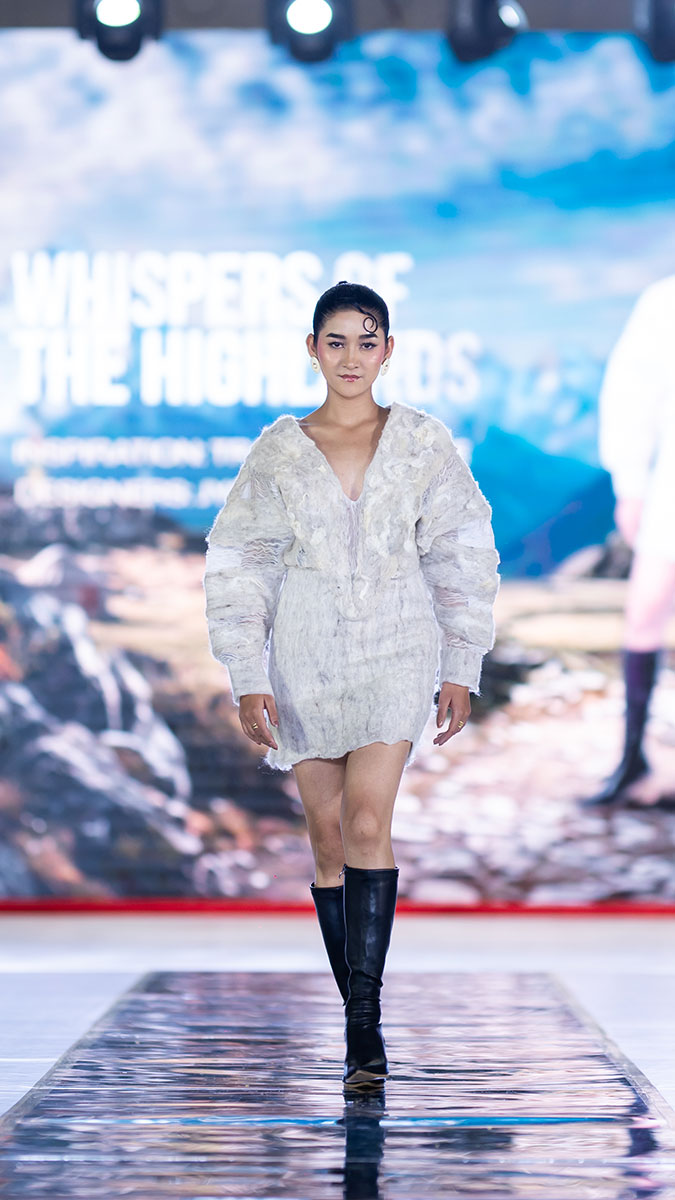
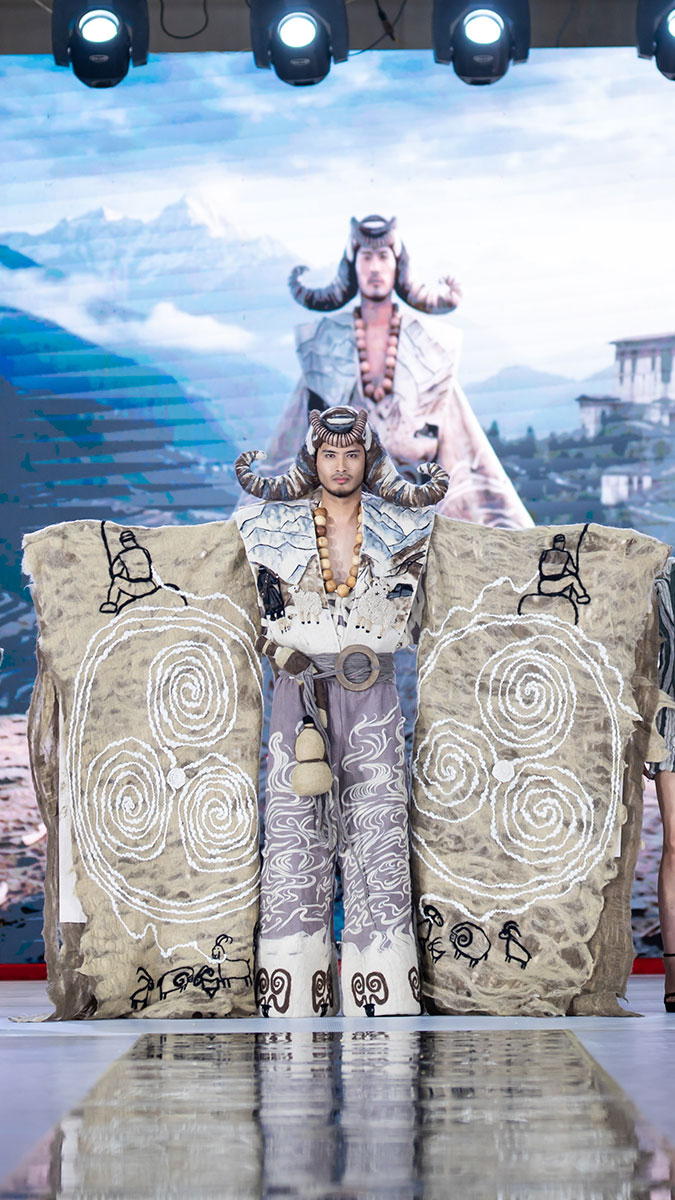
Through its use of natural fibres and textile experimentation, The Shape of Returning paid tribute to the practical knowledge within mountain traditions. It brought attention to lifestyles in which clothing, animals, weather and movement are closely connected.
The collection was created by Nisha Giri, Pratima Baraily, Prabeshika Thamsuhang, Nischal Thapa, Pema Sherpa, Jyoti Gurung, Hangdima Hangma Rai, Prinita Pun Magar and Rasna Bhuju.
Abhaya-Shakti: The Power of Fearlessness Explores Strength and Grace
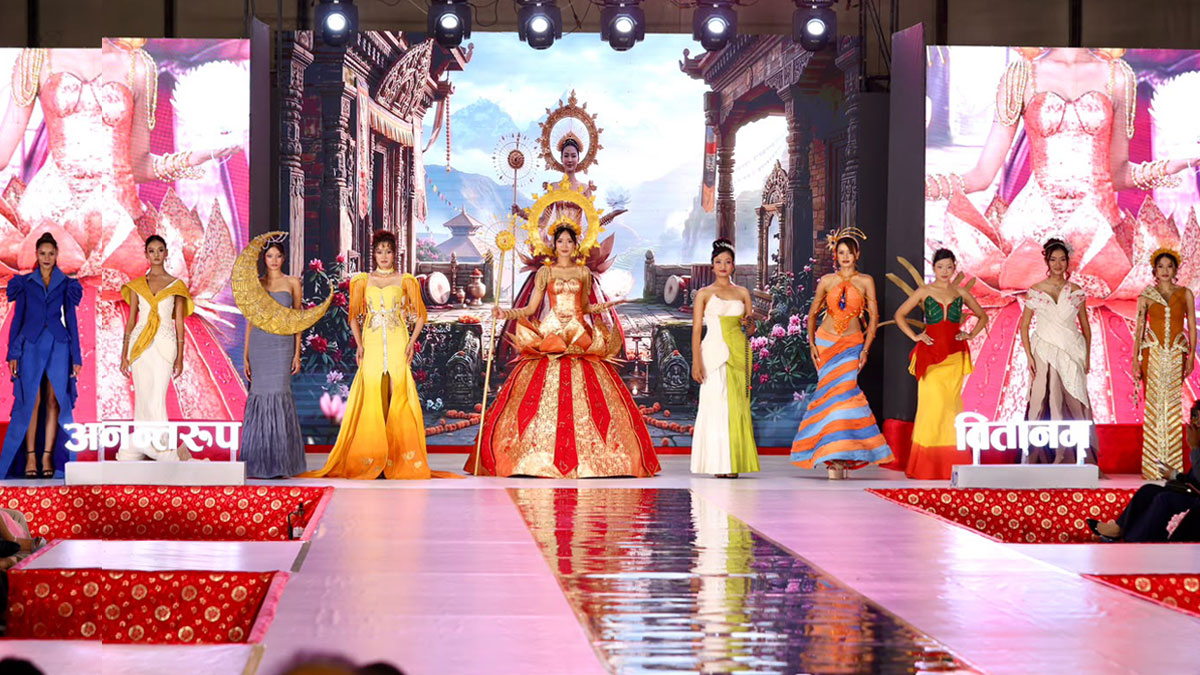
The fifth collection, Abhaya-Shakti: The Power of Fearlessness, drew on the divine feminine in Hindu tradition, particularly Nava Durga and Goddess Laxmi.
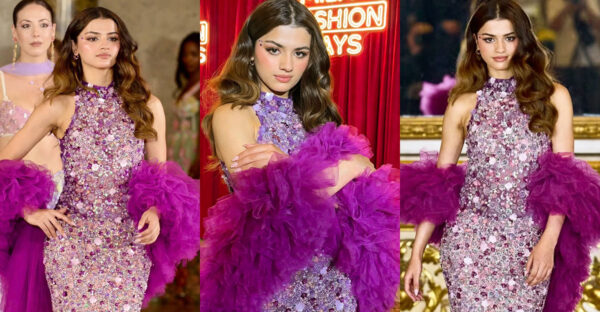
Courage, protection, prosperity and grace shaped its creative direction. The designers explored these qualities through contrasting forms, allowing strength and fluidity to appear within the same collection.
Warrior-like constructions, sculptural elements and resilient textures expressed fearlessness and protection. Alongside them, luminous embellishments, luxurious materials and flowing silhouettes explored abundance, compassion and elegance.
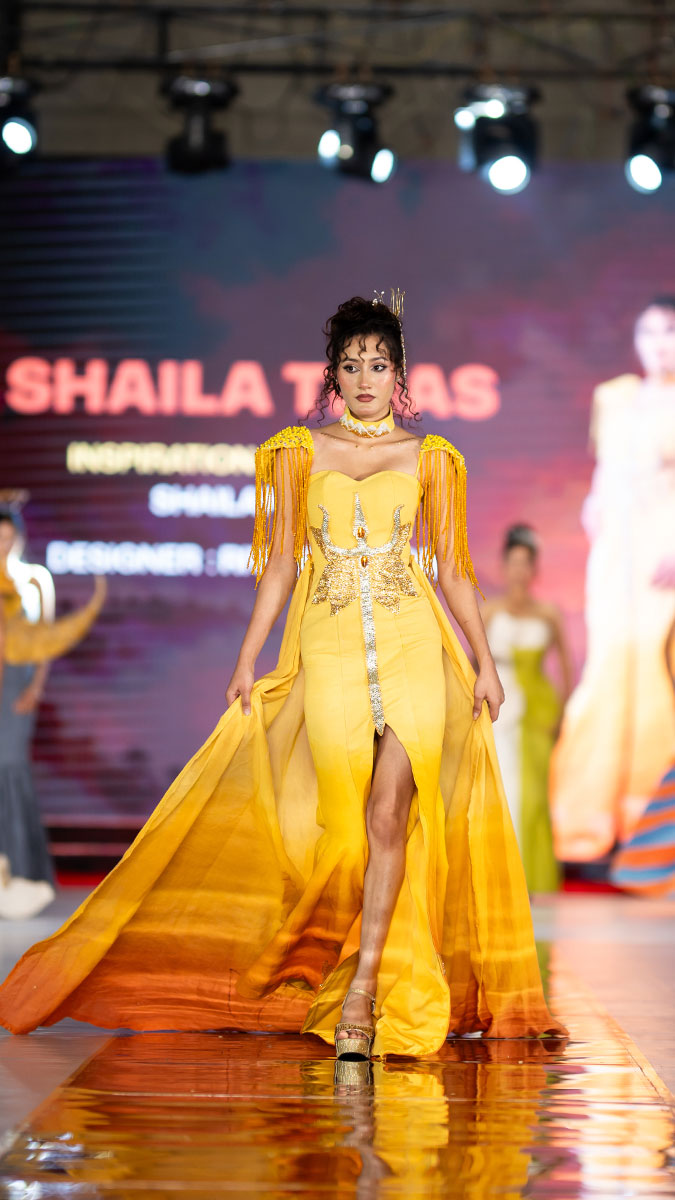
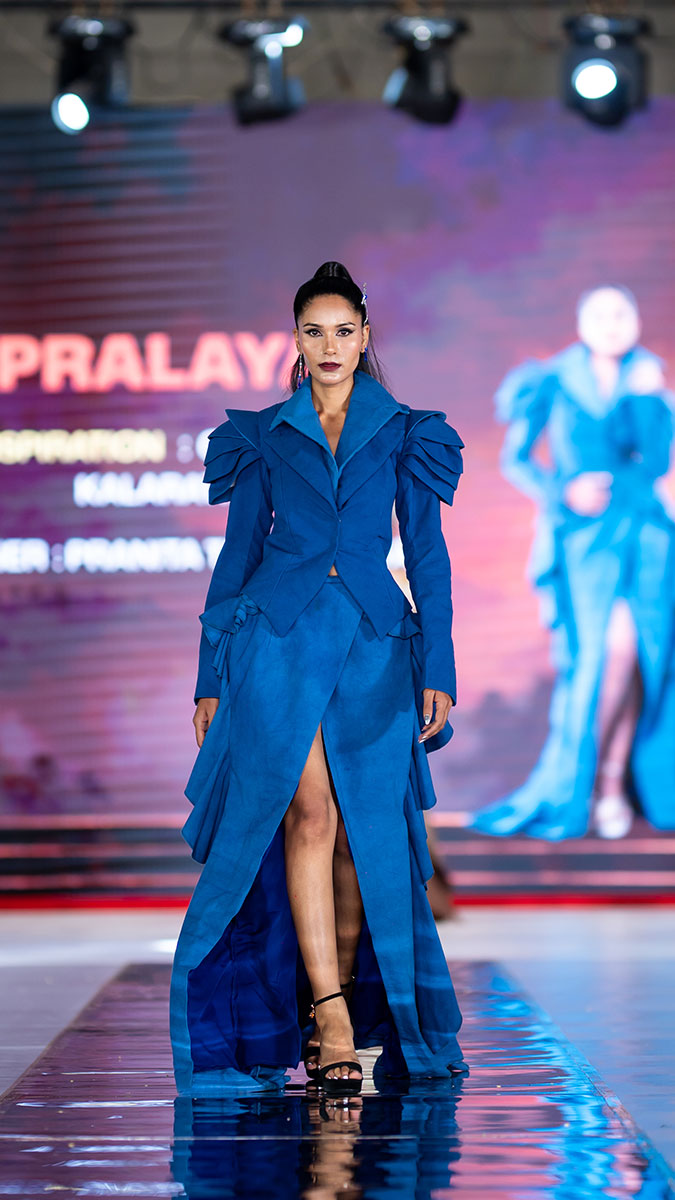
This relationship between structured and softer forms gave the collection its visual range. Its concept allowed the designers to approach feminine identity through several qualities, from the resolve associated with protection to the generosity and grace linked with prosperity.
Spiritual symbolism guided the translation from inspiration to garment. The collection used construction, surface and movement to explore ideas that carry meaning beyond clothing, giving the team room to interpret divine strength in contemporary fashion.
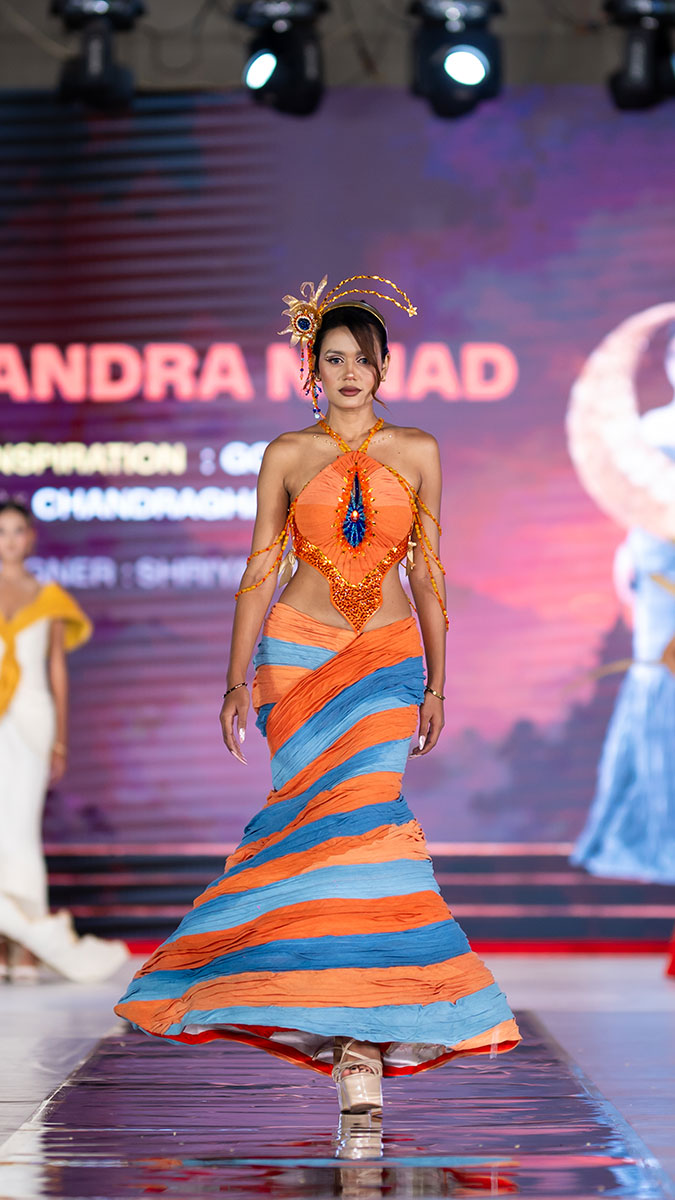
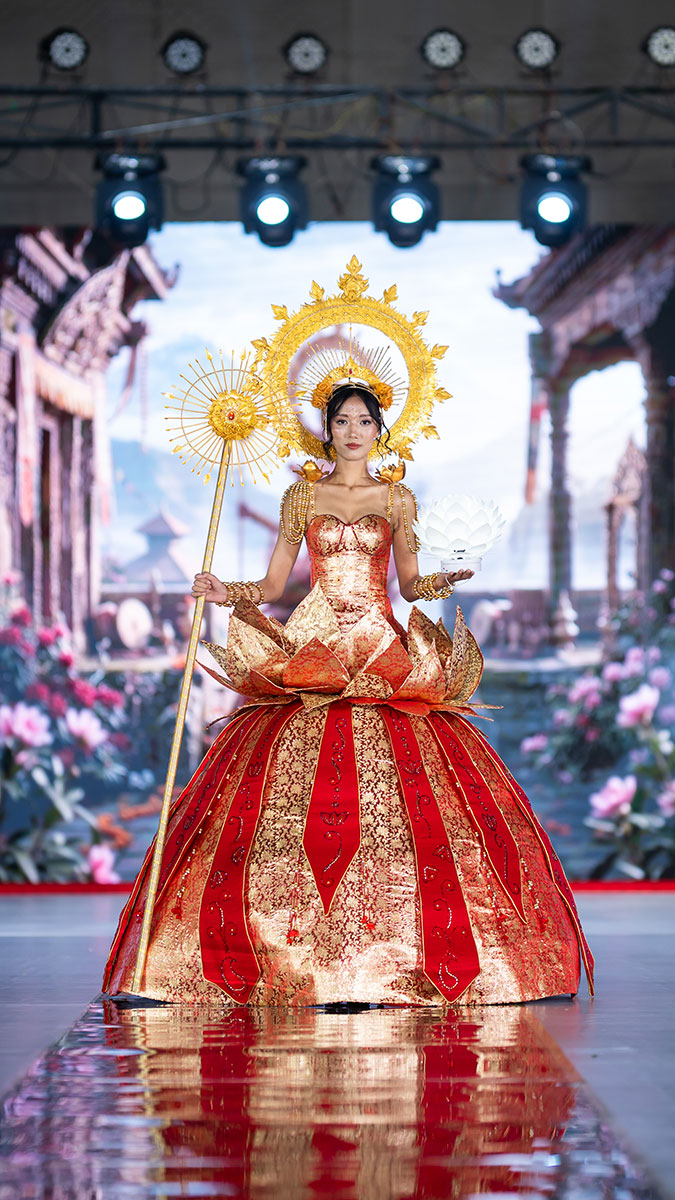
Abhaya-Shakti presented resilience and elegance as qualities that could exist together. Its different silhouettes expressed that relationship while maintaining a shared focus on confidence, transformation and feminine power.
The collection was designed by Riya Bhandari, Grace Rajlaxmi Baral, Shreya Timilsena, Rajiv Adhikari, Kumari Maya Saru Magar, Simran Phanju, Pranita Thapa Magar, Alish Ranjit, Pooja Bhandari and Kabita Shah.
Kalpa Sutra: Nepali Heritage Enters an Imagined Future
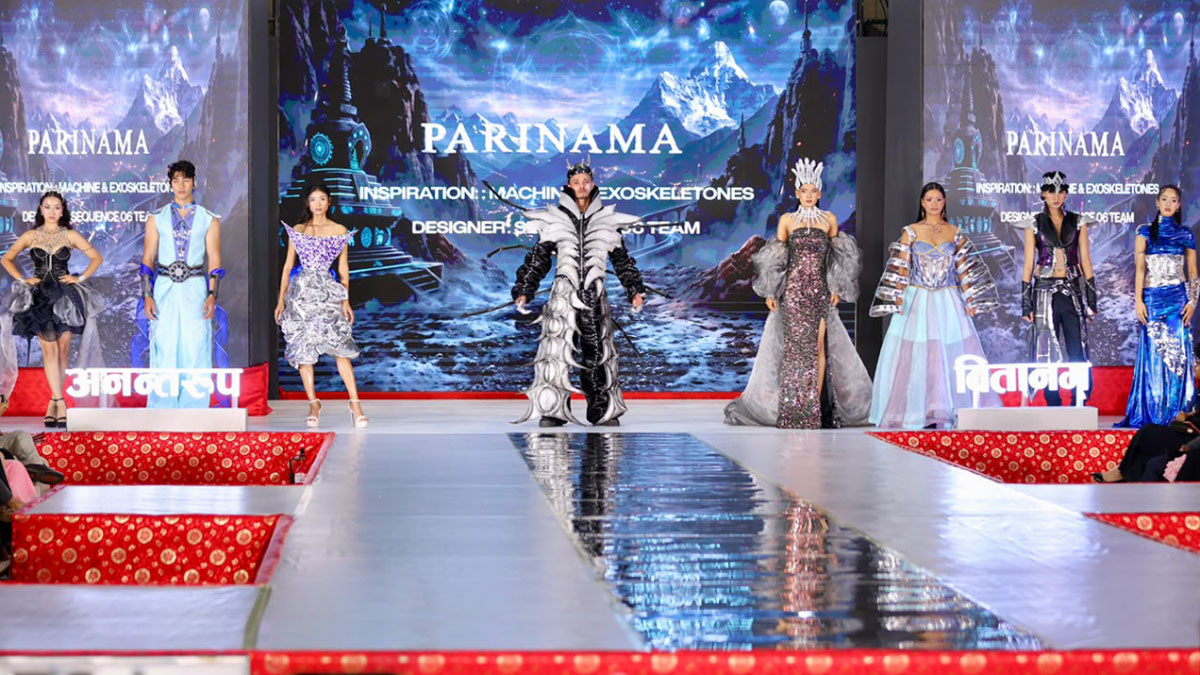
Closing the six-collection presentation, KALPA SUTRA explored Nepali heritage through the conceptual influences of artificial intelligence, cosmic evolution and futuristic couture.
The collection brought together nine interconnected ideas: Cosmic Origin, Himalayan Roots, Heritage Bloom, Spiritual Code, AI Awakening, Nebula Flow, Lunar Guardian, Beyond Time and Future Nepal.
These concepts created a progression between origins, cultural identity, spirituality and imagined futures. Himalayan references and ancestral knowledge remained part of the collection’s foundation, while cosmic and technological ideas opened space for experimentation.
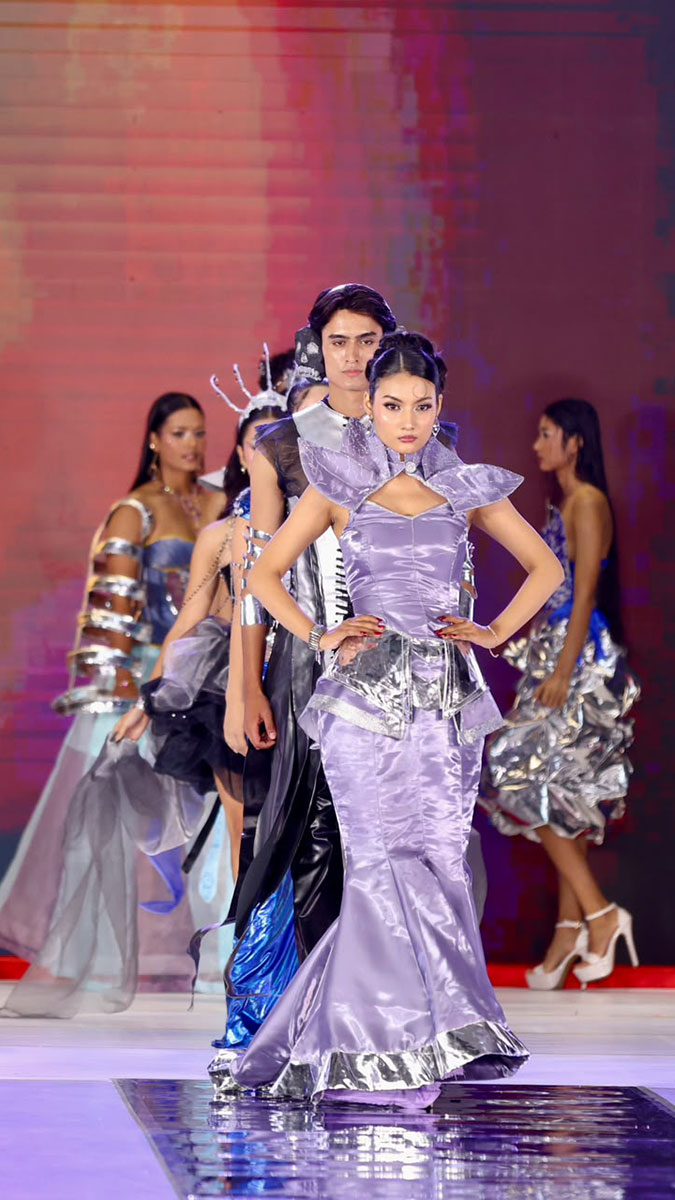
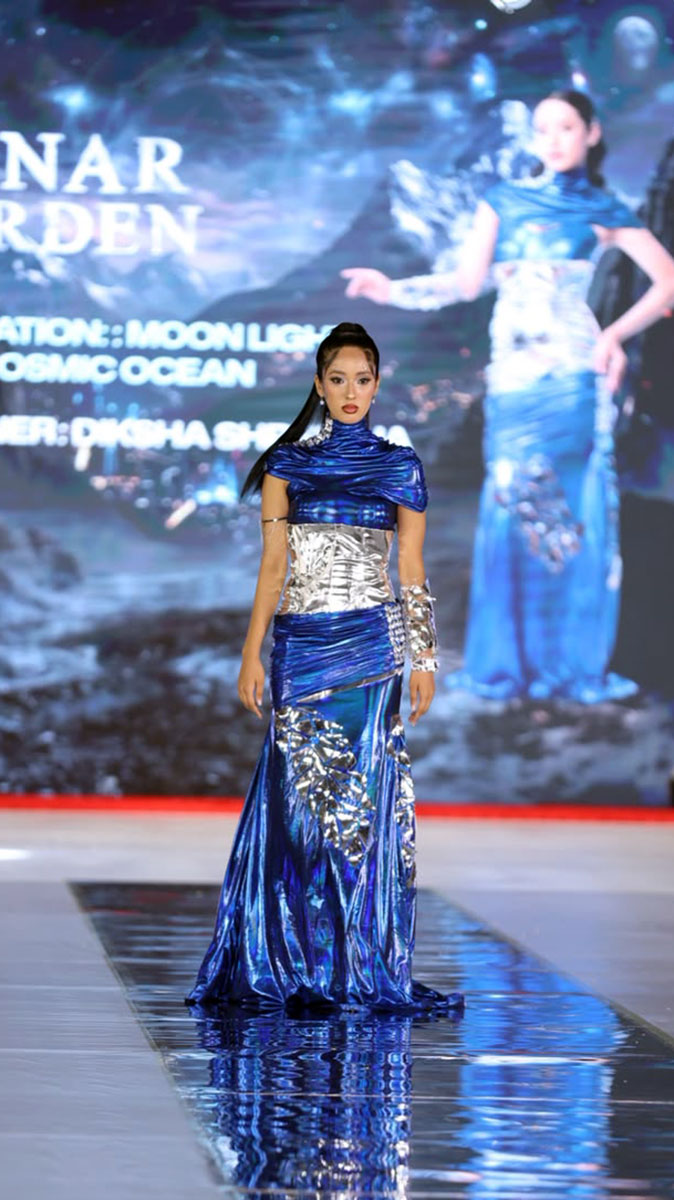
The designers considered how heritage might inform new silhouettes and unfamiliar forms. Their approach connected the cultural references explored throughout the evening with questions about what fashion could become.
Artificial intelligence appeared within this conceptual framework as part of the collection’s interest in emerging technology. Together with cosmic imagery and ideas of evolution, it helped shape a vision of fashion beyond the present.
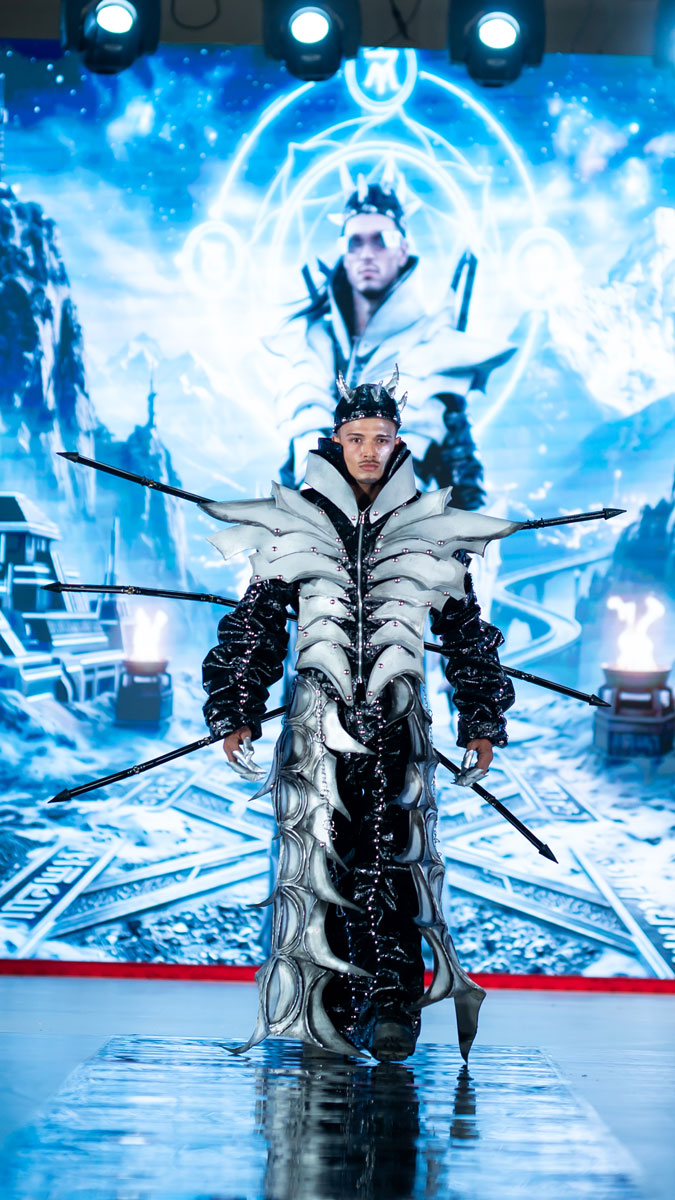
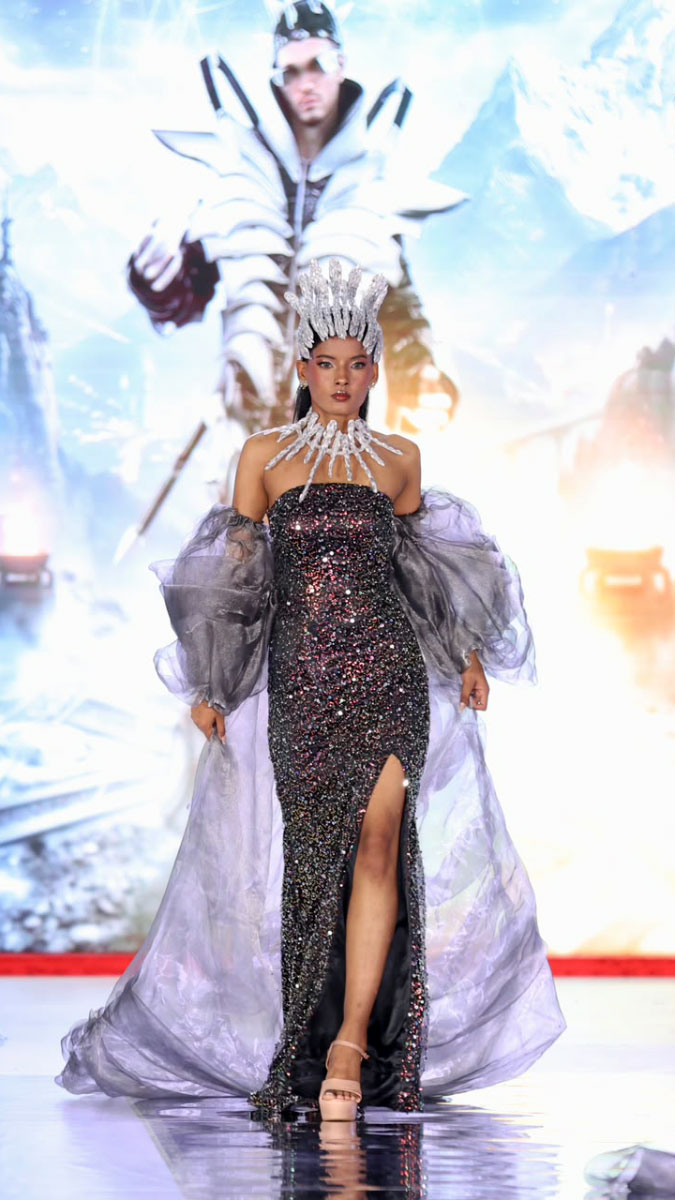
As the closing collection, KALPA SUTRA returned to the wider theme of Nepal beyond time and universe. It carried the show’s exploration of heritage towards the future, suggesting that cultural knowledge can continue to inform creative work even as its materials, methods and visual language change.
The collection was developed by Parisha Baram, Nirjala Waiba, Aditya Kausal, Brisha Gurung, Suraj Bhatta, Grishma Karki, Diksha Shrestha, Ritika Mushyan and Bandana Singh.
Jury Bringing Together Fashion, Education and Industry
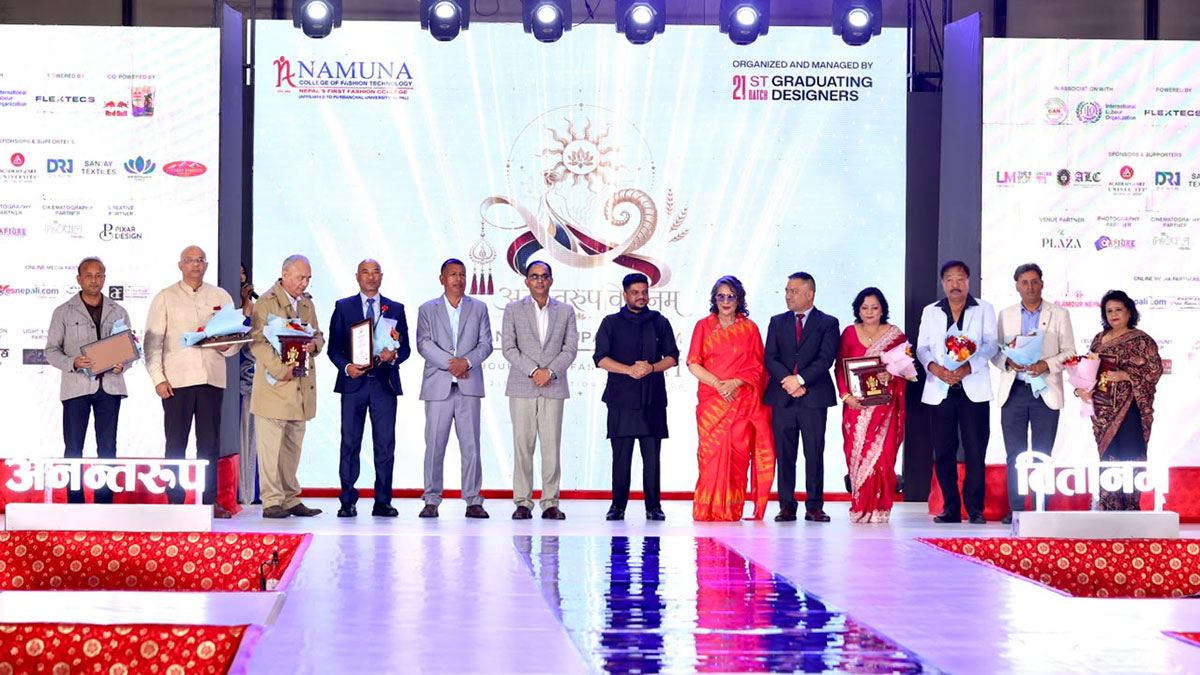
The graduating designers presented their work before a jury whose experience extended across technical education, fashion design, textile technology, academia, the garment industry and entrepreneurship.
The panel included Kul Bahadur Basnet, former Vice Chairperson of the Council for Technical Education and Vocational Training (CTEVT); Colonel Rahul Sharma, Director of the National Institute of Fashion Technology (NIFT), Patna; and Pashupati Dev Pandey, President of Garment Association Nepal (GAN).
Their participation brought perspectives from vocational education, fashion training and garment production into the evaluation of the students’ work.
Also serving on the jury were Prof. Dr. Jaya Pradhan, Campus Chief of Padma Kanya Campus; Rajendra Singh, fashion educator and Deputy Director of the Trade and Export Promotion Centre; Kiran Prakash Saakha, Chairman of Saakha Group; and Hema Manandhar, event organiser and social and cultural activist.
The panel also included Bangladeshi textile technology expert and industry executive Dr. Mohammad Kamruzzaman, widely known as Dr. Kamrul, who serves as Regional Chief for Southeast Asia at Hohenstein Group.
Together, the jury connected the academic presentation with professional perspectives on design development, material application, craftsmanship, originality and presentation.
For students preparing to enter the industry, that connection formed an important part of the graduation showcase. Their garments stood within a wider discussion about creative identity, technical ability and the expectations surrounding professional fashion work.
Fifth NCFT Fashion Catalog Documents the Graduating Class
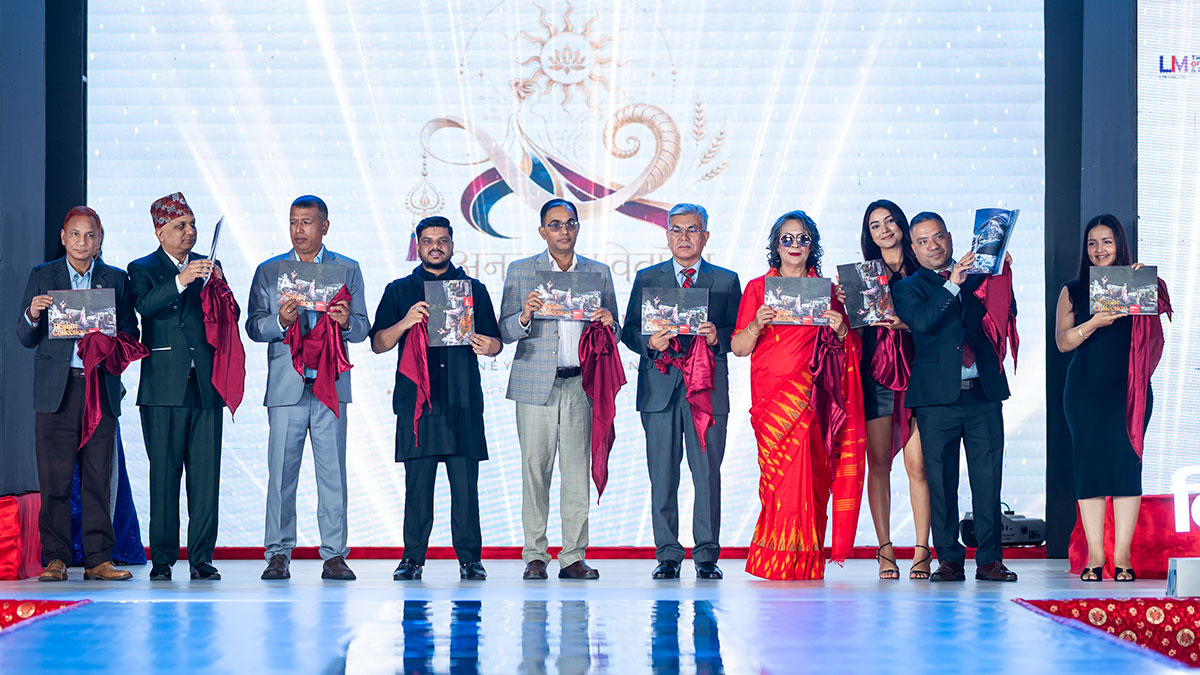
The evening also marked the unveiling of the fifth edition of the NCFT Fashion Catalog, a publication dedicated to the creative work and design achievements of the graduating designers.
The catalogue provided a record of the collections beyond their runway appearance. By documenting concepts, visual explorations and completed garments, it preserved the work in a format that could serve as a portfolio resource for the graduating class.
Ramjee Yadav, Minister of Labour, Employment and Social Security, officially launched the publication in the presence of representatives from government, academia and university administration.
Those attending included Siddhi Byanjankar, Chief Advisor of the Ministry of Education and Sports.
Purbanchal University was represented by Prof. Dr. Sujan Babu Marahattha, Vice Chancellor; Prof. Dr. Panna Thapa, Registrar; Prof. Dr. Uttam Kumar Regmi, Dean of the Faculty of Management; and Prof. Balendu Hamal, Exam Controller.
The ceremony also brought together Gyani Shova Tuladhar, Founder Principal of NCFT, and Jeebeshwor Lal Shrestha, Vice Principal of NCFT, alongside event coordinators from the college’s 20th graduating batch.
Their presence connected the current graduating class with the institution’s continuing educational work and its earlier generations of designers.
The publication gave lasting space to details that a runway presentation can only show briefly: the thinking behind a collection, the development of its visual identity and the technical learning involved in bringing it together.
Student Designs Extended to the Evening’s Personal Wardrobes
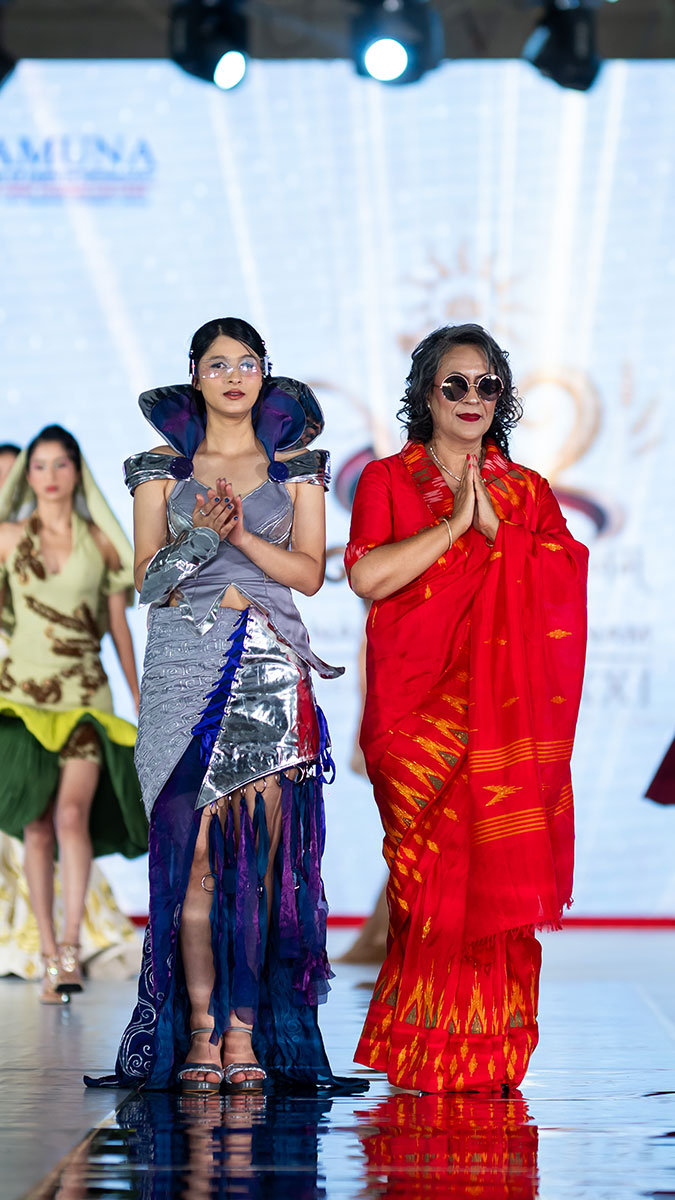
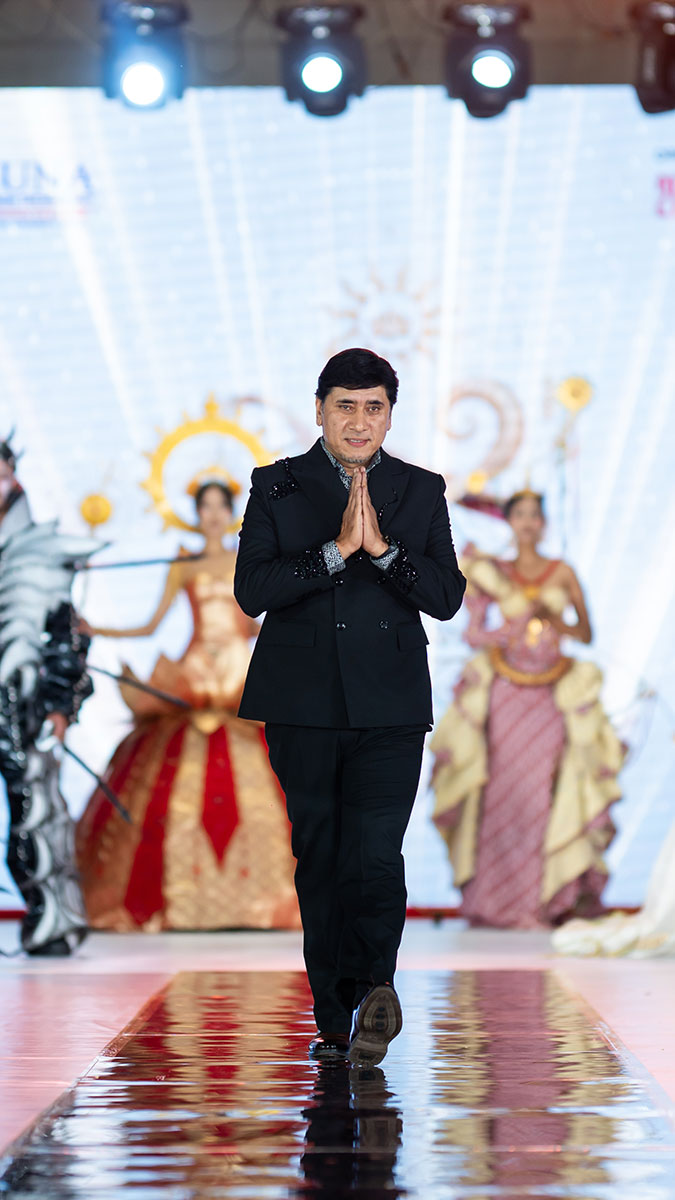
The graduating designers’ work also appeared in outfits created for the college’s leadership and the event’s creative team.
NCFT Founder Principal Gyani Shova Tuladhar wore an ensemble designed by Rojana Shakya and Yamuna Gurung. The outfit provided another setting for the students to apply their skills, working with personal style and presentation alongside their collection concepts.
Choreographer Rojin Shakya appeared on stage in an ensemble by Suhangma Limbu, Subina Raut and Reshu Khatri Chhetri.
Event host Rubishka Shrestha wore an outfit designed by Diksha Shrestha and Yamuna Gurung.
These wardrobe contributions showed another side of the graduating designers’ work. Creating for a particular person brings its own considerations, including individuality, occasion and how a garment will be worn.
Alongside the conceptual runway pieces, the ensembles highlighted the students’ interests in styling, occasion wear and clothing developed for individual clients and personalities.
Institutional Associations and Industry Support
Anantarūpavitānam took place with support from organisations connected to education, textiles, business and the wider fashion industry.
The event was organised in association with Garment Association Nepal (GAN) and the International Labour Organization (ILO), linking the academic showcase with the broader garment and employment sectors.
Flextecs powered the event, while Red Bull served as the co-powered partner.
The showcase also received support from LIM College, American Language Center, Academy of Art University, DRJ Denim, Sanjay Textiles and New Mahalaxmi Textile.
These associations formed part of the framework supporting the graduating class as it brought its work from the college environment to a public fashion presentation.
For the students, managing the showcase alongside developing the garments made collaboration an essential part of the experience. Creative decisions had to come together with coordination, choreography, styling and the practical requirements of presenting six collections within one event.
Across Journey of Fashion XXI, the designers found their starting points in different parts of Nepal’s cultural life. Some began with a carved temple or a traditional ornament. Others looked to cultivated land, wool craftsmanship, spiritual symbolism or the possibilities of an imagined future.
The resulting collections gave those references new forms while keeping the people, practices and ideas behind them in view. For Namuna’s 54 graduating designers, the runway marked the completion of an academic chapter and a public introduction to the individual creative directions they are beginning to shape.
images courtesy: capture photography nepal and Pradeep Raj Onta