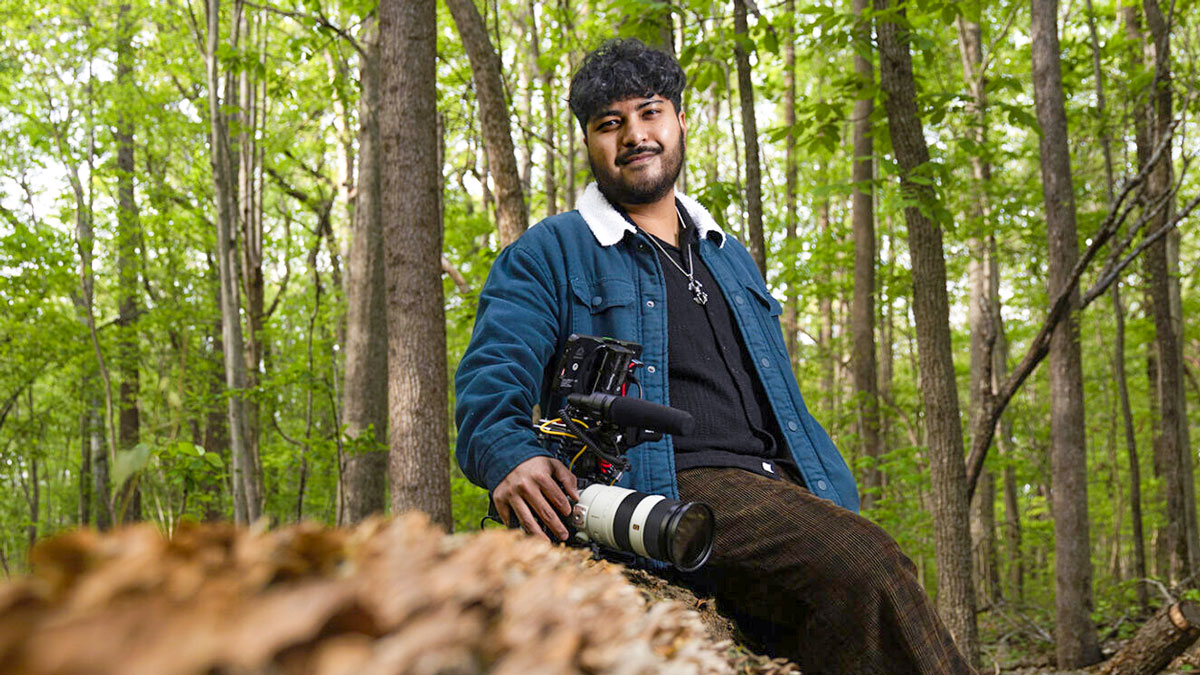
Nepali documentary filmmaker Aayas D. Joshi, based in New York City, earned consecutive WHNPA student video honours in 2025 and 2026.
Aayas D. Joshi was filming in a canyon on Maui when a phone call brought news of a career milestone. The Nepali filmmaker had won another White House News Photographers Association award, becoming the first two-time winner in its Student Video competition division.
Born in Kathmandu and now based in New York City, Joshi earned the association’s Student Video Photographer of the Year honour in 2026 after sharing the top award with fellow filmmaker Anna Connors in 2025.
The consecutive wins recognise a filmmaker whose work follows people protecting wildlife, rebuilding after disasters and responding to environmental change. His documentaries connect places as different as Nepal’s Himalayan communities and America’s riverbanks through the lives of those who call them home.
A Shared Victory, Followed by an Individual Honour
Joshi’s first WHNPA success came through a partnership at the University of North Carolina at Chapel Hill.
In 2025, he and Connors jointly received the student video competition’s highest honour for their documentary, The Last Wild Herd: Defending Yellowstone’s Buffalo. It marked the first time WHNPA had awarded the title to a team.
Judges praised their collaboration and the film’s ability to connect viewers with the community working to protect the animals.
Joshi returned to the winners’ list in 2026, this time receiving the individual title. WHNPA announced the recognition in March as part of its annual Eyes of History competition and identified him as the Student Video division’s first two-time winner.
The awards come from a professional association that supports visual journalists through scholarships, educational programmes and competitions spanning photography, video and other forms of visual storytelling.
The Buffalo Film That Began With Wolves
The documentary behind Joshi and Connors’ shared win took shape after their original plans changed.
The pair initially intended to explore northern Rocky Mountain gray wolves. During their research, they connected with James Holt, a member of the Nez Perce Tribe and executive director of the Buffalo Field Campaign. Learning about the organisation’s work drew their attention towards American bison.
They spent a month in and around Yellowstone National Park, interviewing activists, volunteers and Indigenous community leaders. Both filmmakers shot, edited and produced the resulting 13-minute documentary.
The Last Wild Herd examines efforts to protect the animals alongside their cultural importance to Indigenous communities. Its story brings together wildlife conservation, community knowledge and the pressures surrounding the animals’ survival.
UNC’s Hussman School of Journalism and Media and the Morehead-Cain Foundation supported the project. The experience helped establish a direction that runs through Joshi’s later work: understanding environmental issues through the people closest to them.
Finding Direction in Nepal’s Mountains
An important part of that interest developed back in Nepal. During a scholarship-supported journey to the Everest region, Joshi spoke with residents about changes around the Khumbu Glacier. Their accounts brought the risks facing mountain communities into sharper focus for someone who had grown up in Kathmandu.
Seeing those changes firsthand also helped him recognise what he could communicate through film. “Even if others can’t be there, I can show them,” he told UNC Research.
That idea carries into Adrift, his documentary about a North Carolina resident whose home was swept away during Hurricane Helene. The film explores her relationship with the river after the disaster, following the emotional aftermath of losing a home beside water she had loved.
Across these stories, environmental change becomes something viewers can understand through personal experience: a threatened landscape, a lost home or a familiar place that no longer feels the same.
From a Full Scholarship to a Career in New York
Joshi attended the University of North Carolina at Chapel Hill through the fully funded Morehead-Cain Scholarship. The foundation identifies him as its first scholar from Nepal.
The scholarship covers tuition, accommodation, books and fees, along with opportunities to learn beyond the classroom. For Joshi, that support included experiences that helped shape his interests and filmmaking practice.
He graduated in 2026 and received the Hussman School’s Outstanding Graduating Senior in Journalism recognition, according to his professional biography.
Now working from New York City, he continues to build a portfolio in documentary filmmaking and cinematography. His projects have involved Indigenous led buffalo conservation, disaster recovery in western North Carolina and Lahaina, right whale surveys off New England, and glacial loss in Nepal’s Everest region.
The WHNPA record marks a significant achievement in that journey. The films behind it reveal the interests guiding his career: how people protect what matters to them, what happens when their surroundings change, and how they begin again after loss.