From Doll Dresses to Global Runways: Kriti Mainali’s Fashion Journey
The Nepali-American designer behind K R I T I is building her fashion label after office hours, bringing traditional craftsmanship to international runways. Her Spring/Summer 2027 collection, Maya in Fiore, added a Milan-inspired chapter to that journey.
As a child in Nepal, Kriti Mainali made dresses for her dolls using scraps from old kurtis. Today, models wear her creations on runways in New York, Paris and Milan. Yet behind those international appearances is a routine that rarely appears in the photographs: a full-time corporate job, evenings devoted to design and weekends spent building her fashion label, K R I T I.
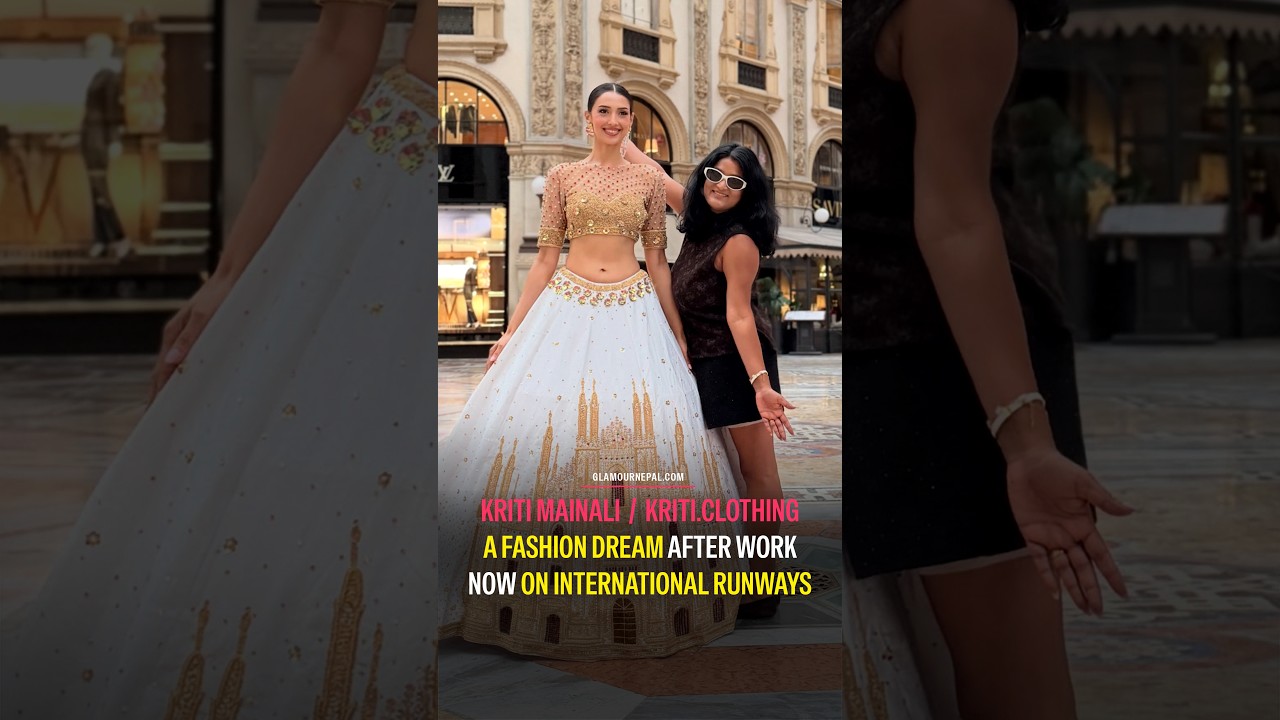
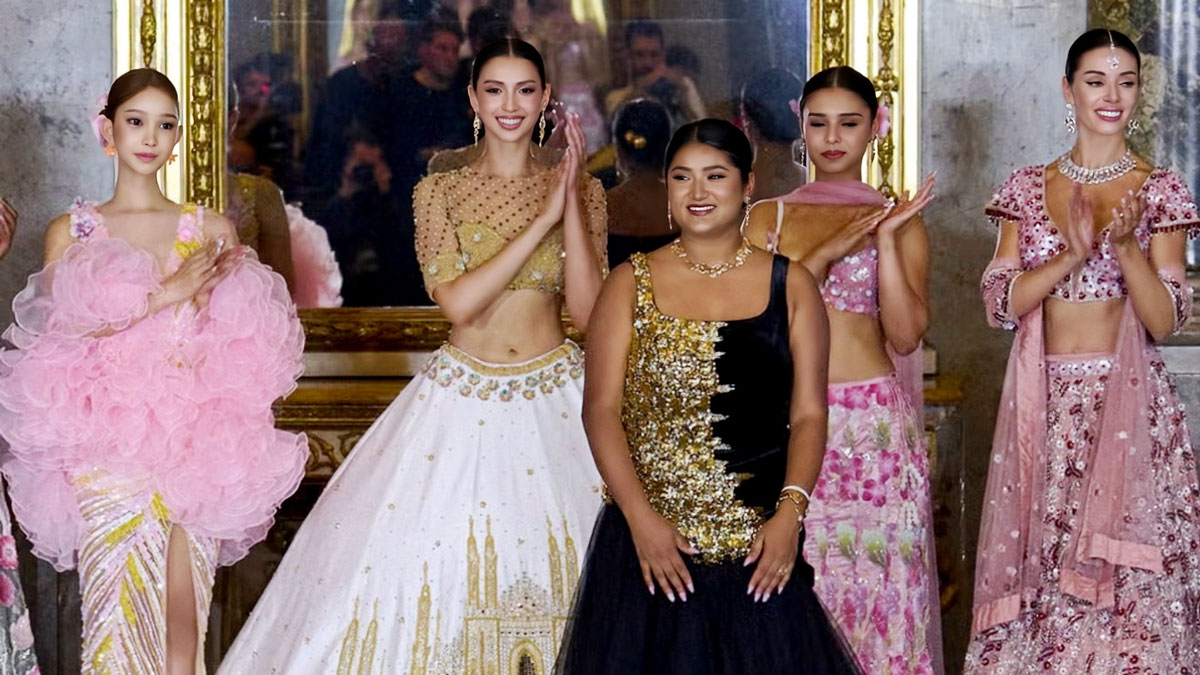
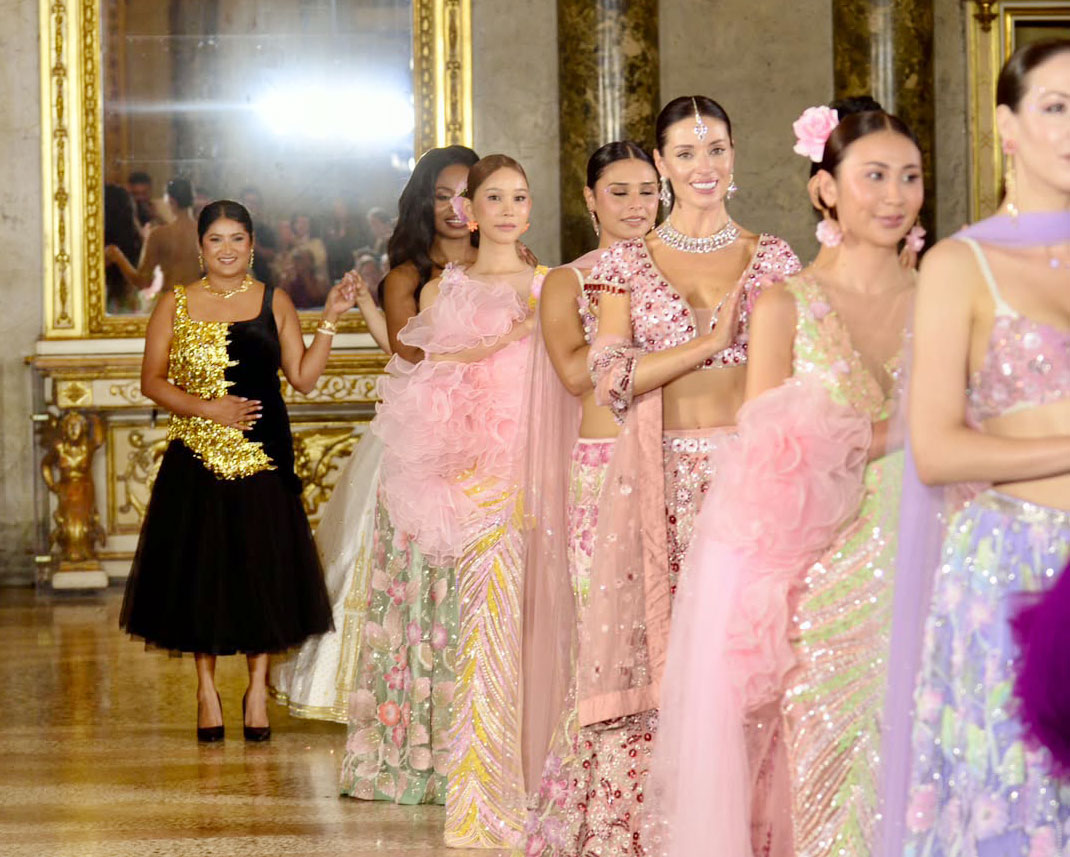
Her work reached another milestone on September 26, 2026, when she presented her Spring/Summer 2027 collection, Maya in Fiore, at Milan Fashion Days at Palazzo Serbelloni during Milan Fashion Week.
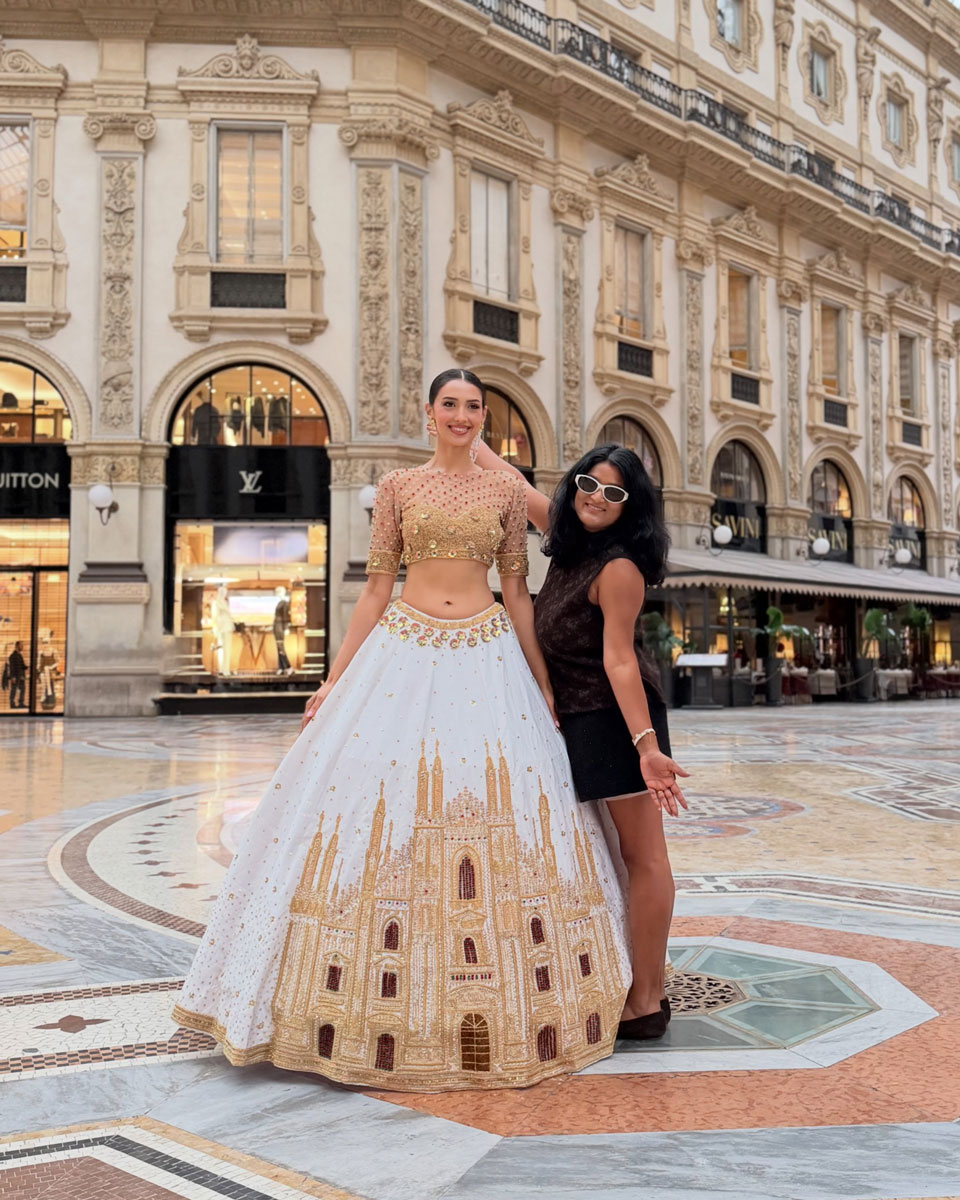
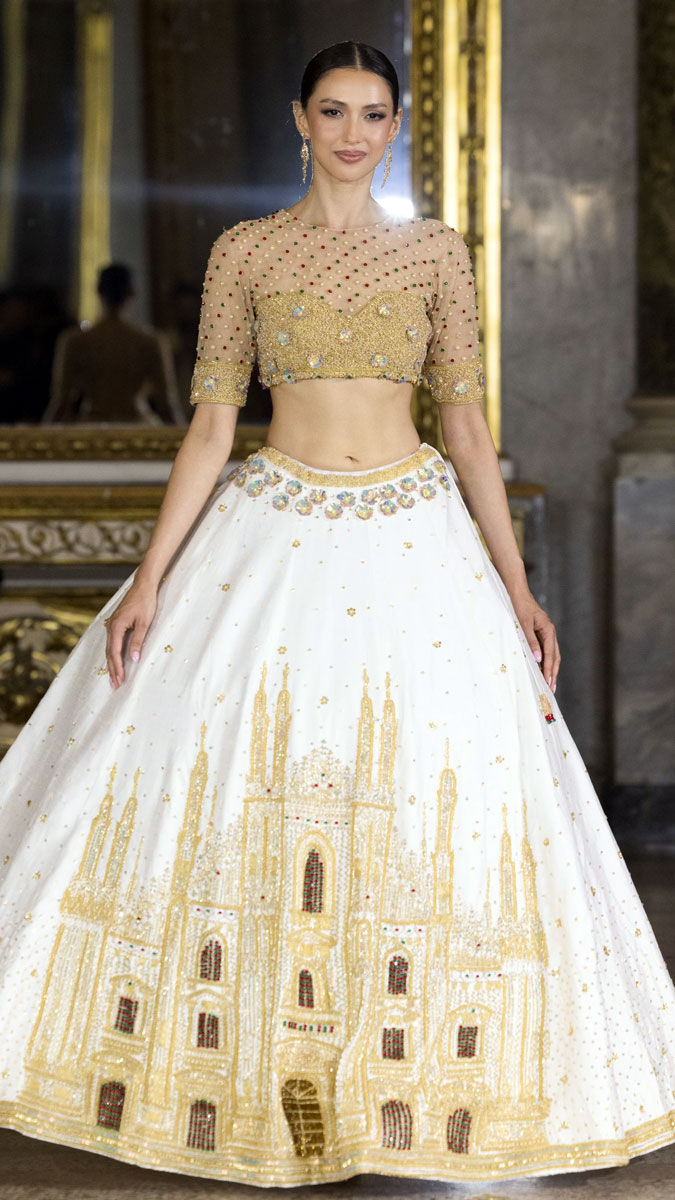
The collection featured 10 couture looks, bringing traditional craftsmanship into contemporary silhouettes. Among its standout pieces was a design featuring intricate, hand-embroidered 3D artwork inspired by Milan’s Duomo Cathedral.
For Mainali, the presentation extended a creative journey shaped by the places she visits and the heritage she carries with her. It also placed her work alongside a new generation of Nepali-American models finding opportunities on international runways.
A Fashion Dream Built After Work
Mainali moved from Nepal to the United States in 2020. Her interest in design travelled with her, even as she built a corporate career.
Fashion had been part of her life long before it became a business. Those childhood experiments with doll clothes gave her an early opportunity to work with fabric, colour and shape. As she grew older, travel, art and history offered new ideas.
Building K R I T I meant finding room for those interests within an already demanding schedule. She developed the label during nights and weekends while continuing her full-time work.
Her professional background in corporate logistics also connects with the practical demands of running a fashion business. Beyond imagining a collection, there are materials to choose, production details to manage and people to coordinate across countries.
With designs developed in the United States and garments handcrafted by artisans in Nepal and India, that coordination is part of the work behind every runway appearance.
In a personal reflection about Maya in Fiore, Mainali spoke about the difficulty of balancing both commitments. Long working days can leave limited time and energy for a growing brand.
But designing also gives her a sense of calm and fulfilment. She finds satisfaction in imagining a piece, seeing it take shape and watching another woman wear it with confidence.
That connection helps explain why she keeps making time for fashion.
Maya in Fiore: A New Chapter in Milan
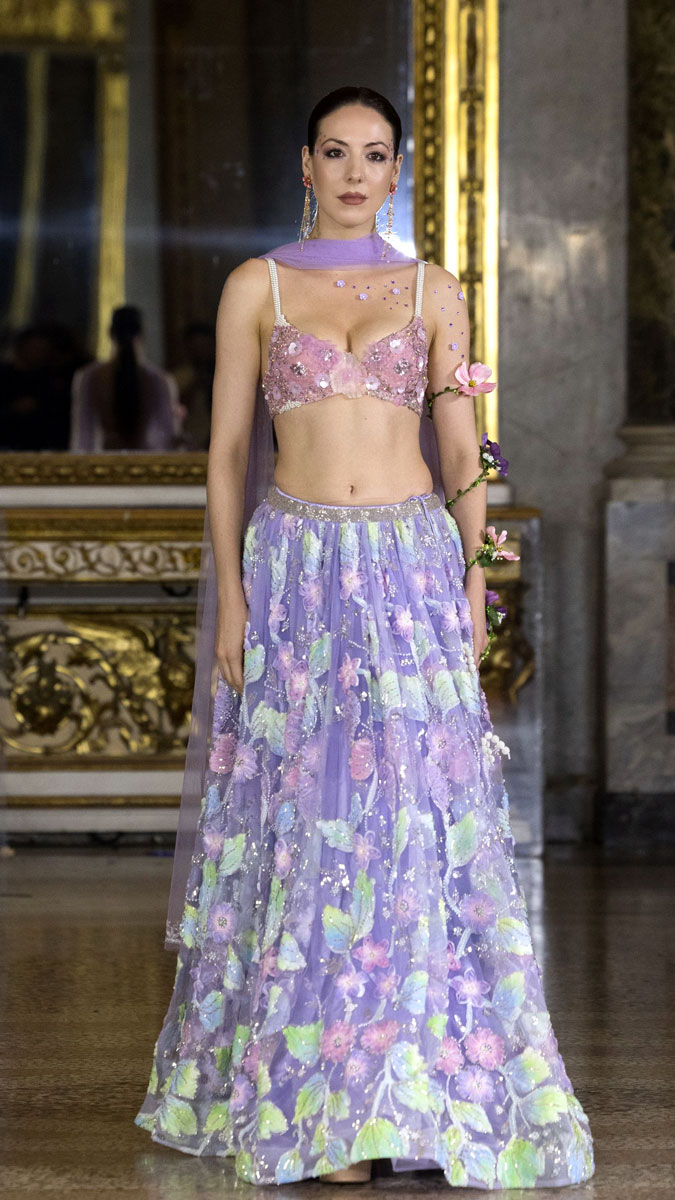
For her Spring/Summer 2027 presentation, Mainali brought 10 couture looks to Milan, continuing her exploration of detailed handwork and contemporary elegance.
The Duomo-inspired piece gave the collection a direct connection to its host city. Intricate, hand-embroidered 3D artwork translated an architectural landmark into a garment, reflecting her interest in turning places into design ideas.
It was a natural extension of an approach already visible in her earlier work. Nepal’s mountains, traditional clothing and folk art have informed her designs; Milan offered another setting to explore through craftsmanship.
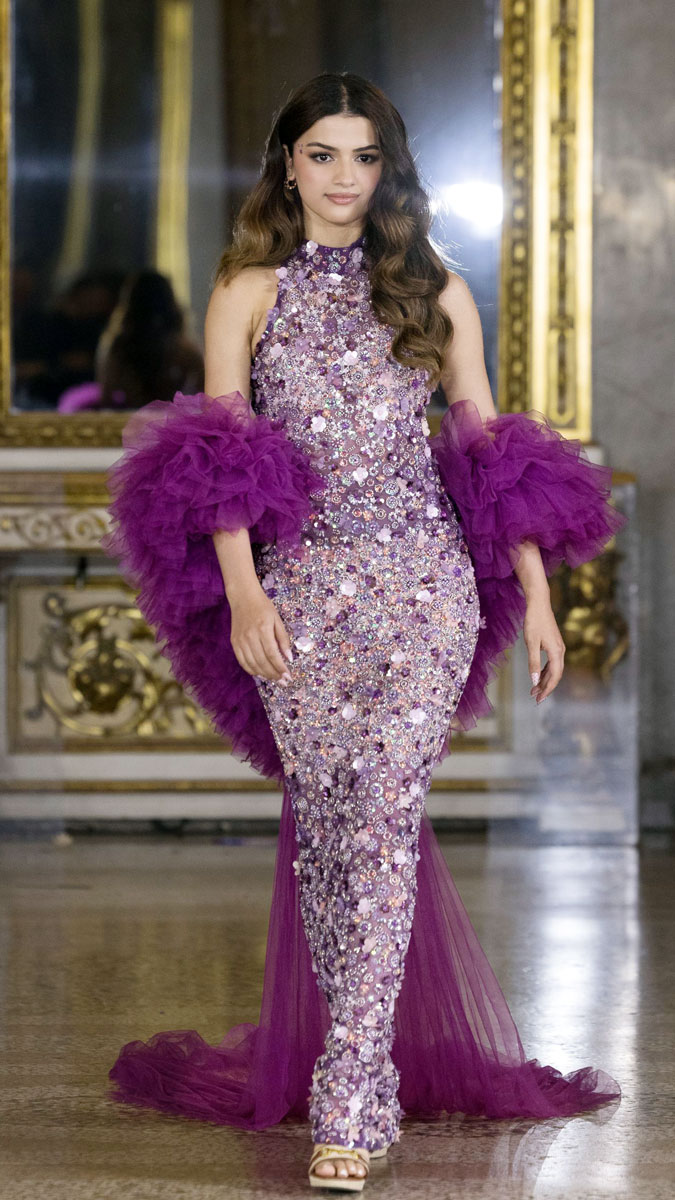
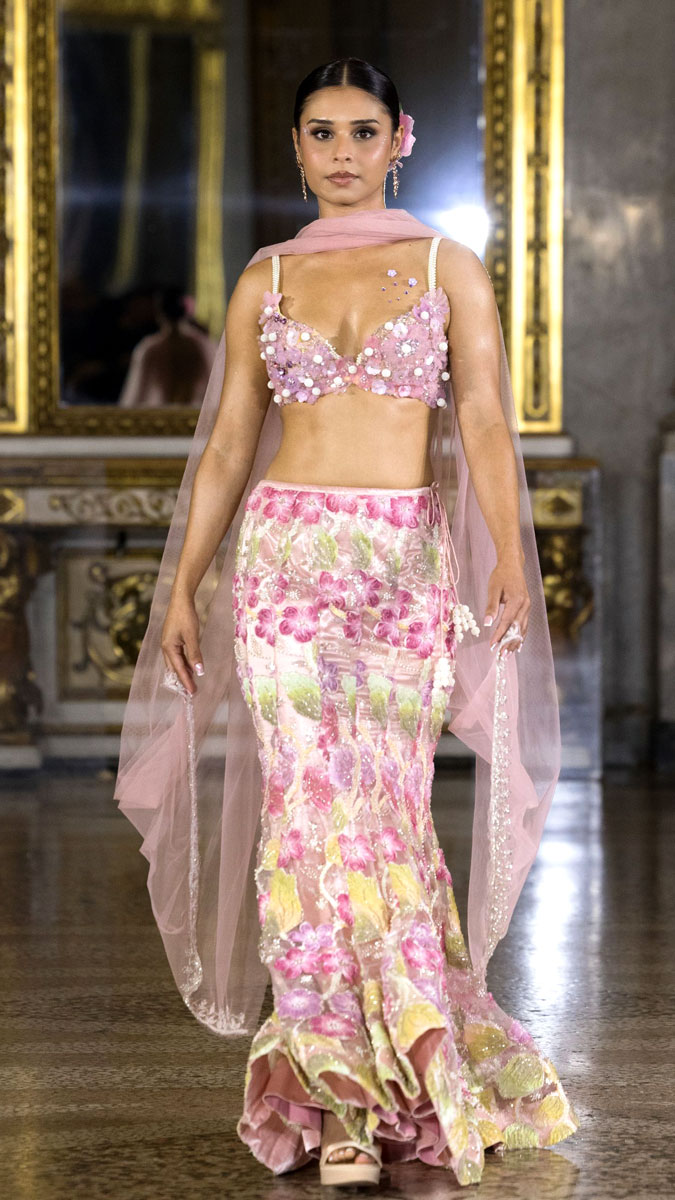
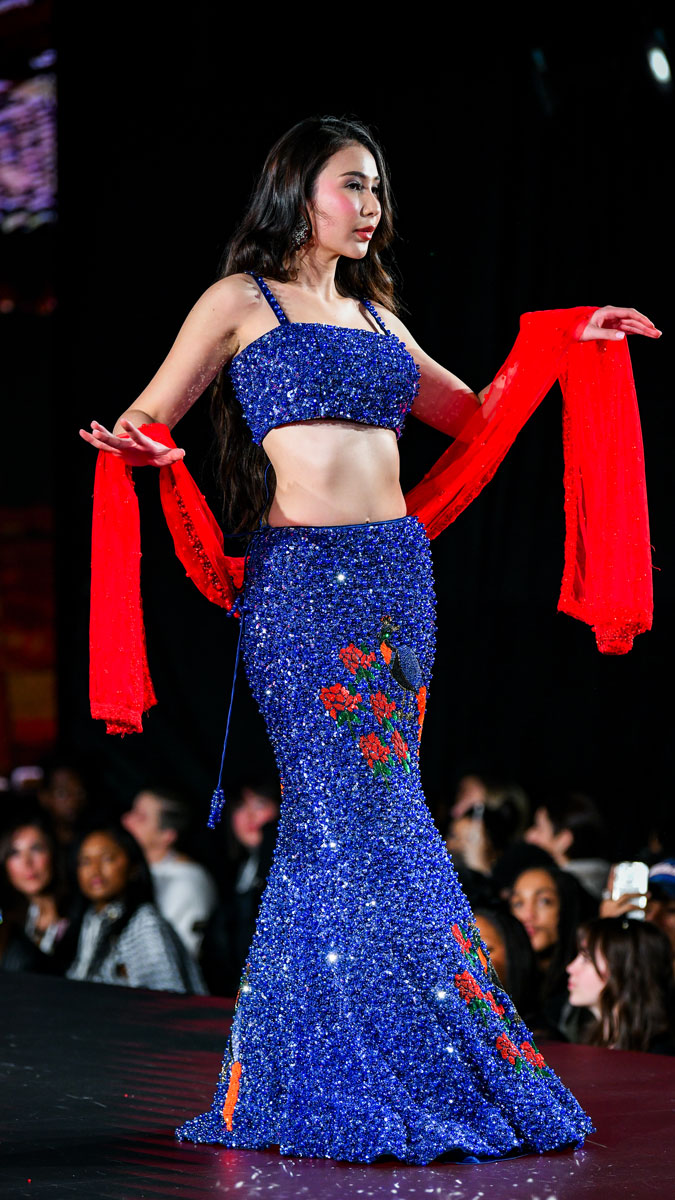
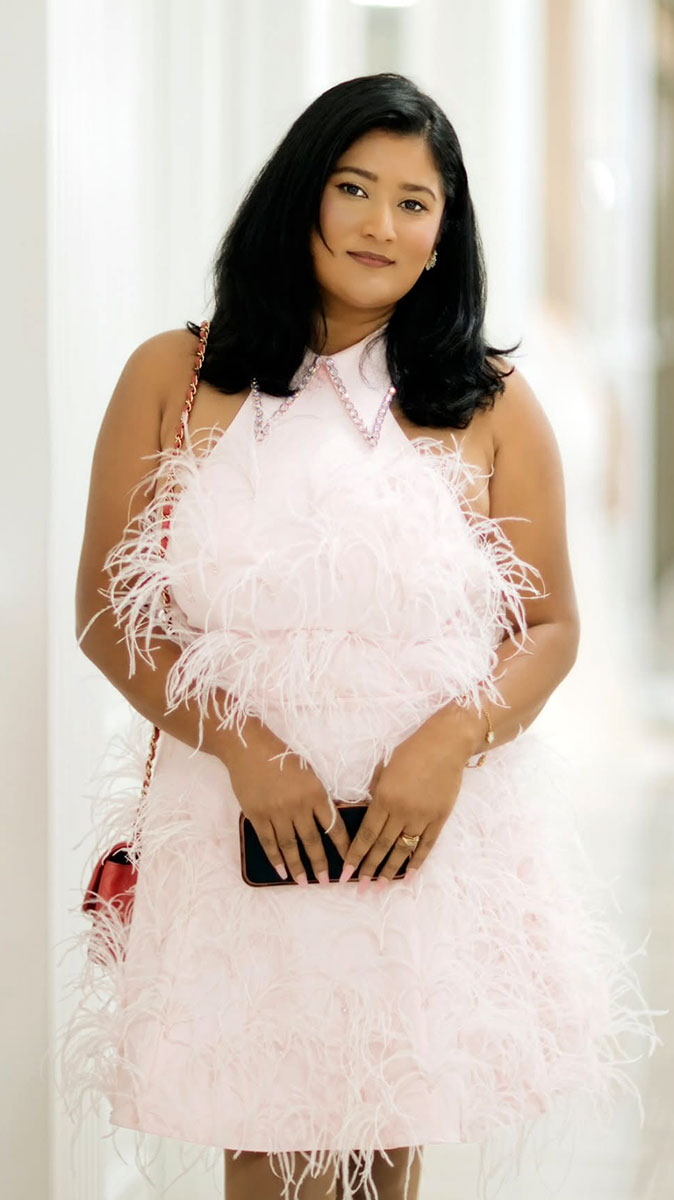
Three Nepali-American models Sana Devkota, Deepika Sharma and Ruby Paudel walked alongside international models in the presentation.
Their participation added a shared connection to the runway. A Nepali-American designer presented her work with models whose own identities also connect Nepal and the United States.
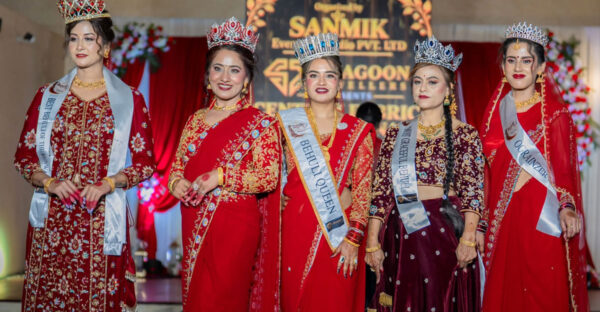
For Sharma, the reigning Miss Nepal North America 2026, the appearance marked an international fashion opportunity early in her reign. Mainali’s relationship with the pageant stretches back to earlier editions, including creative involvement in 2023 and 2024.
Mainali has also shared that her creations received features in ELLE Italy, Marie Claire Italy and Harper’s Bazaar, adding international media visibility to her runway appearances.
Nepal in the Details
Even as her inspirations expand, Nepal remains central to Mainali’s work.
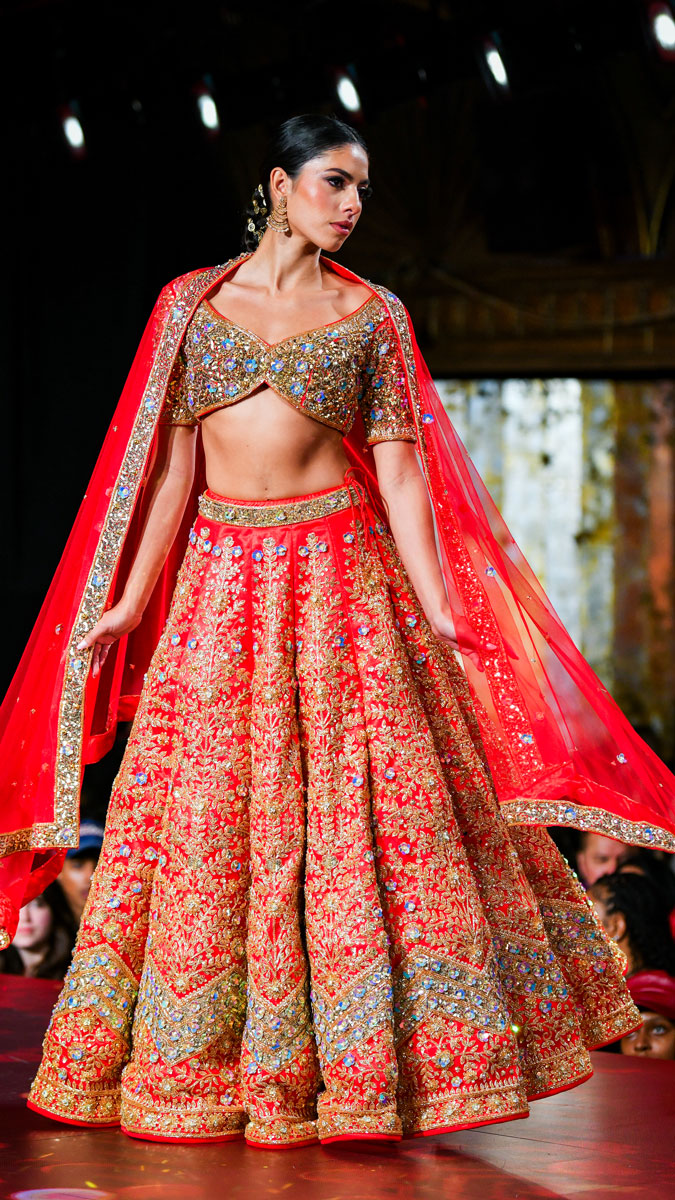
Her designs have included a hand-beaded lehenga inspired by the traditional chaubandi cholo. Another look combined hand-painted Mithila art with a beaded blouse, bringing two forms of detailed craft into one outfit.
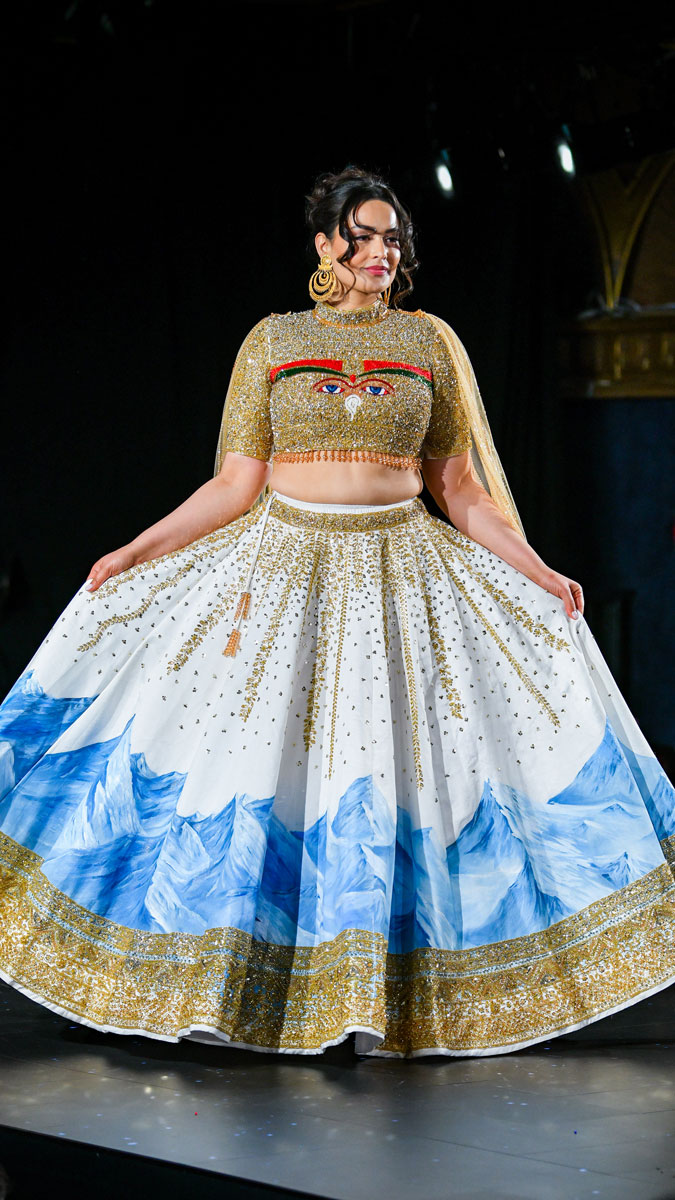
A showstopper featured a hand-painted Himalayan landscape alongside Buddha-eye imagery. Other references in her work include Dhaka textiles and rhododendron-inspired details.
These elements give her clothes a connection to specific places, traditions and memories. They also offer ways to introduce Nepali cultural references to audiences who may be encountering them for the first time.
A viewer might first notice the shape of a garment or its embroidery, then discover the landscape or artwork within it.
“I want people to understand the story just by looking at the design,” Mainali has said.
That idea runs through her approach to couture. The clothes need to work visually while carrying something of the stories that inspired them.
The Artisans Behind the Runway
The finished designs also reflect the skills of the people who make them.
K R I T I works with artisans in Nepal and India to bring Mainali’s ideas to life through embroidery, painting, beadwork and garment construction. Many of those craftspeople are women supporting their families through their work.
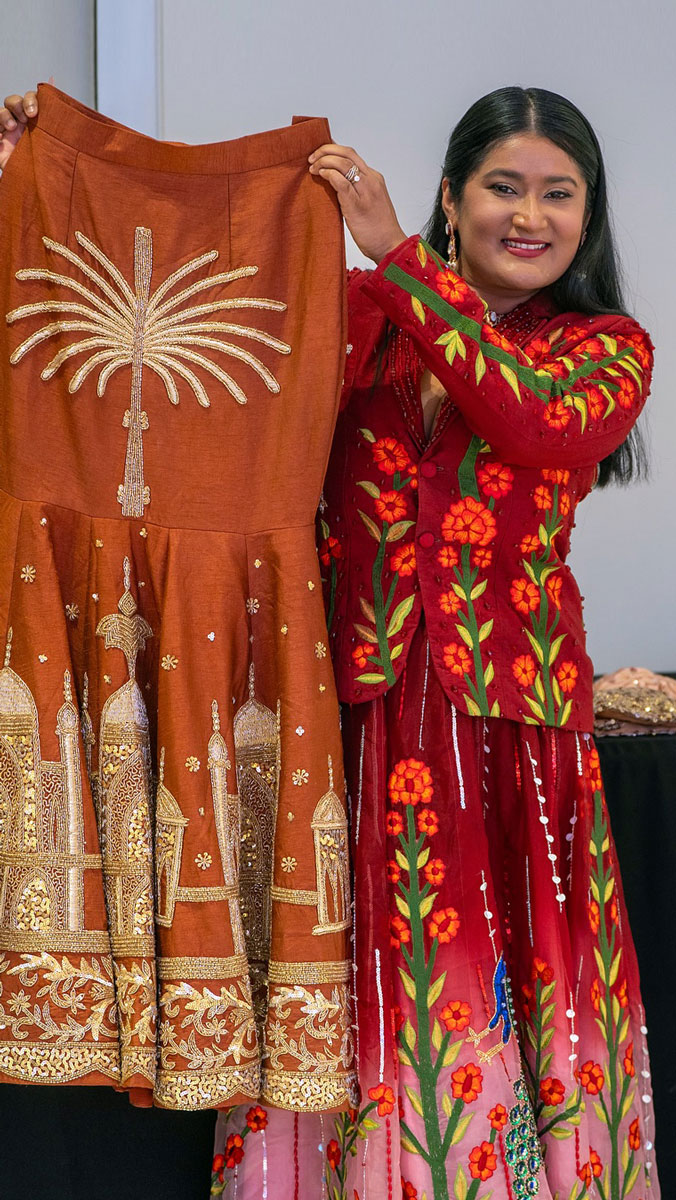
Beads, sequins, crystals and hand-stitched motifs give the garments texture and detail. Their placement requires careful work, with the designer and artisans contributing different skills to the finished piece.
For a label operating across countries, maintaining those relationships requires regular communication and close coordination.
The arrangement also keeps Mainali connected to the craftsmanship that inspired her early interest in clothing. As her designs travel further, artisans in Nepal and India remain part of their creation.
From Dubai to New York and Paris
Before Milan, Dubai provided an opportunity for Mainali to explore another city through fashion.
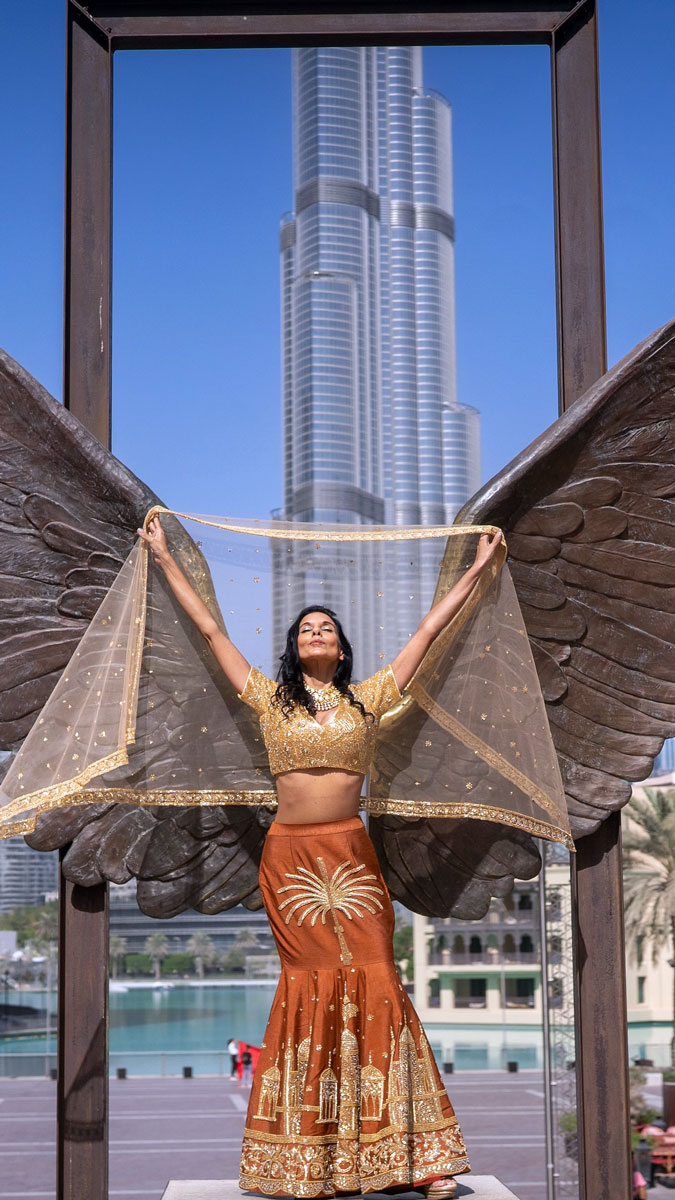
For Emirates Fashion Week, she collaborated with Arni Fashion LLC on a collection inspired by Palm Island and Dubai’s architecture. That presentation showed how her interest in place could develop beyond references to Nepal.
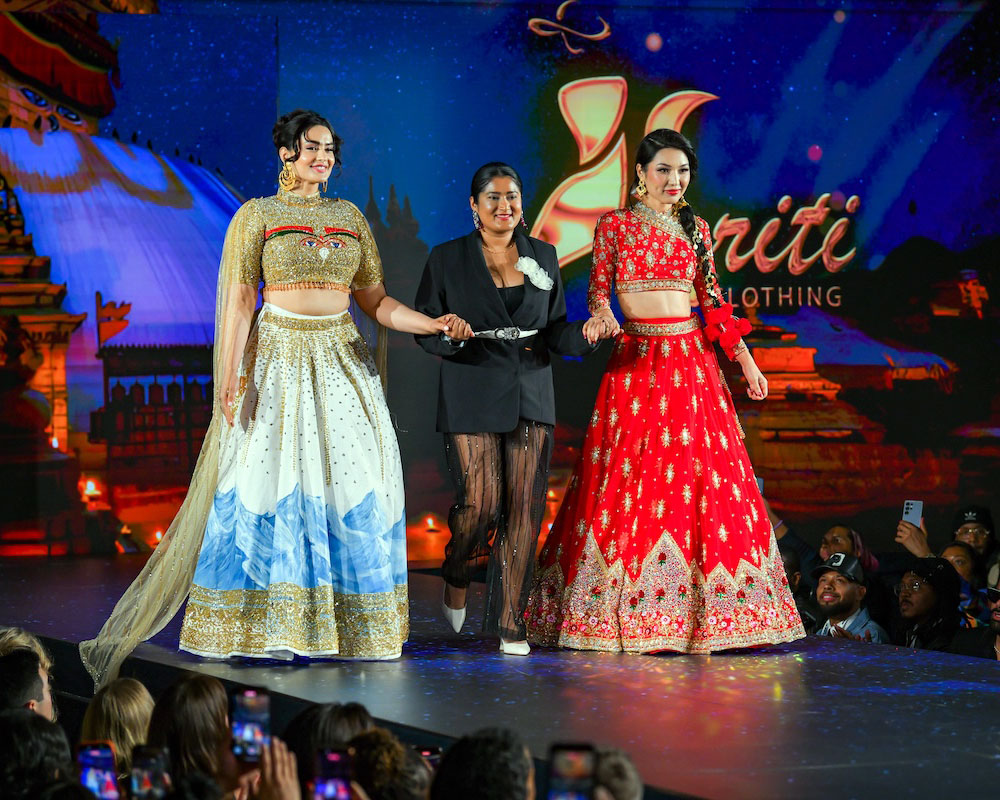
In February 2026, she presented the 10-piece Heritage of Nepal collection through Runway 7 at Sony Hall in Times Square during New York Fashion Week.
The presentation drew on Swayambhunath and the Himalayas, with traditional Nepali music and digital imagery of Mount Everest contributing to the setting.
For Mainali, it was an opportunity to introduce her label through a story closely connected to her own background. The clothes, music and imagery brought different elements of Nepal into the same presentation.
Her work also reached runways in Paris before the September showcase in Milan.
Across those appearances, she has continued developing an approach that brings cultural references, detailed craftsmanship and contemporary clothing together.
Beyond the Runway Photographs
The international presentations are visible milestones. The work between them continues around Mainali’s corporate responsibilities.
There are ideas to develop, garments to refine and production decisions to make. Her label has grown through the hours she finds outside her regular working day.
That makes her journey relatable beyond fashion. It is the experience of building something personally meaningful while meeting everyday responsibilities and continuing even when the available time feels small.
From scraps of old kurtis to a collection inspired partly by Milan’s Duomo, Mainali’s work has changed in scale and ambition. The pleasure of creating remains.
For the little girl who once dressed her dolls, there is now a much larger runway. And after office hours, she is still making time for the next design.