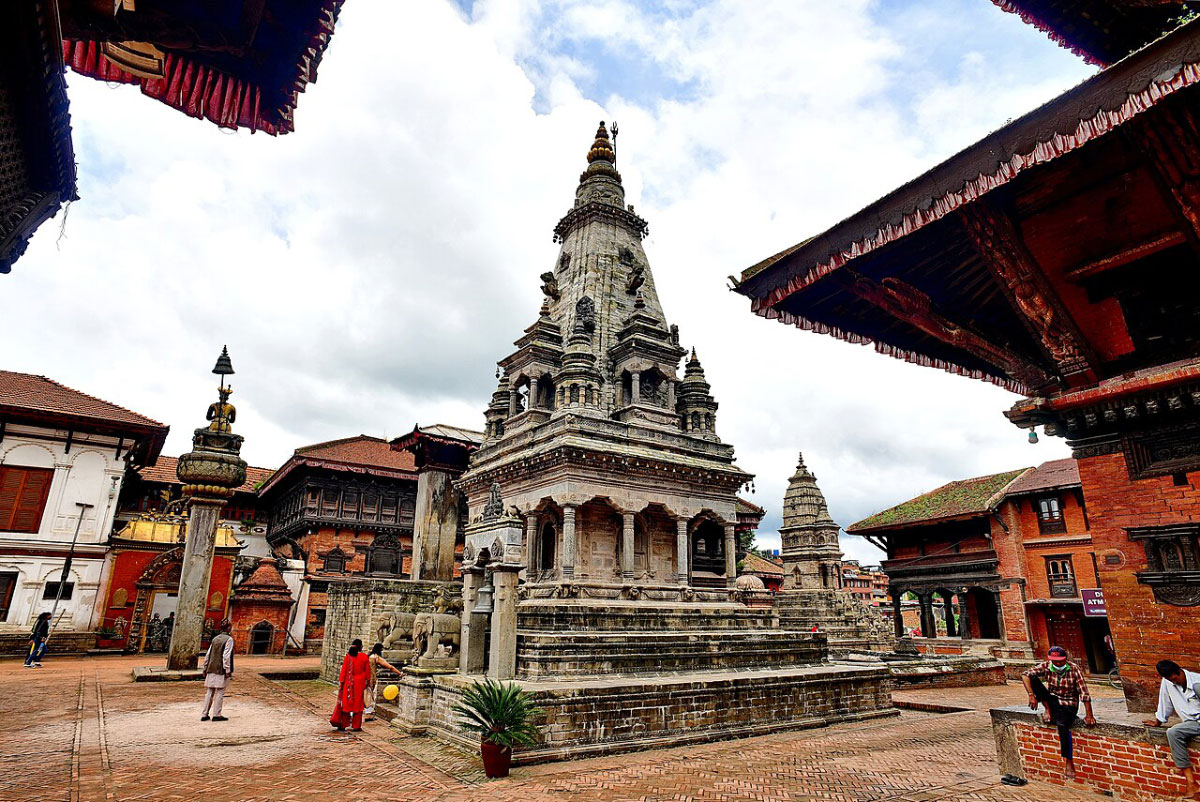
Vatsala Bhagwati and Pashupatinath temples in Bhaktapur Durbar Square. Photo by Rajesh Dhungana via Wikimedia Commons, CC BY-SA 4.0.
Nepal’s Heritage in 1,554 Photos, From Bhaktapur’s Squares to Wikimedia Commons
On October 10, photographers walked through three historic squares in Bhaktapur, stopping to photograph monuments and learn the stories behind them. Their pictures are now on Wikimedia Commons, part of a collection that reached 1,554 uploads during Nepal’s 2026 Wiki Loves Monuments campaign. A teacher preparing a lesson on Bhaktapur can now draw on photographs taken by people who stood in those squares.
Wikimedians of Nepal coordinated the campaign, with UNESCO as a strategic partner. More than 100 people took part online and in person, and more than five partner organizations joined the effort. Nepal has participated in the international photography competition since 2013.
The Bhaktapur Heritage and Photo Walk took participants through Bhaktapur Durbar Square, Taumadhi Square and Dattatreya Square. Along the way, they learned about the history of the monuments and the role these places play in local life. That knowledge matters when a photograph leaves the city. For someone seeing Bhaktapur for the first time, a caption naming the square and identifying a building can be the starting point for learning its history.
The campaign also looked beyond the Kathmandu Valley. Organizers asked for photographs of places that earlier editions had missed. Their priority list included Sindhuli Gadhi in Sindhuli, Amargadhi in Dadeldhura and the archaeological remains at Tilaurakot in Kapilvastu. They also sought images of monuments damaged in the 2015 earthquake, including photographs taken during and after restoration. Pictures from those different stages can show changes that are difficult to see on a visit today.
Each contribution needed a caption and description. Organizers also asked photographers to use clear file names and group their images by subject so that someone searching for a particular site could find it.
The photographs are available under Creative Commons licences. A Wikipedia editor can use one to illustrate an article, a researcher can examine an architectural detail, and a teacher can bring a historic square into the classroom. Anyone reusing a photograph can find its credit and licence terms on the individual image page.
For readers who know Bhaktapur, part of the pleasure is recognizing a familiar square. For those who have yet to visit, the collection offers a place to start looking closely, one photograph and one place name at a time.