
Leonardo DiCaprio, Jeff Bezos Back $200 Million Wildlife Rescue Project; Nepal’s Gharial Among 100 Species
Hollywood star Leonardo DiCaprio and Amazon founder Jeff Bezos are backing an ambitious $200 million global conservation initiative aimed at rescuing 100 of the world’s most threatened species from extinction, including the critically endangered gharial found in Nepal.
The Phoenix Species Project, launched on August 4 by DiCaprio’s conservation organization Re and the Bezos Earth Fund, will support long-term species recovery programs across 30 countries.
Organizers describe the initiative as the largest single philanthropic effort dedicated exclusively to recovering critically endangered species across multiple groups of animals and plants.
Of the $200 million announced at launch, $100 million is being provided by the Bezos Earth Fund and another $100 million by Re. Leonardo DiCaprio, Age of Union and the Todd Graves Family Foundation are also supporting the project.
Nepal’s Gharial Joins the ‘Phoenix 100’
The project’s list of 100 priority species spans mammals, birds, reptiles, amphibians, fish, invertebrates and plants.
Among them are Madagascar’s golden-crowned sifaka, the Hickory Nut Gorge green salamander from the United States, the pink land iguana of the Galápagos, Southeast Asia’s Malayan pangolin and Attenborough’s long-beaked echidna from New Guinea.
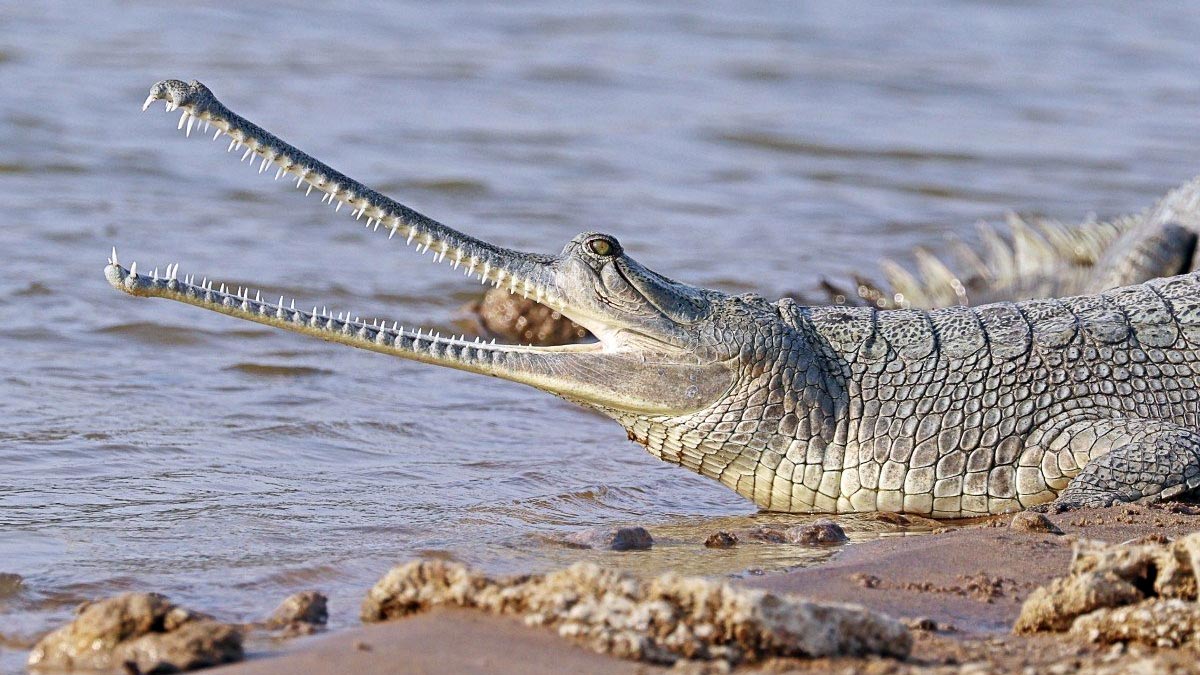
For Nepal, however, one name stands out: the gharial, the unmistakable long-snouted crocodilian found in river systems across Nepal, India and Bangladesh.
The Phoenix Species Project lists the gharial as Critically Endangered and estimates that only around 300 to 900 individuals remain.
Fishing nets, dams and water extraction are among the threats identified for the species. Proposed recovery efforts may include conservation breeding, reintroduction and programs designed to improve the survival of young gharials until they reach maturity.
Conservation Beyond Short-Term Protection
Rather than focusing only on protecting species for a limited period, the Phoenix Species Project aims to support long-term recovery.
More than 100 local and international partners are expected to take part, with conservation strategies designed around the needs of individual species and their habitats.
Depending on the species, the work could involve habitat restoration, conservation breeding, relocating populations to safer areas, disease management and controlling invasive species.
The IUCN Species Survival Commission will serve as a global knowledge partner, providing scientific expertise across the project.
DiCaprio has emphasized that species facing extinction can also play important roles within their ecosystems. Protecting threatened wildlife, he argued, can therefore help safeguard wider landscapes including forests, wetlands, grasslands and oceans.
Project Began With Talks in 2021
The initiative traces its origins to conversations that began in 2021.
DiCaprio and Re co-founder Wes Sechrest met Jeff Bezos and Lauren Sánchez Bezos to discuss endangered species and the habitats they depend on.
Those conversations eventually expanded to include conservation organizations, governments, Indigenous Peoples and local communities, leading to the development of the Phoenix Species Project.
Celebrity-Backed Conservation Plan Draws Criticism
The high-profile partnership has also attracted criticism.
Following the announcement, some social-media users accused Bezos and DiCaprio of greenwashing, questioning the environmental footprint of ultra-wealthy individuals while they promote large conservation initiatives.
The reaction was reported by outlets including The Independent. Such comments reflect public criticism rather than a scientific assessment of the Phoenix Species Project or evidence of its eventual conservation results.
Ultimately, the initiative will be judged not by the celebrity names associated with it, but by whether sustained funding produces stronger populations of threatened species in the wild.
For Nepal, the inclusion of the gharial gives the global initiative a particularly local significance. The distinctive reptile has become one of the country’s most recognizable symbols of endangered river wildlife connecting a headline-making international conservation campaign directly to Nepal’s rivers and biodiversity.