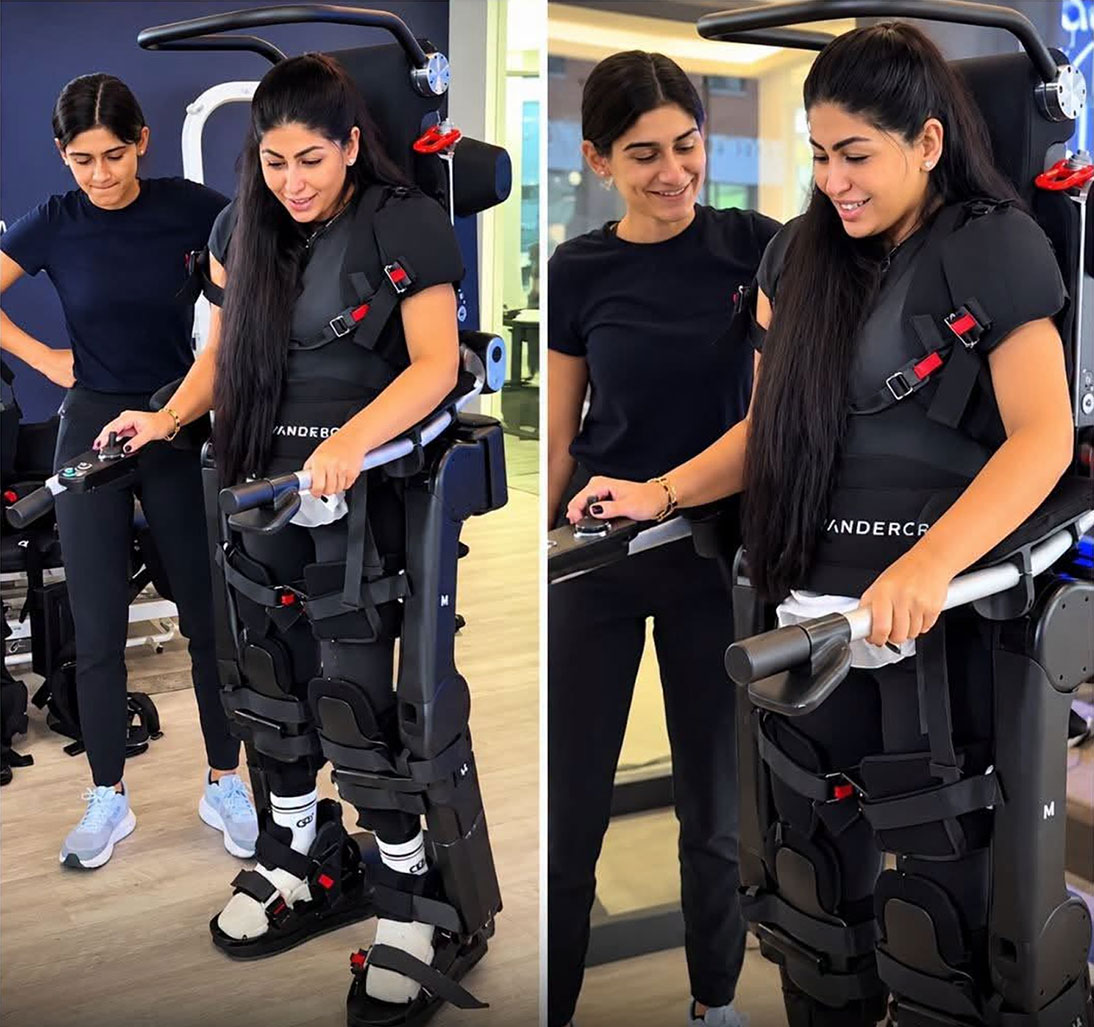
Jessica Tawil experiences standing and taking steps with the support of a robotic exoskeleton, years after a spinal cord injury.
Jessica Tawil’s Emotional Steps Bring Her Closer to Her Younger Self
As a robotic exoskeleton helped Jessica Tawil stand and take steps, she found herself thinking about the girl she had been at 16. Years after a car accident changed her mobility, the experience brought an unexpected sense of recognition: that younger version of herself was still there.
The Lebanese-American content creator shared the moment on social media, showing the emotion of standing upright and moving with the wearable machine’s support.
In her caption, reproduced by news outlets, Jessica described an experience that began with fear and became something she would treasure.
“For the first time in ten years, I saw 16-year-old Jess again,” she wrote.
It was a deeply personal way to describe those steps. They connected her memories of life before the accident with the woman she had become through everything that followed.
Jessica was 16 when a car accident in 2014 caused a spinal cord injury, leaving her paralysed in the lower part of her body. She has used a wheelchair since.
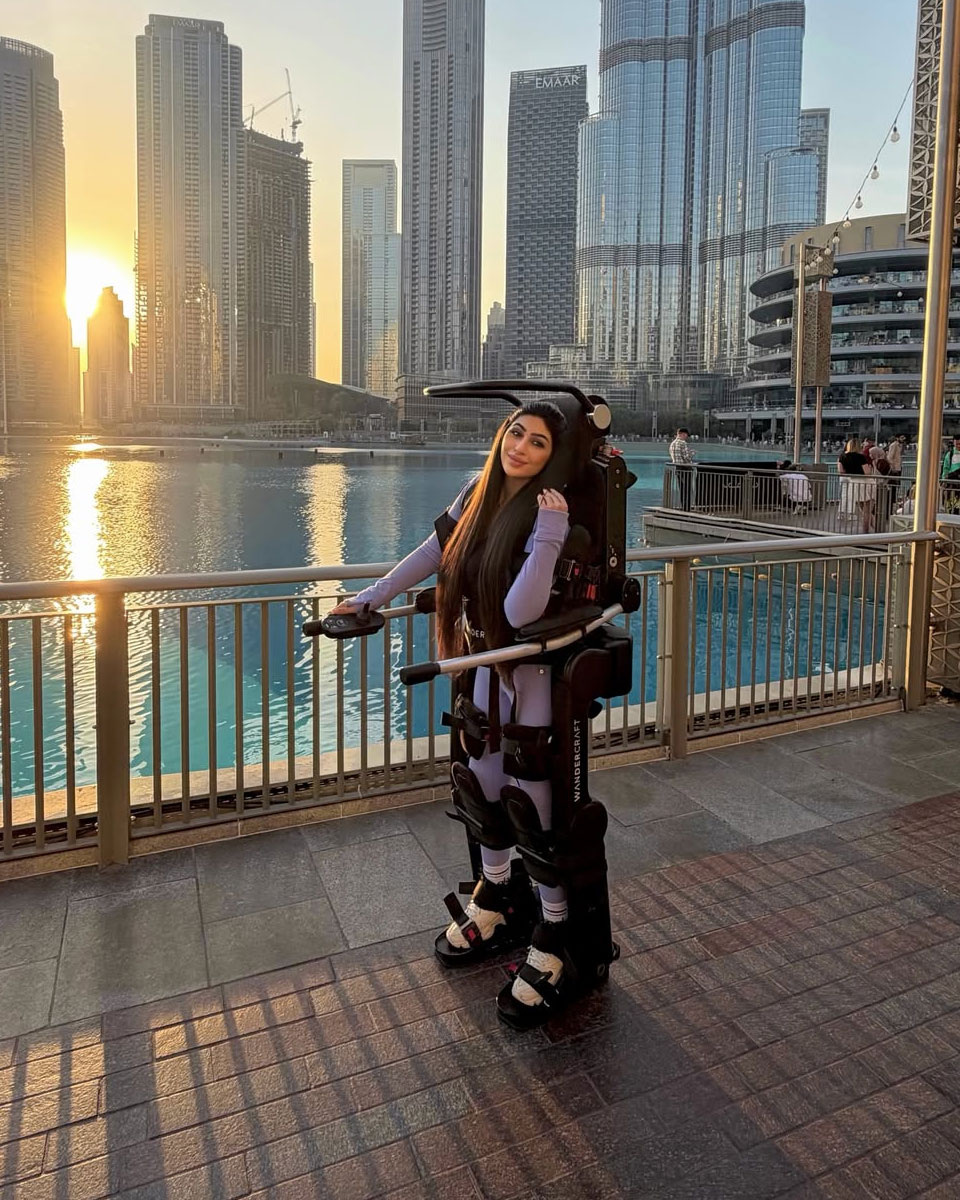
Jessica Tawil shares a special moment near Dubai’s Burj Khalifa. “If you needed a reminder not to take your health for granted, let this be it. This was probably one of the most beautiful moments of my life,” she wrote on Instagram. Photo: Jessica Tawil/Instagram.
Over the years, she built a presence online by sharing her life, including everyday experiences as a wheelchair user. Long before this video attracted attention, she was already telling her story in her own voice.
Trying the exoskeleton added another chapter.
Before taking those steps, Jessica went through assessments and measurements to ensure the equipment fitted her. She also had to learn how to use its controls. Behind the emotional footage was a process of preparation, guidance and getting comfortable with something unfamiliar.
Then came the opportunity to stand and move with support. The robotic frame assisted her body, allowing her to experience movements she had missed for years. Her reaction revealed how much that opportunity meant to her.
These were device-assisted steps; they did not mean her paralysis had been reversed. The technology gave her another way to experience movement while her wheelchair remained part of her life.
Her video was already attracting coverage in October 2025 and drew renewed attention in October 2026. At its heart, however, is a moment whose meaning reaches beyond a news cycle.
Jessica’s words hold both the teenager she remembers and the person she is today. She recognised something familiar in herself while acknowledging how much life had changed her.
For Jessica, standing with support became a memory of its own one filled with surprise, emotion and the joy of experiencing something she once struggled to imagine.