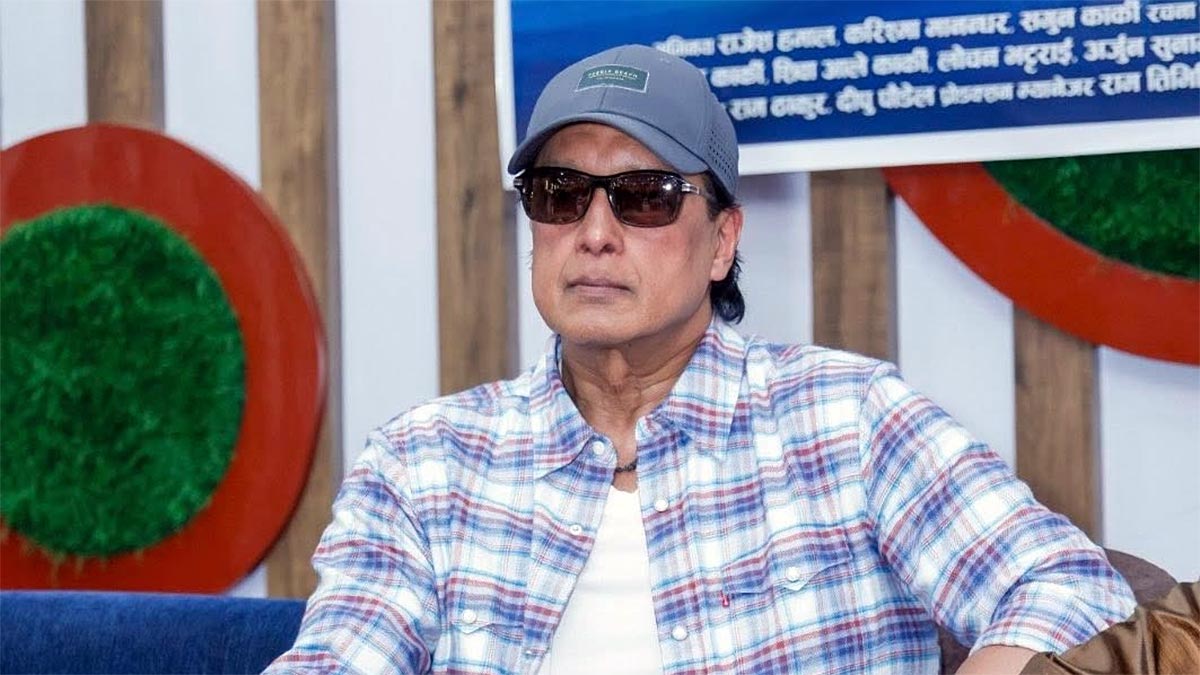
Rajesh Hamal Raises Serious Questions About Nepal’s Future Planning
Nepali cinema superstar Rajesh Hamal has sparked a fresh online conversation after questioning whether a country can be wisely governed through a “hit-and-miss” approach.
In a Facebook post shared on Thursday, Hamal argued that a nation’s future should not depend on chance, experimentation or short-term management. Instead, he said it must be built through foresight, evidence-based decisions and long-term strategy.
“How wise is it to operate the country’s governance system itself on a ‘hit-and-miss’ basis depending on guesswork and experimentation?” Hamal wrote.
The veteran actor did not name a political leader, party, minister or government. Nevertheless, the timing and tone of the message have led several social media users and news pages to interpret it as an indirect comment on Nepal’s current style of governance.
A Question About Nepal’s Long-Term Direction
Hamal’s statement goes beyond criticism of routine administrative failures.
He stressed that national leadership should be able to realistically anticipate where the country will stand in the next five, ten or twenty years.
Without a clear vision for the future, he warned, a country that remains occupied only with everyday management problems may not be moving towards progress at all.
In a rapidly changing world, Hamal suggested, the absence of strategic planning could instead push a nation towards stagnation.
The central message of his post rests on three ideas: foresight, evidence and long-term planning.
Was Hamal Targeting the Government?
Several online pages quickly described the post as criticism of the current government. However, Hamal’s original statement does not identify a particular administration or individual.
It would therefore be more accurate to describe the post as a broader criticism of short-term governance culture rather than a confirmed attack on any named leader.
That ambiguity is also one reason the statement is attracting attention. Readers are debating whether Hamal was responding to a specific political development or raising a larger question about how Nepal has historically been governed.
Hamal Becoming More Vocal on National Issues
One of the most recognisable figures in Nepali cinema, Hamal has increasingly used his public platform to comment on leadership, accountability, good governance and national priorities.
In an earlier message, he said citizens wanted measurable results, employment, justice, accountability and good governance rather than political speeches.
His latest statement expands that discussion. Instead of focusing only on immediate results, he asks whether Nepal has a credible roadmap for the coming decades.
Why the Post Is Resonating
Hamal has avoided personal allegations or partisan language. His question is simple, but it reflects a frustration shared by many citizens: Is the country being guided by a consistent national strategy, or is it reacting to one problem after another?
Because the message comes from a major entertainment personality rather than a career politician, it has travelled quickly across celebrity, news and political-discussion pages.
The post also arrives during an ongoing national debate over whether promises of governance reform are translating into visible improvements in public life.
Hamal’s broader argument is clear: in a world changing at extraordinary speed, managing today’s problems is not enough. A country needs leaders who can anticipate tomorrow, make decisions grounded in facts and follow a long-term strategy.