In Nepal, pageants have emerged as influential informal platforms for leadership development. Through public speaking, interviews, cultural presentations, and advocacy projects, participants build skills in communication, representation, and social engagement. These experiences prepare contestants for meaningful roles beyond the stage in civic, professional, and public life.
Over the past two decades, Nepal’s pageant culture has shifted from being primarily focused on beauty and performance to becoming a platform for leadership, social advocacy, and political participation. Pageantry is now increasingly viewed as a pathway to public service, governance, and national leadership rather than just aesthetic display.
Today, pageants play an important role in developing confidence, civic awareness, and communication abilities. Many participants have progressed into careers as social advocates, entrepreneurs, professionals, and even Members of Parliament. This reflects a broader shift in perception where pageantry is understood as a space for developing voice, presence, and influence.
Rather than being the end of a journey in glamour, pageants now serve as starting points for leadership, shaping individuals into engaged participants in democratic and public life.
Pageantry as a Leadership and Political Pathway
Nepal’s evolving pageant ecosystem represents far more than cultural celebration; it has become a structured environment for developing leadership, identity, and civic participation. Participants gain visibility, discipline, and communication skills that support their transition into diverse professional and political fields.
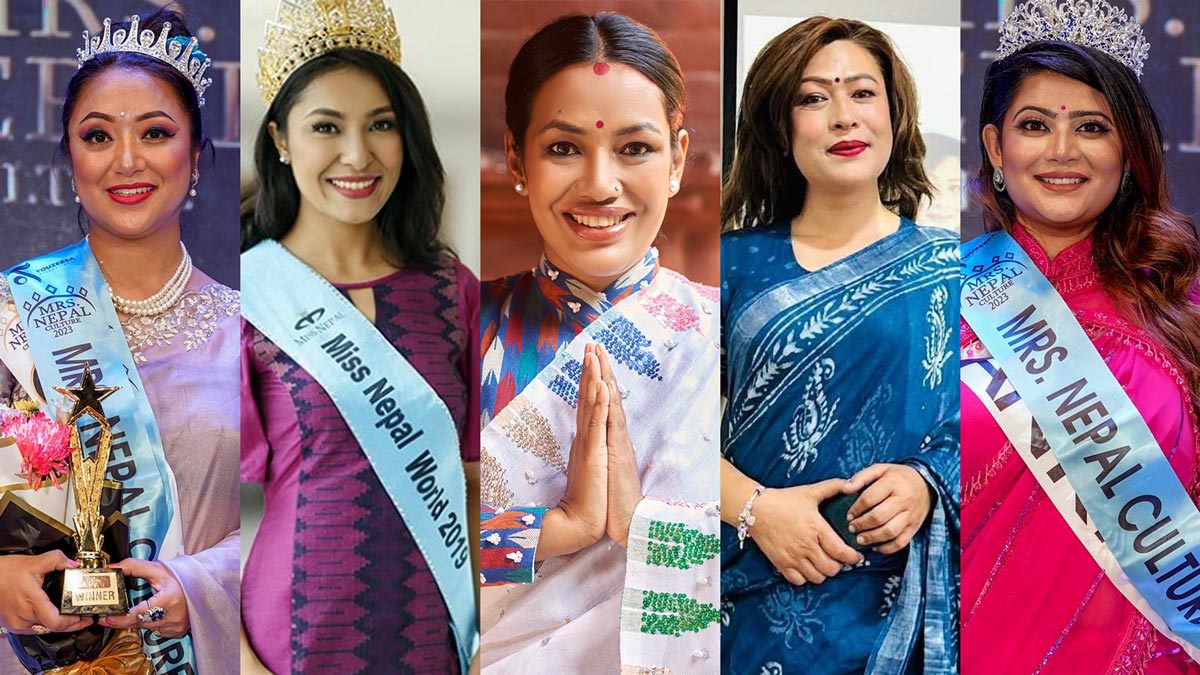
From nationally recognized platforms such as Miss Nepal to culturally grounded pageants like Miss Indigenous, Miss Tamang, Miss Newa, Mrs. Nepal Culture, and Miss Pink Nepal, these institutions have consistently nurtured individuals with strong public speaking abilities, social awareness, and a commitment to community representation. These competencies are not developed instantly but are gradually refined through interviews, advocacy campaigns, public appearances, and community engagement.
As a result, pageants in Nepal have become structured training grounds for leadership presence and civic responsibility. This transformation is increasingly visible in national politics, where a growing number of former pageant participants have entered the Federal Parliament through both direct elections and the proportional representation (PR) system.
A New Generation of Leaders
A notable trend in Nepal’s political landscape is the emergence of women leaders with pageant backgrounds. Their journeys demonstrate how early exposure to public platforms can evolve into influential roles in governance and policymaking. These individuals bring confidence, visibility, and a strong sense of advocacy into their political responsibilities, contributing to more representative and inclusive leadership.
Medical Professionals Turned Pageant Leaders and Lawmakers
A significant dimension of Nepal’s evolving pageant culture is the increasing participation of highly educated professionals who seamlessly integrate academic excellence with public representation. This emerging trend demonstrates that pageant platforms are no longer confined to cultural display, but are increasingly being utilized to amplify informed voices in public policy, governance, and social reform.
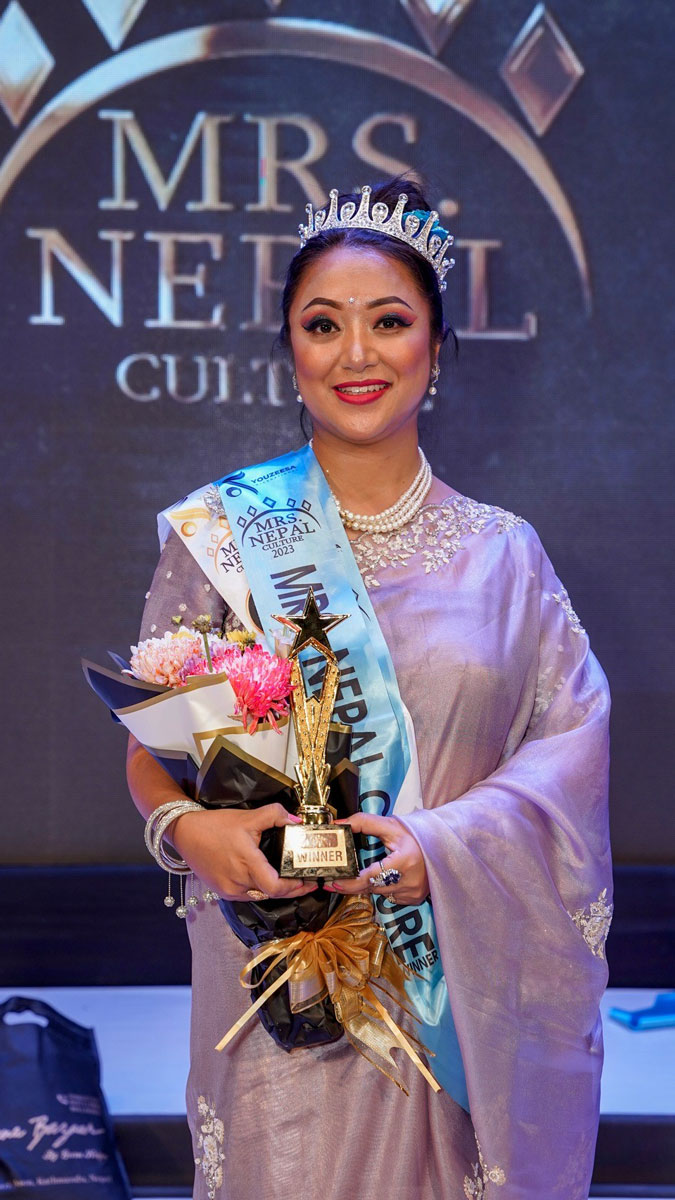
Dr. Ojaswee Sherchan exemplifies this convergence of academia, pageantry, and political leadership. A medical doctor with an MBBS degree and specialization in biochemistry, she has built a distinguished career as an associate professor, contributing extensively to medical education, clinical research, and academic training of future healthcare professionals. Her work spans areas such as biochemical research, laboratory science, and institutional teaching, reflecting a strong foundation in Nepal’s healthcare and academic sectors.
Extending her influence beyond academia and pageantry, she now serves as a Member of Parliament under the proportional representation (PR) system, representing women within Nepal’s inclusive framework. In her parliamentary role, she brings her professional expertise into national discourse, contributing to areas such as healthcare reform, medical education policy, public health systems, and institutional development. Her entry into pageantry culminated in her being crowned Mrs. Nepal Culture 2023 at the grand finale held at Rastriya Naach Ghar, Kathmandu, organized under Youzeesa International Events, where she competed among 35 contestants. In addition to the main title, she was honored with the Public Choice Award, reflecting her strong connection with the audience.
Her journey did not conclude with pageantry; rather, it expanded into the realm of national governance. Extending her influence beyond academia and pageantry, she now serves as a Member of Parliament under the proportional representation (PR) system, through the Rastriya Swatantra Party. Her trajectory reflects how accomplished individuals are increasingly leveraging pageant platforms to extend their influence beyond academia into national decision-making processes.
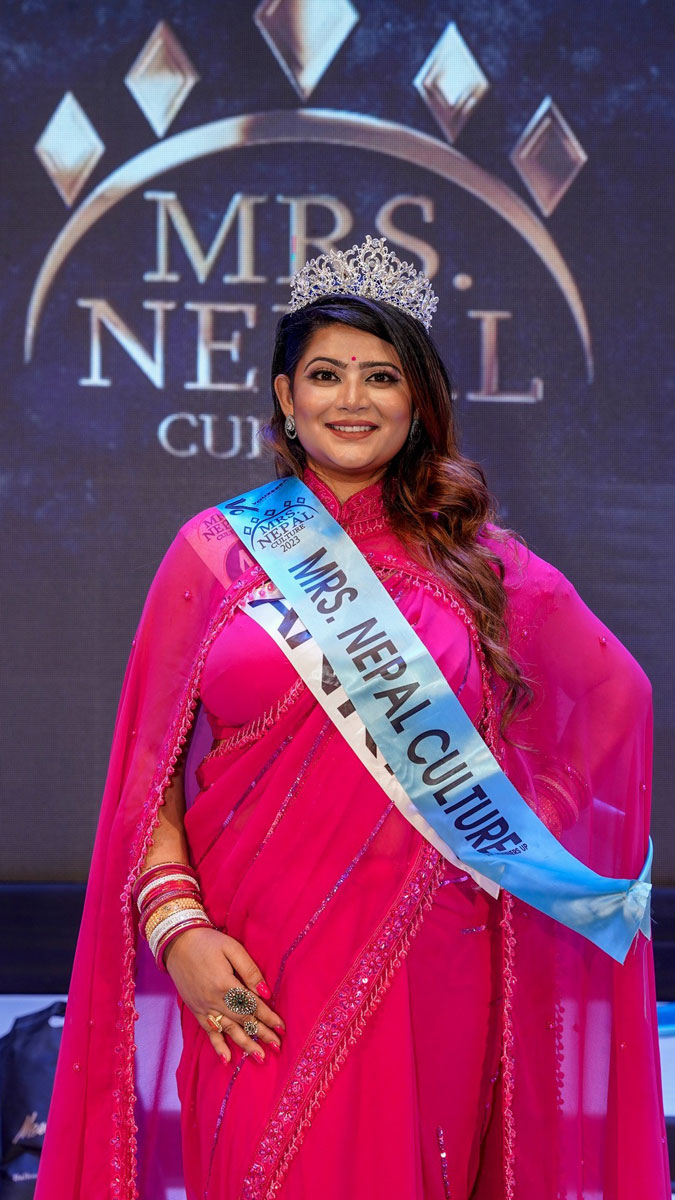
Similarly, Dr. Ankita Thakur represents a compelling example of the intersection between professional expertise, pageant visibility, and political leadership. A dental surgeon with a Bachelor of Dental Surgery (BDS) degree from UCMS Bhairahawa, she has established herself as both a healthcare professional and an entrepreneur, serving as the CEO of Nova Dental & Aesthetic Clinic in Lalitpur. Her long-standing involvement in community health initiatives including blood donation drives, public health campaigns, and outreach programs reflects her commitment to social service.
Her participation in Mrs. Nepal Culture 2023, where she secured the First Runner-Up position along with the Mrs. Dynamic title, brought her into greater public recognition, highlighting her advocacy, personality, and leadership potential. This exposure further strengthened her public profile, enabling her transition into national politics. She now serves as a Member of Parliament under the proportional representation system, representing Madhesi women through the Rastriya Swatantra Party.
Together, the journeys of Dr. Ojaswee Sherchan and Dr. Ankita Thakur illustrate a broader pattern within Nepal’s pageant ecosystem where highly qualified professionals are utilizing pageantry as an extension of their public voice. Their experiences demonstrate how the discipline, confidence, and visibility gained from such platforms can complement professional expertise and translate into meaningful contributions in governance, policy-making, and national development.
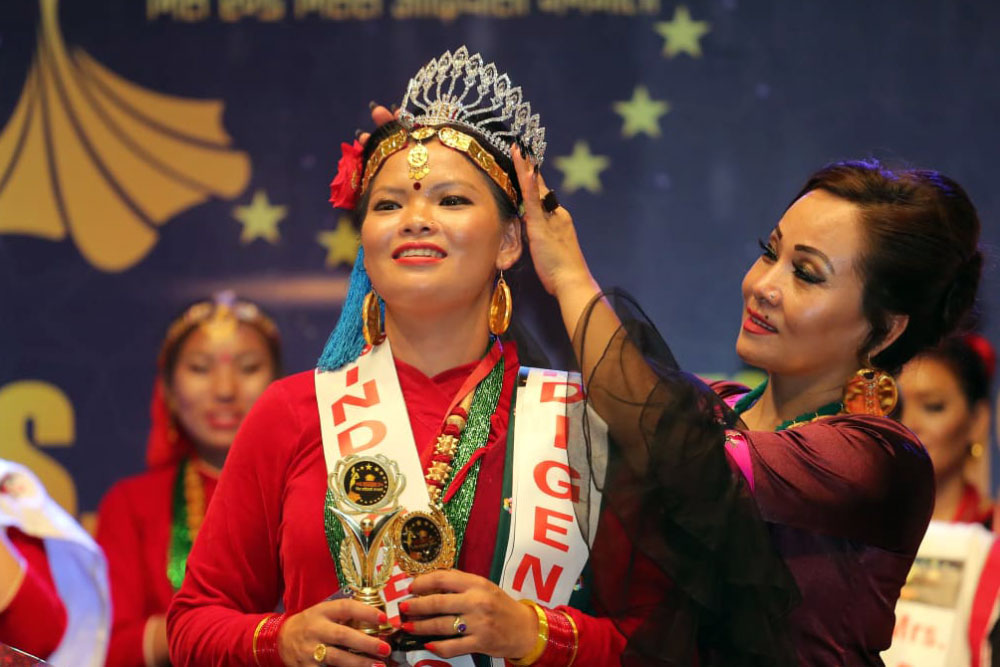
Eliza Gurung
Indigenous Representation and Grassroots Leadership
Eliza Gurung represents the emergence of indigenous leadership in Nepal through culturally rooted pageantry and sustained grassroots engagement. Born in the remote village of Kerounja in Dharche Rural Municipality of Gorkha, her journey reflects the transformative potential of platforms that combine cultural identity with public representation.
She rose to national prominence after winning Miss Indigenous 2019 at the Miss and Mrs. Indigenous Nepal 2019 pageant, held at Rastriya Naach Ghar, Kathmandu, and organized by SK Entertainment. In addition to the main title, she was honored with the Viewer’s Choice Award and Best Hair Award, highlighting both her public appeal and confident representation of indigenous culture.
From an early stage, Eliza Gurung was actively engaged in community development and indigenous advocacy. Her involvement with organizations such as Tamu Huyula Choj Dhi Gurung National Council and Northern Gorkha Tamusamaj reflects a strong foundation in grassroots social work and cultural leadership. Through these platforms, she contributed to community mobilization, cultural preservation, and advocacy for indigenous rights.
Her combined experience in pageantry and community engagement ultimately facilitated her transition into national politics. She currently serves as a Member of Parliament under the proportional representation system through the Rastriya Swatantra Party, representing indigenous women within Nepal’s constitutional inclusion framework.
Her journey exemplifies how pageantry can function as a catalyst for leadership development, enabling individuals from rural and marginalized backgrounds to rise to positions of national influence. It underscores a broader pattern within Nepal’s evolving socio-political landscape, where grassroots experience, cultural identity, and public visibility converge to shape inclusive and representative leadership.
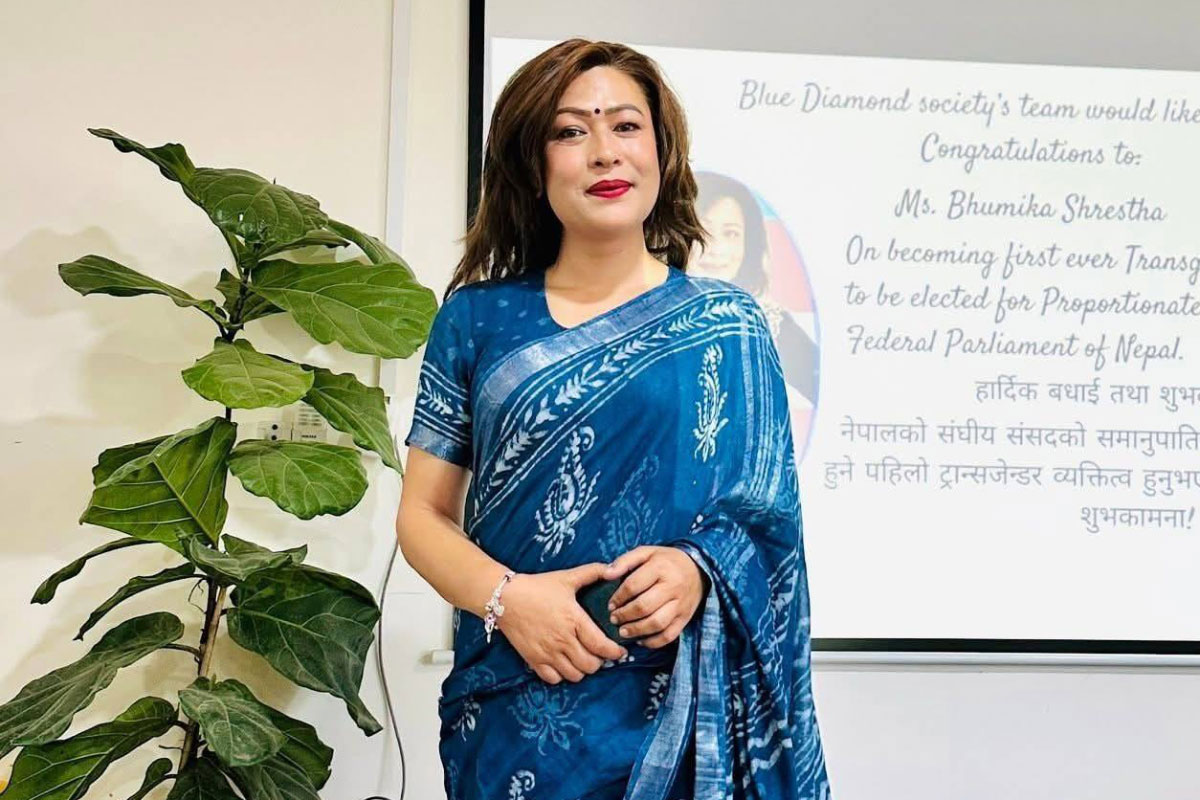
Bhumika Shrestha
Transgender Visibility and Human Rights Advocacy
Bhumika Shrestha stands as one of the most influential figures in Nepal’s human rights movement, representing a powerful intersection of pageantry, activism, and institutional change. Her journey began with her historic participation in Miss Pink 2007, Nepal’s first transgender beauty pageant, where she utilized the platform not merely for competition, but as a means to advocate for the visibility, dignity, and rights of transgender individuals.
Through this early exposure, she emerged as a leading voice in LGBTQ+ advocacy, actively contributing to awareness-building and policy discourse surrounding gender and sexual minority rights. Her long-standing association with organizations such as the Blue Diamond Society further strengthened her role in advancing human rights and promoting social inclusion in Nepal.
Over the years, Bhumika Shrestha gained significant international recognition for her contributions. She was listed among the 100 Most Influential People in Global Policy (2019) and was honored with the International Women of Courage Award (2022) both acknowledgments of her sustained efforts in advancing equality and human rights on a global platform.
Her transition into formal politics marked a historic milestone. In 2026, she entered the Federal Parliament as a Member of Parliament under the proportional representation system through the Rastriya Swatantra Party, representing the gender and sexual minority inclusion category. Her presence in the legislature signifies a transformative moment in Nepal’s political history, bringing lived experiences of gender diversity directly into national policymaking and governance.
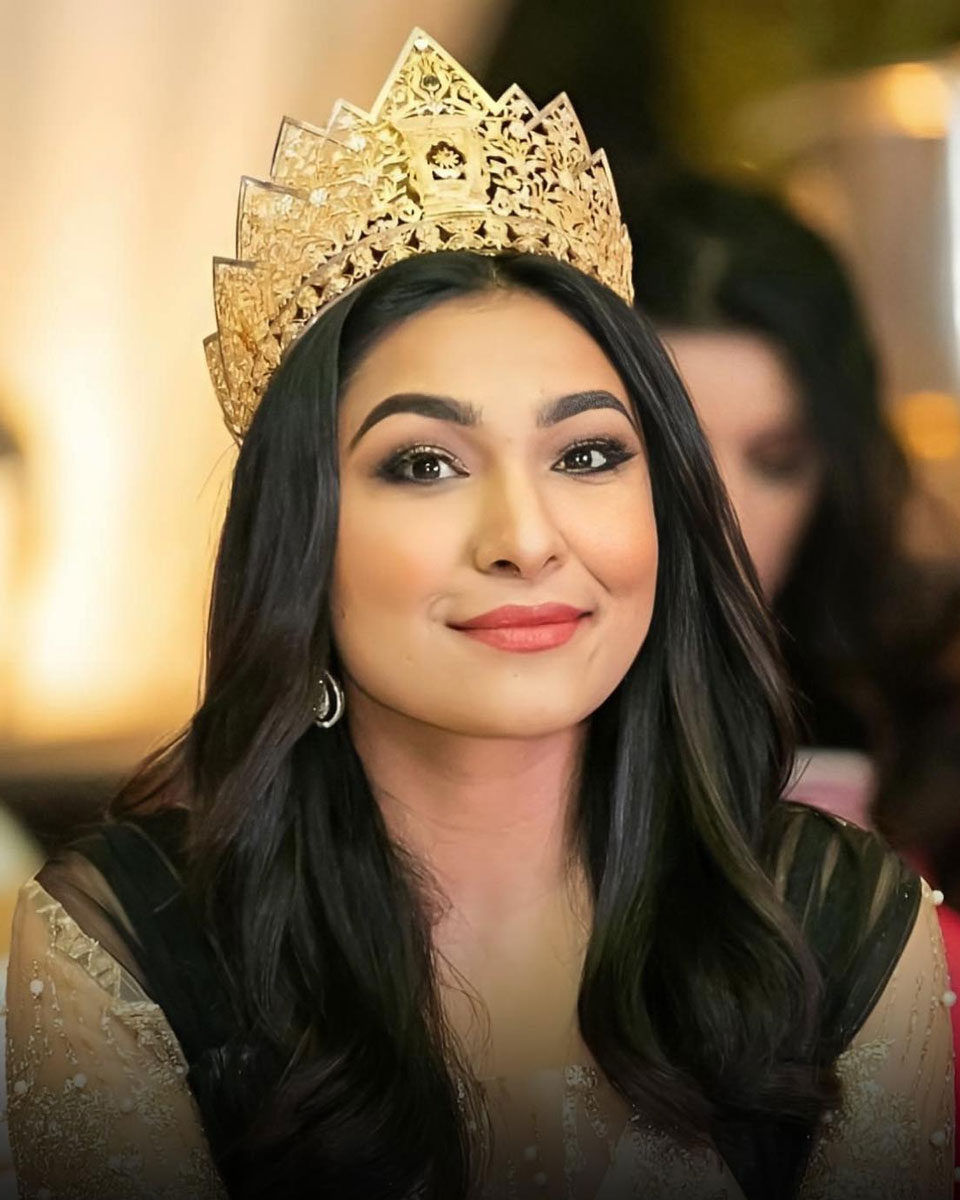
Anushka Shrestha
From Pageantry to Politics: The Journey of Anushka Shrestha
Anushka Shrestha exemplifies a contemporary Nepali leadership trajectory where pageantry serves as a foundation for broader social, entrepreneurial, and political engagement. Her journey began on the international pageant circuit as Miss Nepal Oceania 2018, marking her early exposure to global representation and public engagement. She later achieved national prominence by winning the title of Miss Nepal World 2019, along with special recognitions such as Miss Intellectual and Yamaha Miss Fascino, which highlighted her intellectual ability, communication skills, and confident public presence.
Her global recognition expanded significantly when she represented Nepal at Miss World 2019 in London, where she secured a position among the Top 12 finalists and received prestigious sub-awards including Beauty With a Purpose and the Multimedia Award. These achievements not only elevated her individual profile but also strengthened Nepal’s image in the international pageant arena, demonstrating the country’s growing presence in global cultural platforms.
Beyond pageantry, she transitioned into entrepreneurship as the founder of the Makusi dessert chocolate brand, contributing to youth entrepreneurship and women-led business development. Her work in this sector reflects her commitment to innovation, economic empowerment, and the creation of opportunities for young women in Nepal.
Her journey further evolved into political participation, where she now serves as a Member of Parliament under the proportional representation system through the Rastriya Swatantra Party. This transition highlights how pageant platforms can function as effective preparatory spaces for public life. The skills cultivated through pageantry, such as public speaking, leadership presence, advocacy, media engagement, and confidence in public representation have contributed to strengthening her role in parliamentary responsibilities.
In a broader context, her entry into politics reflects the positive contribution of Nepal’s pageant culture to democratic representation. Pageants have increasingly become spaces that nurture leadership qualities, civic awareness, and social responsibility among participants. In this sense, Anushka Shrestha represents how pageantry can evolve beyond cultural performance into a meaningful pathway toward inclusive political participation and nation-building.
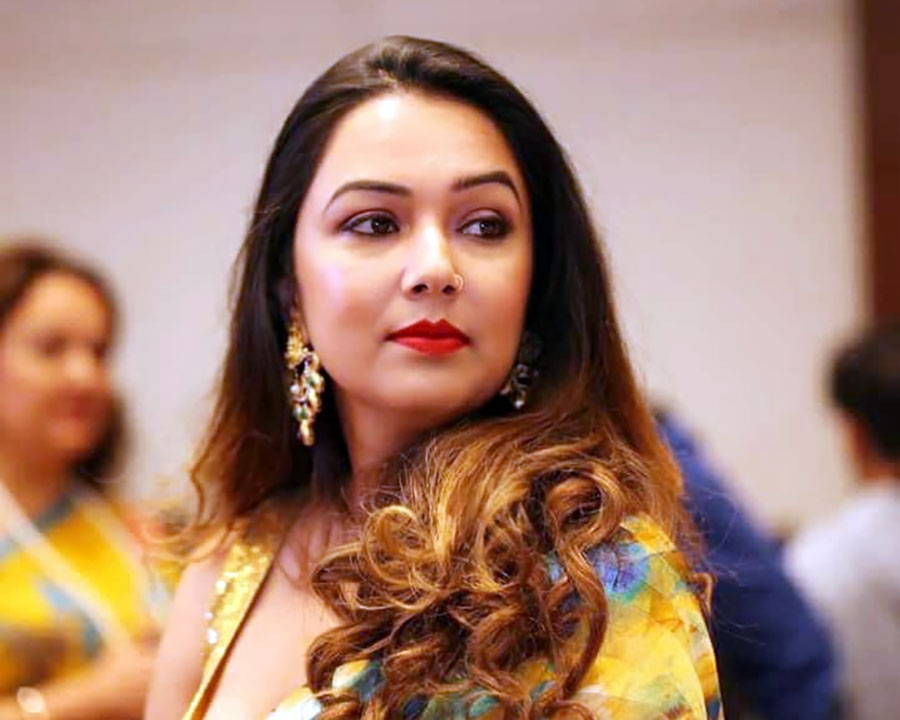
Khusbu Oli
Youth Entry into Politics through Pageantry
Khusbu Oli exemplifies how early exposure to pageantry can evolve into long-term political engagement and institutional leadership. She began her public journey as Miss Teen Nepal 2006, organized by JCI Kathmandu Nepal, which introduced her to public performance, youth representation, and leadership at an early stage.
Building upon this foundation, she gradually transitioned into active political involvement and is now a prominent figure within the Rastriya Prajatantra Party. She currently serves as a Central Committee Member and Deputy Head of the Training Department, where she plays a key role in organizational development, political training, and strengthening party structures.
In addition, Khusbu Oli has been included in the proportional representation (PR) system under RPP, reflecting her progression from youth pageantry to national political participation. While the PR allocation framework of the Rastriya Prajatantra Party is not publicly categorized into detailed social clusters in the same manner as some other parties, it adheres to Nepal’s constitutional inclusion requirements by incorporating women and youth leaders into its representation structure.
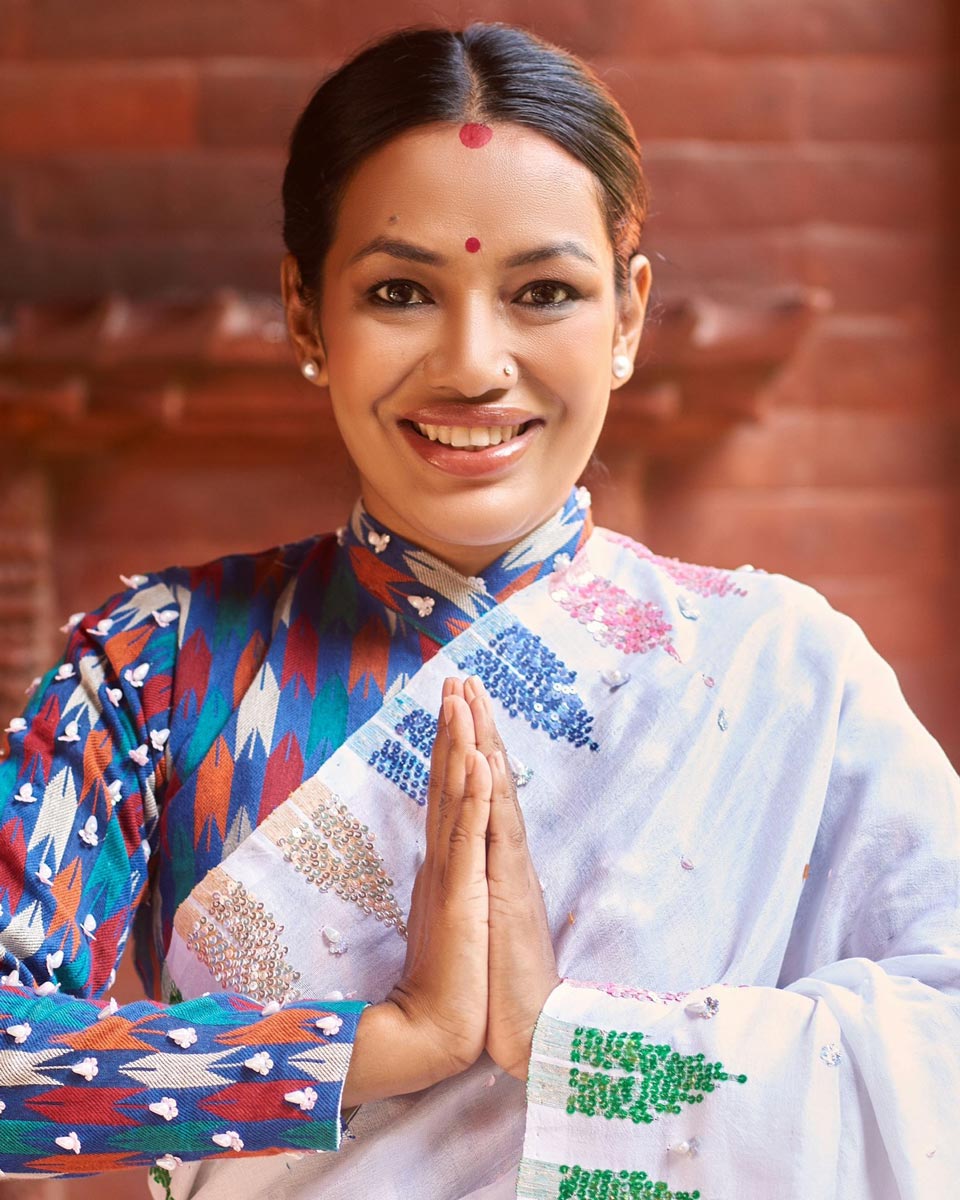
Aashika Tamang
Aashika Tamang: From Pageantry Stage to Electoral Mandate
Aashika Tamang is a notable example of a personality who transitioned from cultural pageantry to democratic representation. She first rose to public attention through her participation in Miss Tamang 2012, held during the Duk Loshar celebrations at the Tudikhel Open Theatre and organized by the Nepal Tamang Kala Sanskriti Kendra and Everest Fashion Home. In this competition, she earned recognition by winning the titles of Miss Popular and Miss Photogenic, which established her early presence in the cultural and public sphere.
Following this, she further strengthened her pageantry profile by participating in Miss National Queen 2012, where she received Miss Discipline and Viewer’s Choice awards, reflecting both her stage confidence and public appeal. These achievements helped her gain wider visibility beyond cultural platforms.
Alongside her pageantry background, Aashika Tamang later became involved in social activism through initiatives such as the Green & Clean Ashika Foundation, focusing on environmental awareness and cleanliness campaigns. She also collaborated with civic groups advocating for consumer rights, anti-corruption efforts, and public service accountability. In her political journey, she was associated with the Rastriya Swatantra Party (RSP) and emerged as its candidate from Dhading–1 constituency, representing a new wave of young, independent-minded entrants into mainstream politics.
In the election, she secured approximately 29,128 votes, reflecting notable public support despite not winning the seat. Building on this growing public profile and political engagement, she continued her transition from cultural representation to active political participation and public leadership.
Conclusion: Pageantry as a Pipeline of Leadership and Representation
Collectively, these journeys demonstrate that Nepal’s pageant platforms have evolved into powerful spaces for identifying and nurturing leadership potential. What begins as performance on stage often develops into meaningful engagement in activism, professional fields, entrepreneurship, and national politics.
Therefore, Nepal’s pageant ecosystem should not be viewed merely as entertainment or aesthetic competition. Instead, it represents a structured pathway toward leadership development where crowns symbolize not only beauty and performance, but also responsibility, representation, and the evolving journey toward inclusive nation building.